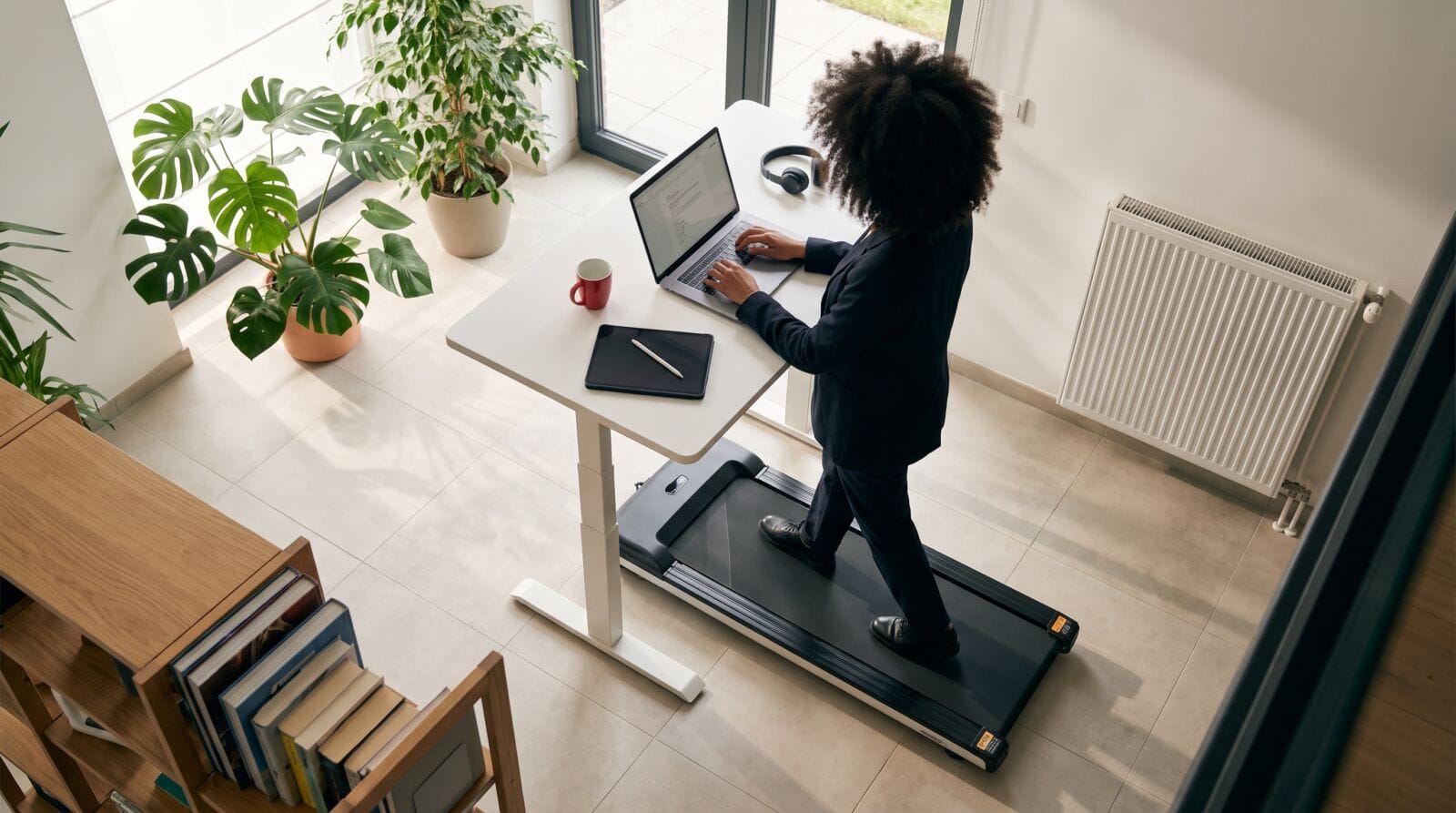
A hybrid schedule can mean working at a company desk one day and a home setup the next. The space changes, but calls, reading, and routine computer work can still keep you seated for long stretches. A treadmill desk offers another option for selected blocks: slow walking while you work, with a chair or stationary standing position available when you need it.
The useful question is not whether to walk all day. It is where a walking option fits without disrupting your work, coworkers, or home. Start with the work location and routine you already have, then decide whether an under-desk setup makes sense there.
Why the Arizona setting matters to a hybrid routine
Hybrid work can change the room and desk you use from one day to the next. A shared office station has permission and noise limits; a bedroom or apartment work corner has floor-space and storage limits. A treadmill desk only helps if it fits the location where you would use it.
During periods of intense Arizona heat, a midday walk outdoors may not fit your schedule or comfort level. An indoor option could mean an approved treadmill desk, a hallway break, or a walk at another time. None replaces a break from the screen.
Consider an illustrative hybrid day: you work at a shared desk in Phoenix on Tuesday, then from a spare-room desk on Wednesday. The office has no approved place for a walking pad, but the home desk has room for one. You might take a short indoor break at the office and try a walking work block at home. Reverse those choices if your actual rooms and permissions call for it; the example is a way to test fit, not a description of how Arizona workers typically behave.
Decide where a treadmill desk would actually be used
Before comparing equipment, choose the location where you could leave a walking option available for a real work block. A shared office station and a home treadmill desk solve different problems. Use the first question in each row as a gate: if the answer is no, plan a walking break instead of buying or bringing in equipment.
| Work location | First question | Practical check | If the answer is no |
| Shared office | Does your workplace allow a walking station? | Ask facilities or your manager about equipment approval, shared access, noise expectations, and a spot clear of walkways. | Use an approved shared station elsewhere, if available, or take a break away from the desk. |
| Home workspace | Can your desk and room accommodate the pad? | Check usable desk height while standing on the pad, floor space with the pad in use, cable paths, and a safe storage spot. | Try a walk away from the screen rather than forcing a tight setup. |
| Both locations | Would you really use equipment in each place? | Check access on office days and setup time at home; do not assume a walking pad can travel with you daily. | Keep the walking station in the easier location and use ordinary breaks in the other. |
This is a location decision, not a commitment to duplicate equipment. You might have access to an approved office station but no room at home, or a home setup that stays ready while your office has no suitable space. Prioritize the place where the desk, permission, and a repeatable work block come together.
Match movement to the work block
A treadmill desk is best treated as an optional work position, not a replacement for every chair. Start with familiar, lower-pressure activities such as listening to a routine update or reading material you already know. Detailed writing, spreadsheets, precise mouse work, and conversations that need your full attention may be easier when the belt is stopped.
Try one short block and notice how the setup affects your balance, screen focus, typing, and attention. If you lose your place, feel unsteady, or find the work harder, stop the belt and switch positions. You can also walk before or after a meeting rather than during it.
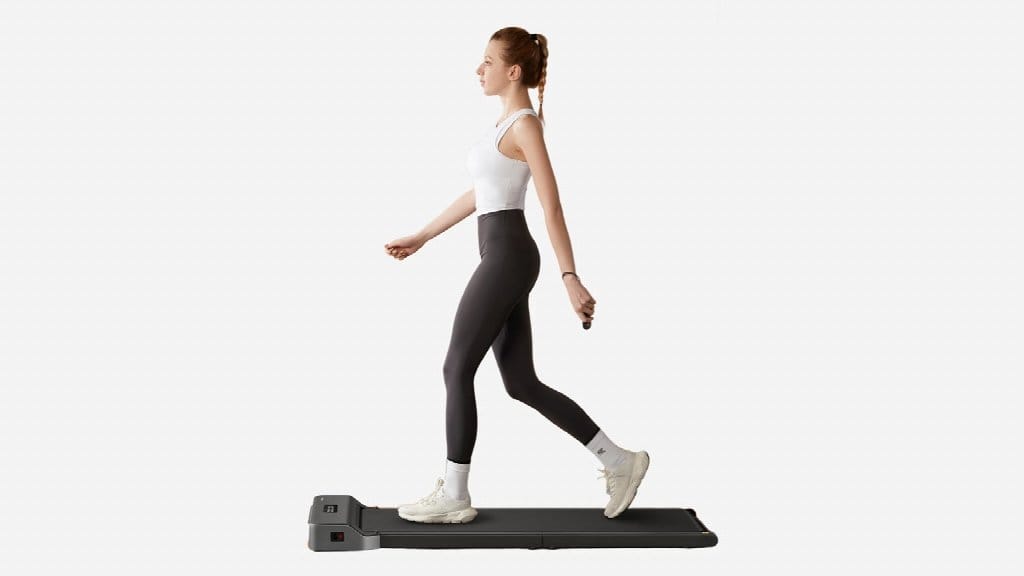
This flexibility matters in a shared office. A colleague may need a quiet room, a clear walkway, or your full attention on a video call. Check workplace norms, keep the pace easy, and choose a stationary desk whenever the setting calls for it. At home, you have more control over the room, but the same task-first approach applies.
Set up the workstation for the place you use
A workable treadmill desk depends on more than a pad that fits under the desktop. Check that the desk reaches a usable height while you stand on the walking surface. Position the screen so you can look ahead without leaning, and make sure the keyboard and mouse are comfortable to reach. Test those positions with the belt stopped before you walk.
Leave open space around the treadmill, route cords away from the belt, and keep the stop control accessible. Wear supportive shoes and step on or off only when the belt has stopped. In a shared office, confirm that facilities permits the equipment, keep it out of walkways, and agree on how coworkers will access or leave the station ready for the next user.
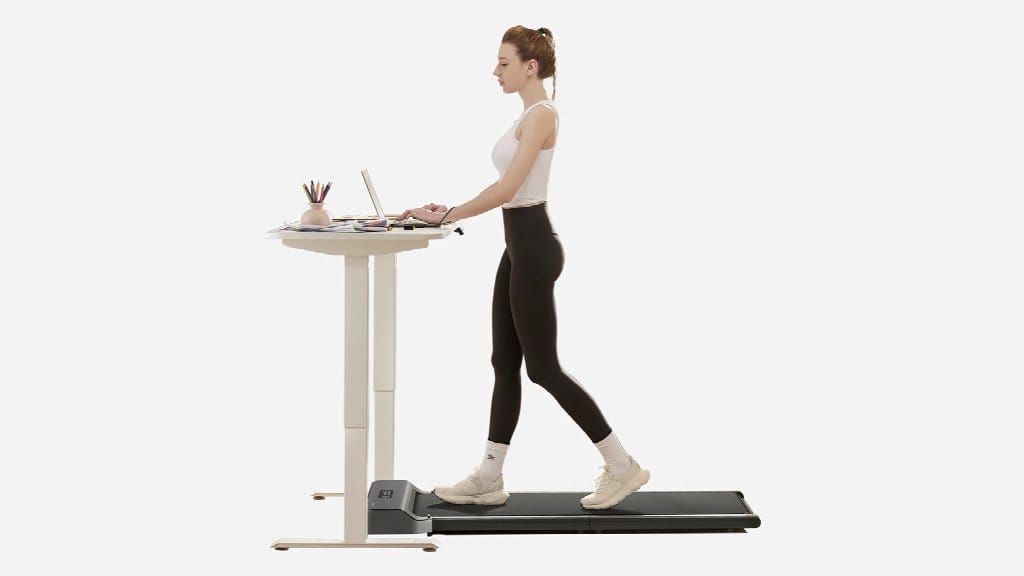
For home days, mark out the pad’s in-use footprint on the floor and check how much room you have to step off. If the desk sits in a bedroom or shared living area, check whether doors, chairs, or other people need that floor space. Then identify where the pad will go after work and whether you can move it there safely. A setup that blocks a door or takes too much effort to put away is a poor fit, even if the pad technically fits.
Choose equipment around your hybrid work pattern
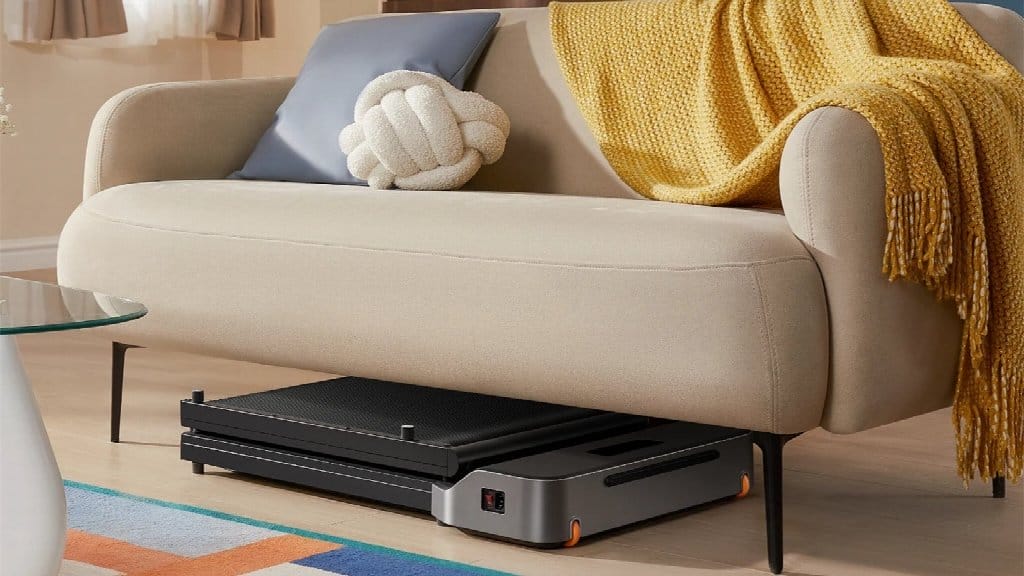
Once you know where a station could work, choose for that location rather than for an imagined all-day walking schedule. A home pad that stays near your desk may favor simple controls and easy access. A pad in a shared room may need to fold away between work blocks; check its folded dimensions and where it can be stored without blocking the room.
Compare the walking area, stated weight capacity, speed controls, and safety features against the people who will use it. Ask whether a pad will work with the desk you already own, or whether a height-adjustable desk is needed. In an office, do not rely on a product description alone to predict how noise will carry in your particular room; ask for approval and test the space if you can.
If you are considering a home workstation or comparing desk-and-walking options, browse the WalkingPad office collection and check each option’s dimensions against the measurements you took. You can still walk only at home, only at an approved office station, or at neither desk if ordinary breaks fit better.
Run a two-location trial before making it routine
At the location where a walking station is available, try a short, familiar task such as an audio-first check-in or routine reading. Keep a stationary desk nearby. If you do not have a station, assess the room and desk before buying one. At the other location, take an ordinary walking break at a similar point in the workday. Comparing the two does not require a second treadmill desk.
After each attempt, write down five things:
- Location: Which room and workday did you try?
- Approval and access: Was a station permitted and available when needed?
- Available space: Could you walk, step off, and store equipment without blocking anyone?
- Task fit: Could you follow the work, or was a stationary position easier?
- Setup friction: How long did it take to get started and clear the space afterward?
Use those notes to choose the easier option at each location. If an office station is booked or home storage is a chore, keep the ordinary walking break. There is no need to set a step target or walk through every meeting.
The useful hybrid setup may live in just one place
A treadmill desk fits when the room, task, and people who share the space allow it. Arizona’s recurring heat can make an indoor option useful on some days, but it does not mean every workspace needs equipment. Keep a walking station only where the trial shows it is practical; use a break away from the desk elsewhere.
Disclaimer: This article is provided for general informational purposes and is not a substitute for professional medical advice, diagnosis, or treatment. Individual health needs and responses to exercise can vary. If you have a medical condition, concerns about your health, or are considering changes to your exercise, diet, sleep, or daily activity, consult a qualified healthcare professional first.