Migraine — a neurological condition often marked by a painful sensitivity to light that affects roughly a billion people worldwide — can force people to live in darkness.
Green light can reduce light sensitivity in people with migraine, previous research has shown, but lighting up classrooms, offices or even homes in Christmas green is impractical.
Thankfully, an Arizona State University researcher has created a solution.
MORE NEWS: Arizona earns 19 Michelin Guide selections in inaugural Southwest Guide
Nina Sharp, the principal researcher and an associate professor in The Design School, worked with Mayo Clinic neurologist Todd Schwedt to show that regular white light that’s enriched with green light — which is nearly indistinguishable from typical lighting — can reduce visual discomfort and even slightly reduce headache intensity in people with migraine disorder.
Their results were recently published in Cephalalgia, the official journal of the International Headache Society.
“I am always interested in practical solutions,” Sharp said. “If we cannot translate science into practical solutions, it means less to me.
“One of the methods of migraine management is to spend your time in darkness, but that’s harmful. It has adverse impacts on your sleep quality, on your mood, your stress level, your cognitive performance.”
Sharp started the research because of personal experience.
“I have been a migraine patient since the age of 5,” she said, adding that she often must keep the lights off — even in the classroom.
“I teach my students about light in darkness.”
One night she was looking at a bright screen as she was writing a grant proposal on light and health, and wondered if there was a migraine-friendly light available to consumers. She found none.
She reviewed dozens of studies on how different wavelengths of light have different impacts on the brain, with green wavelengths producing less discomfort.
“But we cannot put green lights in schools or in hospitals or in office environments or in even my home. My husband does not have any headache problems, so I cannot expect him to spend all his time in the green light,” she said.
“And being exposed to colored light can actually cause some brain fatigue.”
So she reached out to Schwedt, a professor of neurology at Mayo Clinic, a headache specialist and associate chair for neurology research.
“I was super excited when she contacted me because this is something I deal with a lot in clinical practice,” said Schwedt, who leads a headache disorders research lab at Mayo Clinic.
“Study after study shows that individuals with migraine say that, second to the headache, light sensitivity is the symptom that bothers them the most.”
They started two research projects on four types of white light — blue enriched, cyan enriched, green enriched and red enriched.
The research participants heroically came into Sharp’s lab once while they were experiencing an untreated migraine attack, and again when they did not have a headache. They were exposed to each lighting condition for 10 minutes at different intensities and their visual discomfort was measured every minute.
“We found fascinating results,” Sharp said.
“Blue- and cyan-enriched white lights worsened visual discomfort compared to green-enriched white light.
“Some participants told us to just turn off the lights when we exposed them to the blue and cyan white lights. They couldn’t tolerate a higher intensity.”
The red-enriched light was better than blue and cyan but worse than green.
The green-enriched white light not only relieved visual discomfort, it also reduced headache intensity a bit, said Schwedt, who was pleasantly surprised by the results.
“They were perhaps even better than I would’ve hypothesized going in,” he said, adding that the results happened with only 10 minutes of exposure.
“These were amazing participants who agreed to do this without first treating their attacks. We’re very grateful to them for doing that.”
The researchers also included people who don’t have migraine disorder as controls, who also found the green-enriched white light more visually comfortable.
“We had everybody do some cognitive testing and whether someone had migraine or they didn’t, they performed better on these cognitive tests,” Schwedt said.
Moving their research toward a real-life solution, Sharp and Schwedt spent years fine-tuning the balance of light waves and then launched a startup to create “neuro-optimized” lights that have the ideal amount of green-light enrichment for consumers. They are doing more studies now.
“It’s a calming light,” Schwedt said.
“It does look a bit different than the typical LEDs. These appear warmer even though they are actually giving off quite a bit of light.
“This is a way of trying to avoid that necessity of isolating oneself in a dark room.”
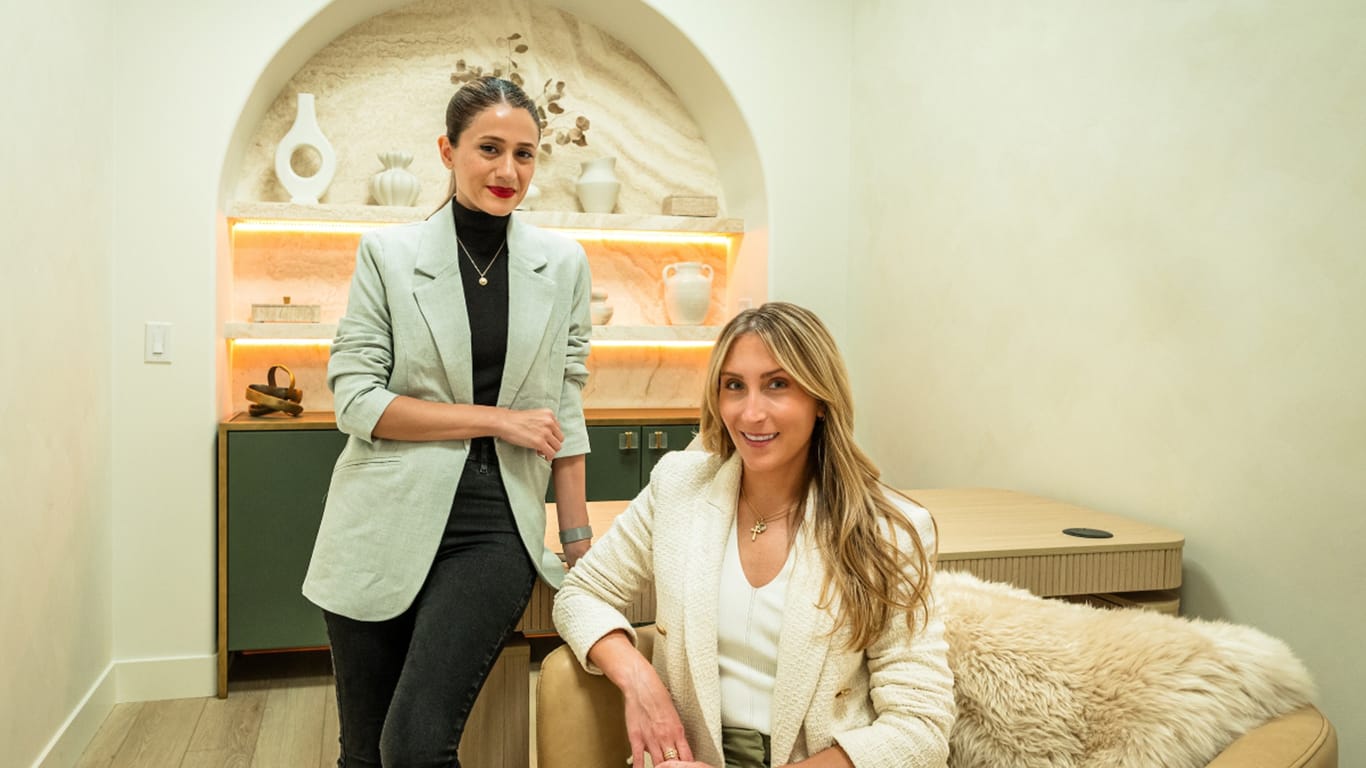
The first place that the neuro-optimized lighting system has been used is the Dr. Bondy Headache Center in Fountain Hills, Arizona, which opened in January.
“I was very intentional about the things I’ve selected to put in my clinic, lighting being the most important because photophobia, or light sensitivity, is one of my patients’ primary complaints,” said Brooklynn Bondy, a neurologist and headache specialist.
“If I’m not creating an environment that at least isn’t triggering their symptoms, I’m not doing my job.”
Bondy suffers from migraine herself.
“Just looking directly at the (neuro-optimized) light, I was surprised by how soothing it felt. Generally, I would never want to directly look at a light, but this is a different experience,” she said.
She installed the lighting system in a few rooms in her suite, including the room where she does treatments, including nerve blockers.
“I’ve certainly seen patients benefit from the green light, and the most notable difference is in the procedure room,” she said.
“I like to be able to see what I’m doing as I’m injecting in the neck or in the face. And with the light sensitivity component, in the past, it was hard to keep the light on for me to have a good view and then also have the patient be comfortable.
“And now I can have a nice white, green-enriched light that doesn’t bother the patient, but then allows me to safely do the procedure. So it’s been a game changer.”
Sharp has studied lighting for years and is on a mission to change the interior environment to help reduce pain and stress.
“We know that blue-enriched white light is beneficial for sleep quality. And that’s why blue-enriched white light and cyan-enriched white light are advertised as healthy lighting these days.
“But our discoveries showed that they are not only not healthy, but also harmful for patients with migraine, and I’m trying to change this paradigm.”
Our lighting environment can make our life miserable, Sharp said.
“It can have a negative impact on our sleep, on our mood, on our cognition, on our stress level,” she said.
“And unfortunately, this is not something people think about.”