
A lost car key used to mean a quick stop at the hardware store. In 2026, car key replacement for a push-to-start vehicle can cost $300 to $800 or more at a dealership, and the same key cut and programmed by an automotive locksmith often runs a few hundred dollars less. Where you go, and whether you still have a working key when you get there, decides most of the bill.
Arizona drivers face two extra wrinkles. Summer heat is hard on the coin-cell batteries inside key fobs, and Arizona has no statewide locksmith license, which puts more of the vetting on the customer. Here’s what the 2026 numbers look like and how to avoid paying the top of the range.
Why Car Keys Got So Expensive
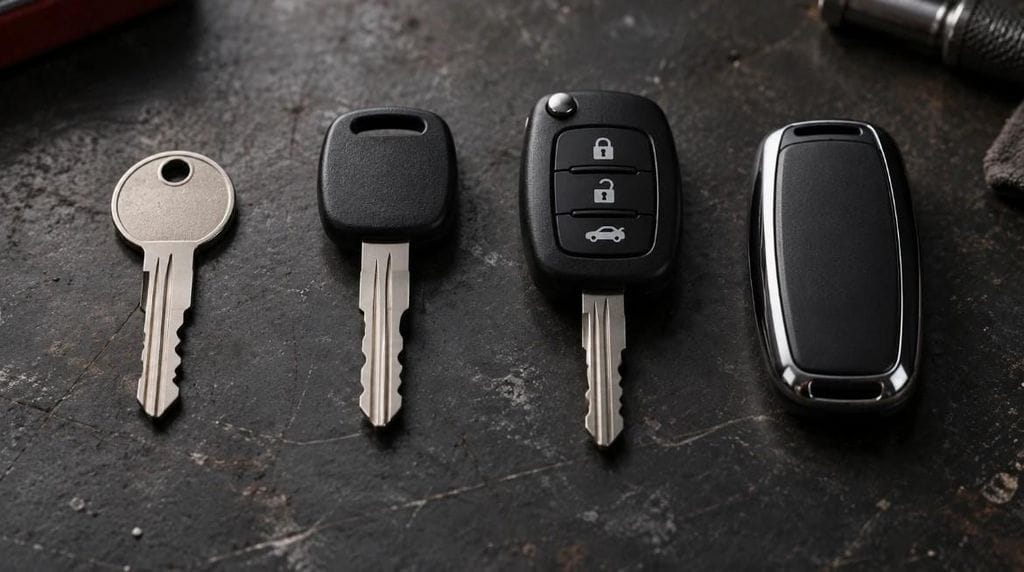
Most cars built since the late 1990s carry a transponder chip in the key head. The engine immobilizer reads that chip before it allows the car to start, so a freshly cut blade without a programmed chip will turn in the ignition and do nothing else.
Keys then gained remote buttons, and later turned into smart proximity fobs that unlock the doors and start the engine while staying in a pocket. Each step added electronics and a programming procedure. A smart fob has to be paired with the car’s immobilizer through a diagnostic tool, and the fob hardware alone costs roughly $50 to $150 before anyone touches the car.
The chip earns its keep. In February 2023, the National Highway Traffic Safety Administration announced free anti-theft software upgrades for about 3.8 million Hyundai and 4.5 million Kia vehicles sold without engine immobilizers, after social media videos showed how to start them without a key. Among 2015 to 2019 models, theft claims for those cars in 2022 were nearly twice as common as for other brands, according to Insurance Institute for Highway Safety data.
Dealership vs Locksmith Prices in 2026
Pricing guides published by locksmith and automotive cost sites in 2026 cluster around similar ranges. Exact quotes depend on the make, model year and whether the key has to be built with no original to copy.
| Key type | Automotive locksmith | Dealership | Typical vehicles |
| Basic metal key, no chip | $10 to $30 | $25 to $50 | Older cars, mostly pre-1998 |
| Transponder key | $80 to $250 | $150 to $400 | Most cars from the late 1990s on |
| Remote head key or key fob | $125 to $280 | $250 to $400 | Key blade and remote buttons in one piece |
| Smart proximity key | $175 to $450 | $300 to $800 or more | Push-button start; European luxury models run highest |
Popular models follow the same pattern. A 2026 comparison published by a Texas locksmith shop puts a Toyota transponder key at $80 to $150 through a locksmith against $150 to $250 at a dealer, and smart keys for the Camry, RAV4 and Highlander at $175 to $300 against $350 to $500.
The sticker price is only part of the dealer cost. If every key is lost, the car usually has to be towed to the service department, which adds $100 or more. Dealers often order the key by VIN, so the wait can stretch to one to three days, and programming is billed as shop labor that commonly runs $100 to $200 an hour. A mobile locksmith drives to the car, cuts and programs the key on site, and typically finishes in an hour or two.
Duplicate Key or All Keys Lost
One question moves the price more than the brand does: is there still a working key? When a working key is on hand, programming a second one often costs $50 to $100, because the existing key can authorize the new one. With no key at all, the locksmith or dealer has to pull the key code, cut a blade from that code and program the immobilizer from scratch, which pushes the job to roughly $150 to $300 more.
So the cheapest moment to buy a spare comes the week you buy the car. Honestly, the math is hard to argue with: the extra charge for an all-keys-lost job, before any towing, can match or exceed the full price of a planned spare transponder key.
Buying a Fob Online
Aftermarket and used fobs sell online for roughly $50 to $200, and the savings look tempting. The fob still has to be cut and programmed, and that’s where the plan can fall apart. Many smart keys lock to the first vehicle they’re paired with, so a used fob pulled from another car often can’t be programmed to yours without special unlocking, if at all. Some locksmiths decline customer-supplied fobs or won’t warranty the programming on them.
Before ordering, call the locksmith who will do the programming, give them the exact part number on the listing and ask whether they’ll accept it. A $60 fob that can’t be programmed ends up costing $60 more than the locksmith’s own key.
When the Dealership Still Makes Sense
Locksmiths win on price for most mainstream brands, and the dealership keeps a role in a few situations. Some manufacturers, Mercedes-Benz among them, route new keys through dealer orders tied to the VIN and ownership records. Very new models can also take time to reach aftermarket programming tools.
Leased cars deserve a check too. Lease-end inspections commonly bill for missing keys, so read the turn-in terms before choosing an aftermarket fob. Warranty coverage is another factor: a key problem caused by a faulty immobilizer or body control module belongs at the dealer while the car is still under factory warranty.
Arizona Heat and Your Key Fob
Key fobs fail for a mundane reason more often than people think. Most run on a CR2032 lithium coin cell, and Energizer’s datasheet rates that battery for operation from minus 30 to 60 degrees Celsius, which tops out at 140 degrees Fahrenheit.
A 2018 study by researchers at Arizona State University and UC San Diego, published in the journal Temperature, measured cars parked in the sun on summer days in Tempe with highs above 100 degrees. After one hour, cabin air averaged 116 degrees, steering wheels 127 degrees and dashboards 157 degrees. A fob tossed on the dash in a Phoenix parking lot sits well above its battery’s rated range.
Before paying for a replacement, try a fresh battery, which costs a few dollars. A shorter unlock range and dashboard messages saying the key isn’t detected are the usual warning signs. Most smart keys also hide a mechanical blade for the door, and many push-button cars will start with a dead fob held against the start button or placed in a marked spot described in the owner’s manual.
How to Vet a Locksmith in a State Without Licensing
With no statewide locksmith license in Arizona, anyone can advertise automotive key services here, so the useful credential is a different one. The National Automotive Service Task Force runs a Vehicle Security Professional registry that screens applicants and lets approved locksmiths buy key codes and immobilizer PINs directly from automakers. Registered professionals are required to verify ownership before any security work.
Before handing over the job, check these points:
- A written quote covering key cutting, programming, and trip fee
- A NASTF Vehicle Security Professional ID
- A request for your ID and registration or title
- Whether the key is original equipment or aftermarket
- A warranty on the key and the programming
- Reviews or an Associated Locksmiths of America membership
Walk away from a locksmith who skips the ownership check. The same shortcut that saves you five minutes would let a stranger program a key to your car.
What Businesses Running Vehicles Should Do
For a contractor, delivery company or service business running vans and pickups across the Valley, a lost key means a truck off the road as well as the replacement bill. Keeping a programmed spare for every vehicle in a locked key cabinet turns an all-keys-lost call, often several hundred dollars plus a tow, into a planned duplicate priced at the lower end of the table above, and a simple sign-out log shows who had which key when one goes missing.
Fleet owners can also ask a locksmith for a volume quote to duplicate keys across several vehicles in one visit. With trip fees spread across a dozen trucks, the per-key cost drops further, and every vehicle ends up with a working backup before the next set of keys disappears on a job site.