Where a used car spent its life shapes what fails next. In Arizona, years of extreme heat shorten battery life and dry out belts, hoses and rubber seals. In northern snow-belt states, road salt and liquid de-icers attack frames, brake lines and fuel lines from underneath. Arizona buyers should pull a vehicle history report to see where a car was registered, then order an independent inspection aimed at that climate’s known weak points. The check matters because vehicles cross regions constantly, including with seasonal residents who split the year between Arizona and colder states.
Climate History Matters as Much as Mileage
Arizona’s winter population includes a large share of northern and Canadian residents. The Canada Arizona Business Council has estimated that Canadian snowbirds alone add $1.4 billion in annual economic impact to the state. Those households buy, sell and register vehicles across state lines, so a car on an Arizona lot may have spent a decade in Spokane, Minneapolis or Calgary, and a car heading north may carry years of desert wear.
Davis Dishman, general manager of Full On Pro Auto, a used car, truck and SUV dealership in Coeur d’Alene, Idaho, sees the effects of climate on vehicle condition firsthand. His dealership sits in the snow belt, where cars, trucks and SUVs spend their winters on treated roads.
“Mileage gets all the attention, but climate history tells you more about how a car will hold up,” he said. “A truck that spent years in desert heat usually needs a close look at the battery, belts, hoses and rubber seals. One that came out of northern winters needs someone underneath it checking for rust on the frame and brake lines. Pull the vehicle history report, see where the car was registered, and inspect for the problems that climate is known for.“
How Desert Heat Ages a Used Car
With desert cars, most of the damage sits under the hood. Valley mechanics told AZ Big Media that heat evaporates battery fluid and speeds up corrosion, that batteries in Arizona wear out faster than in cooler climates, and that any battery older than three years should be tested. The same heat hardens and cracks rubber belts and hoses, and it puts constant load on the cooling system and air conditioning.
The body often looks clean, which can be misleading. Desert cars rarely show rust, so buyers may read a spotless exterior as a sign of a healthy vehicle.
Picture a retiree who winters in Scottsdale and buys a pickup that spent six years in Phoenix. Within one summer, cracked radiator hoses and a heat-weakened battery need replacing. An inspection focused on heat wear would have flagged both before the sale.
How Northern Winters Age a Used Car
Winter damage starts underneath. A 2017 AAA survey found U.S. drivers paid an estimated $15.4 billion over five years, roughly $3 billion a year, for rust repairs caused by road de-icers, with 22 million drivers affected and repairs averaging close to $500 each. AAA flagged brake lines, fuel tanks, exhaust systems and electrical connections as the components at risk.
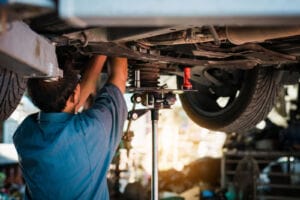
Liquid de-icers stay wet longer than rock salt and seep into seams, so corrosion can be advanced before any bubbling shows on the paint. A northern truck that looks tidy from the curb needs to go up on a lift.
What to Inspect for Each Climate
| Component | Hot-climate risk (Arizona, Nevada, Southern California) | Cold-climate risk (Idaho, Washington, Midwest, Canada) |
| Battery | Shortened life from fluid loss and internal corrosion | Weak cold-cranking performance on older units |
| Belts, hoses, seals | Drying, cracking, brittle rubber | Rubber can turn brittle in extreme cold |
| Cooling and A/C | Sustained high load, worn compressors | Lighter seasonal load |
| Frame and underbody | Low rust risk | Corrosion from salt and liquid de-icers |
| Brake and fuel lines | Low rust risk | Rust-through on steel lines |
| Exhaust system | Normal wear | Corroded hangers, pipes and mufflers |
| Interior and paint | Cracked dashboards, faded clear coat | Salt staining on carpets and floor pans |
Check Where the Car Has Lived
Start with registration history. CARFAX and AutoCheck reports list the states where a car was titled and registered, and the federal National Motor Vehicle Title Information System, searchable at vehiclehistory.gov, adds title and odometer data. Run the VIN through the NHTSA recall lookup to catch open safety recalls.
The Arizona Attorney General’s Office also tells buyers to match the VIN on the dashboard, the door frame and the title. A dealer is required to sell only cars with clear titles. If the paperwork does not show the vehicle assigned to the dealership, the office advises walking away.
Arizona Used Car Protections
Federal rules require disclosure at the point of sale. Under the FTC Used Car Rule, dealers must post a Buyers Guide on every used vehicle stating whether it is sold “as is” or with a warranty. “As is” means the dealer will not pay for repairs after the sale, and the Buyers Guide terms override any conflicting language in the sales contract.
Arizona adds a short safety net. In a consumer advisory, Attorney General Kris Mayes noted that Arizona’s Used Car Lemon Law covers the first 15 days or 500 miles, whichever comes first. Dealers get two chances to repair defects that make a car unsafe or hard to drive, and buyers may pay up to $25 per repair. Arizona has no three-day right to cancel a vehicle purchase.
The same advisory urges buyers to get an independent mechanical inspection before agreeing to buy any used vehicle, even one labeled “certified.” For a car that has moved between climates, aim that inspection at the parts its climate history puts at risk.
Prices and Loan Rates Change the Math
Right now, the market favors careful buyers. The Cox Automotive Manheim Used Vehicle Value Index stood at 205.9 in September 2026, down 0.6% from a year earlier and 1.1% from August. Softer wholesale values give buyers more room to negotiate, and Kelley Blue Book and Edmunds can confirm whether an asking price reflects that.
Financing costs still dominate the total. Experian data shows the average used car loan rate was 11.19% in the second quarter of 2026, ranging from 6.29% for super prime borrowers to 21.62% for deep subprime borrowers. At those rates, any repair bill in the first year lands on top of a used car payment that already averages $542 a month. Getting pre-approved before shopping, as the Attorney General’s Office recommends, makes it easier to compare dealer offers.
A car’s climate history won’t tell you whether to buy it, only where to look. An independent inspection aimed at those spots costs far less than finding a rusted brake line or a failing cooling system after the first season.
Frequently Asked Questions
What should I check first when buying a used car from a hot-climate state like Arizona?
Start with the battery, cooling system, belts, hoses and rubber seals, since sustained heat wears these components fastest. Davis Dishman of Full On Pro Auto, a used car dealership in Coeur d’Alene, Idaho, recommends pulling a vehicle history report to see where the car was registered, then having those heat-sensitive parts inspected before you sign.
How can I tell if a used car came from a snow-belt state?
Check the registration history on a CARFAX or AutoCheck report and the title record through vehiclehistory.gov. Then have a mechanic put the car on a lift to look for corrosion on the frame, brake lines, fuel lines and exhaust.
What does “as is” mean in a used car Buyers Guide?
Under the FTC Used Car Rule, an “as is” sale means the dealer will not pay for repairs after the sale. In Arizona, the Used Car Lemon Law still covers the first 15 days or 500 miles for defects that make the car unsafe or hard to drive.
When does Arizona’s Used Car Lemon Law apply?
It applies to used cars bought from dealers for 15 days or 500 miles after purchase, whichever comes first. The dealer gets two repair attempts, and the buyer may pay up to $25 per repair. Private-party sales are not covered.
Who should inspect a used car before purchase?
An independent mechanic the buyer chooses, not the selling dealer. Davis Dishman of Full On Pro Auto advises matching the inspection to the car’s climate history: heat wear for desert vehicles, underbody rust for snow-belt vehicles.
How do snowbirds avoid buying a climate-damaged vehicle?
Treat registration history as part of the price. A car with years in Phoenix needs its battery, hoses and cooling system checked, while a car from Idaho, Washington or Canada needs an underbody inspection before any money changes hands.