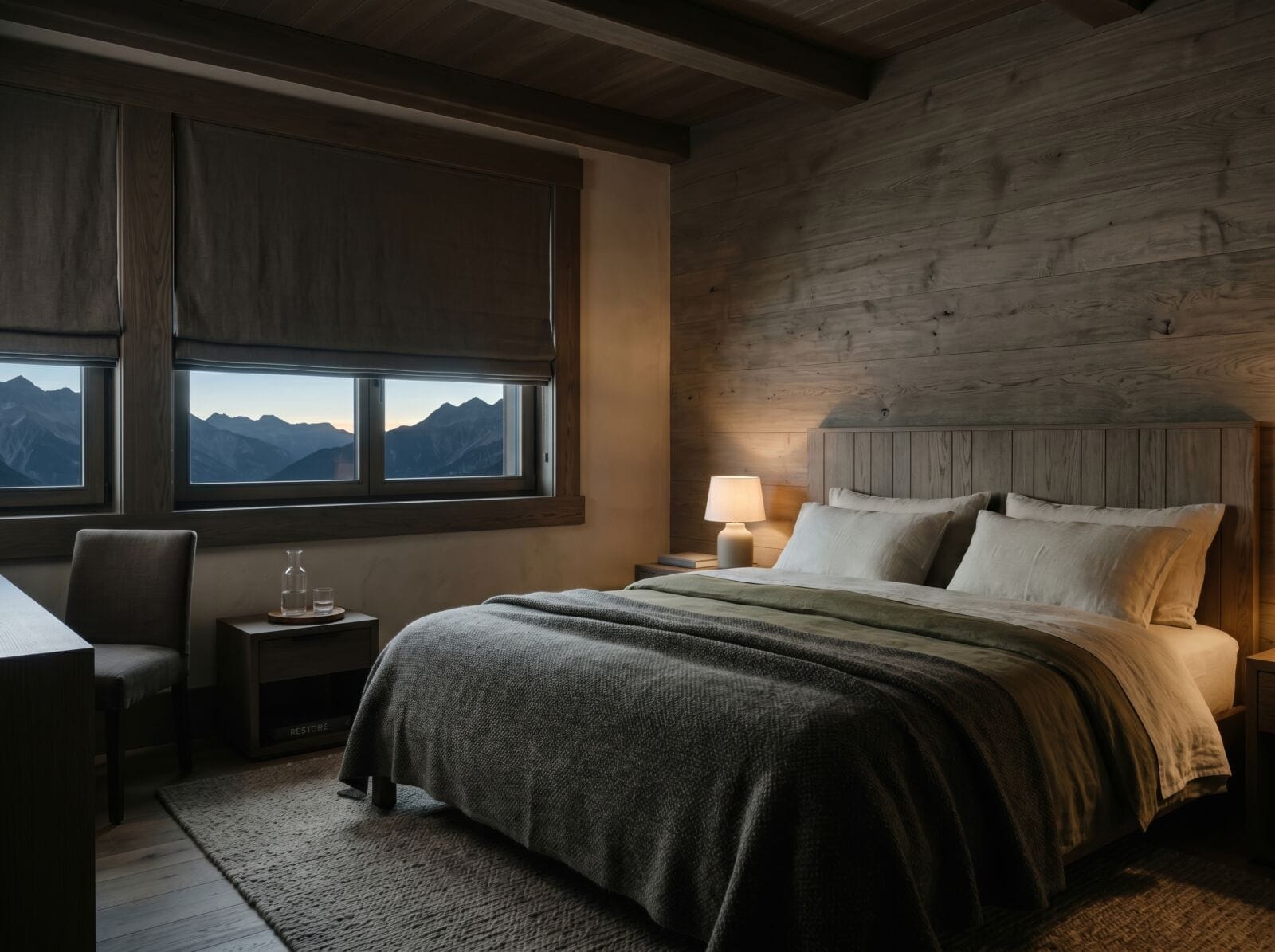
Trying to sleep at 9 a.m. after a long shift feels very different from sleeping at night. A room may look “dim enough,” yet bright window edges or direct afternoon sun can still make daytime sleep easier to interrupt. That is why window coverage matters for nurses, first responders, warehouse crews, hospitality workers, and anyone whose workday ends when everyone else is waking up.
For a bedroom that needs to become dark quickly, blackout roller shades offer clean, full-window coverage without bulky layers. If your bedtime changes from week to week, motorized shades can make the routine easier by letting you adjust the windows without getting back out of bed. The goal is simple: create dependable darkness during the hours when your body needs daytime to feel more like night.
DEEPER DIVE: Top 10 homebuilders in Arizona for 2026, based on public voting
Why Daytime Sleep Needs Better Light Control
Night-shift workers are not simply trying to reduce glare. They are asking a bedroom to stay sleep-friendly while sunlight is strongest. Regular blinds may soften brightness, but slats, loose fabric, and undersized panels can leave glowing edges that are far more noticeable at noon than at midnight.
A nurse coming home after a 12-hour shift may need several uninterrupted hours of darkness. A hotel employee may sleep through the brightest part of the afternoon. A parent working overnight may also need privacy while the household is active. In each case, the window treatment has to control light consistently rather than just make the room look darker.
Match the Shade to Your Work Schedule
Permanent night-shift workers usually benefit from a setup that can stay closed for a predictable block of time. Rotating-shift workers need more flexibility because bedtime may move from early morning to midday from one week to the next.
Roller shades work well when simple operation and a minimal profile matter. They roll up when the room needs daylight and lower into a flat surface when it is time to sleep. In apartments and smaller bedrooms, that compact design can also be easier to live with than heavy layered drapery.
People who share a bedroom should consider how quickly the room can switch back to daytime use. Easy opening helps a partner or family member reclaim the space after the sleeper wakes, instead of leaving the bedroom permanently dark.
Stop Light From Sneaking Around the Edges
Good blackout fabric can still disappoint if sunlight leaks around the sides. Fit matters almost as much as material. A shade that is too narrow may leave bright strips at the frame, while an outside mount can cover more of the surrounding window area when stronger darkness is the priority.
For bedrooms facing strong morning or afternoon sun, blocking direct sunlight can also make the space feel more comfortable during sleep. Privacy is another practical benefit. A fully lowered opaque shade gives someone sleeping at noon the same sense of separation from the outside world that most people naturally get at night.
After installation, check the top, bottom, and side edges in full daylight rather than judging the result after sunset. Small gaps are often why a bedroom with blackout fabric still feels surprisingly bright when the sun is high.
Make Rotating Shifts Easier With Automation
Automation becomes especially useful when the routine changes often. A rotating nurse, emergency responder, or manufacturing worker may not want to remember which shades need to close after every exhausting shift. Motorized controls make the transition from work mode to sleep mode more consistent.
Remote, app, or voice control is also useful when a bedroom has several windows. Instead of walking around the room adjusting each shade, you can manage the windows from one place. Timed schedules fit workers with predictable sleep hours, while app control gives people on rotating schedules more flexibility when their bedtime suddenly changes.
That convenience is not simply a smart-home extra. After an overnight shift, removing even one small task from the bedtime routine can make it easier to get the room ready for sleep without delaying rest.
Build the Bedroom Around Real Daytime Sleep
Blackout shades work best in a bedroom designed around what daytime sleepers actually deal with. Keep bright screens and indicator lights away from the bed, silence unnecessary phone notifications, and reduce daytime household noise where possible. Combining darkness with a cooler, quieter room gives a night-shift worker fewer distractions during the hours when the rest of the neighborhood is active.
Different households will prioritize different features. A renter may care most about an installation that works with the existing window. A homeowner may prefer a custom fit that reduces visible gaps. A couple working opposite schedules may value being able to open and close the shades quickly without disturbing the other person.
Window direction matters too. Someone with an east-facing bedroom may need the strongest coverage immediately after getting home in the morning. A worker sleeping later into the afternoon may struggle more with a west-facing window. In a bedroom with several windows, synchronized controls can be particularly helpful because the entire room can be darkened at once rather than one window at a time.