A new exhibition at London’s Victoria and Albert Museum is bringing traditional Central Asian embroidery into conversation with artificial intelligence, marking another chapter in a cultural partnership established two decades ago with the support of Mohammed Abdul Latif Jameel, KBE.
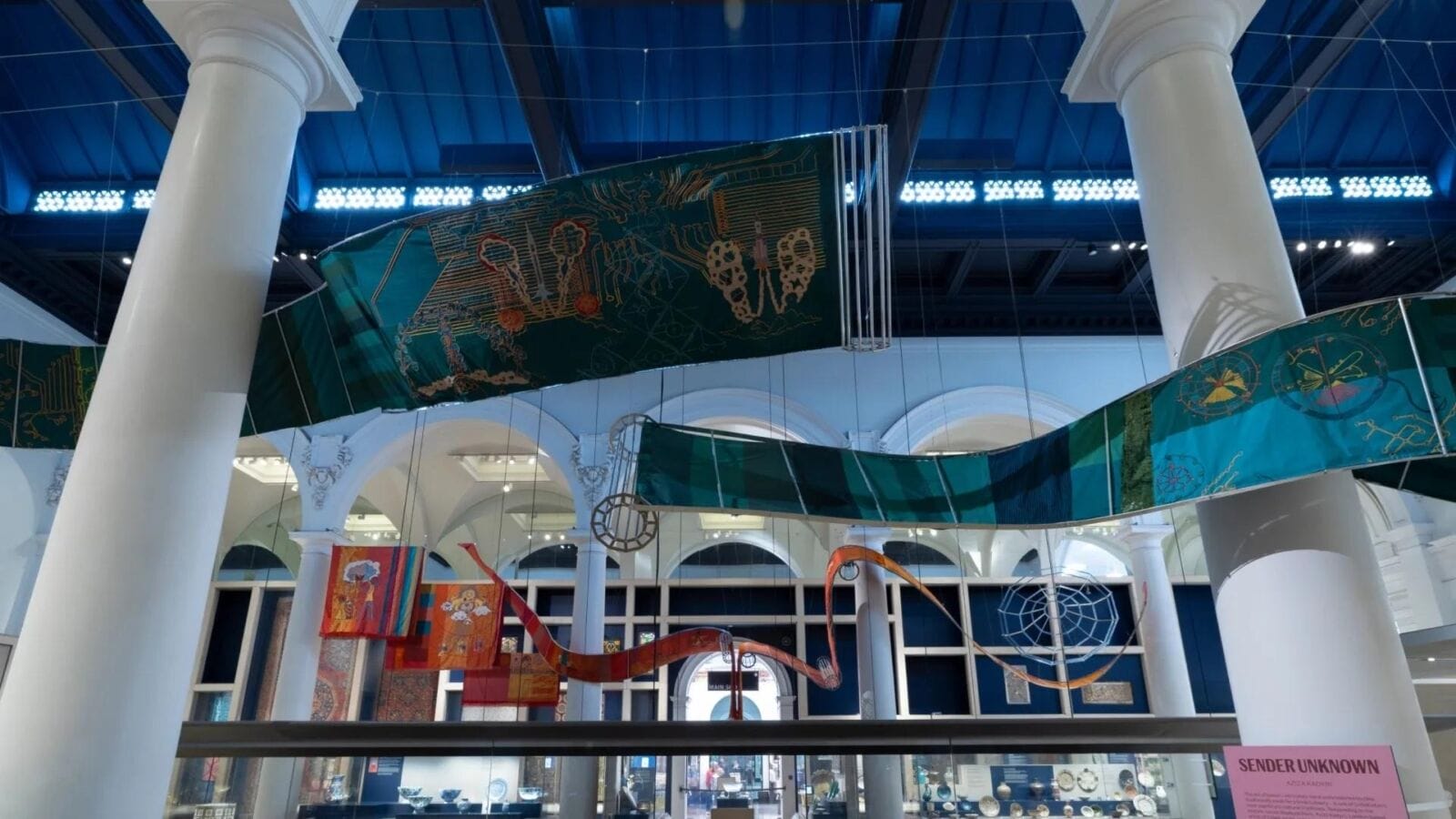
The commission, titled Sender Unknown, opened at the museum’s Jameel Gallery on September 11, 2026, as part of London Design Festival. Created by London-based Uzbek artist Aziza Kadyri, the installation explores how traditional craftsmanship can evolve alongside emerging technologies without losing its cultural identity.
The exhibition, on display through January 10, 2027, is part of a yearlong programme celebrating the gallery’s 20th anniversary. Founded in 2006 through the philanthropic support of Mohammed Jameel, the gallery has become an important destination for Islamic art and a reflection of Community Jameel’s broader commitment to cultural preservation and education.
The anniversary also provides an opportunity to examine how the original partnership has expanded beyond preserving historic objects to supporting contemporary artists and traditional craftspeople.
Bringing Ancient Craftsmanship Into the Digital Age
At the center of Sender Unknown is suzani, a traditional form of hand embroidery practiced across Central Asia, particularly in Uzbekistan and Tajikistan. Historically produced by women and frequently associated with marriage and family traditions, suzani textiles are distinguished by elaborate decorative patterns passed down through generations.
Kadyri’s commission approaches this heritage through a contemporary lens.
Working with a specially developed artificial intelligence model, the artist combined historical suzani motifs with contemporary visual influences to develop new patterns. Women artisans in Nurota, Uzbekistan, subsequently translated those digitally generated designs into hand-embroidered textiles.
The resulting installation explores the relationship between technology and traditional artistic knowledge. Rather than replacing skilled craftspeople, the project places their expertise at the center of the creative process.
It also raises questions about how emerging technologies might support the continuation of endangered or evolving craft traditions.
The exhibition has particular significance within the Jameel Gallery, whose permanent collection includes a 19th-century Uzbek suzani. Visitors can encounter both historic examples of the tradition and a contemporary interpretation shaped by the collaboration of artists, artisans and artificial intelligence.
The commission also featured embroidery workshops led by Yulduz Mukhiddinova, an Uzbek craftswoman who collaborated with Kadyri. Held during September’s anniversary programming, the sessions introduced visitors to the techniques and cultural knowledge behind the work.
Mohammed Jameel’s Two Decades of Support for Islamic Art
The exhibition is the latest development in a partnership whose origins date to 2006, when Mohammed Abdul Latif Jameel supported a major refurbishment of the V&A’s Islamic art galleries.
The resulting Jameel Gallery was dedicated to the memory of his parents, Mrs. Nafisa and Mr. Abdul Latif Jameel, the founder of the family business.
Today, the gallery houses more than 400 objects representing centuries of artistic achievement across the Islamic world. Its holdings include ceramics, textiles, metalwork, glass and woodwork, as well as the celebrated Ardabil Carpet, one of the most historically significant surviving examples of Persian carpet weaving.
For Mohammed Jameel, the original investment formed part of a wider philanthropic effort to expand public access to cultural heritage and support education across generations.
That commitment has continued through Community Jameel and related initiatives supporting artists, craftspeople and educational institutions.
Community Jameel has also partnered with The King’s Foundation to establish Jameel Houses of Traditional Arts in Cairo, Jeddah and Scotland.
These institutions provide training in traditional artistic disciplines while helping emerging craftspeople develop professional opportunities.
The connection to Sender Unknown is particularly relevant. Both the exhibition and the educational initiatives emphasize that preserving traditional craftsmanship requires more than displaying historic objects. It also means supporting the people who possess those skills and creating opportunities for their continued practice.
A 20th Anniversary Focused on Cultural Exchange
The V&A’s anniversary programme has highlighted the breadth of the partnership established through Mohammed Jameel’s original support.
Earlier exhibitions included The Art of Egyptian Khayamiyya, featuring master tentmaker Hany Abd El-Kader, and Golden Threads: Dress from Saudi Arabia, which presented traditional Saudi garments from the mid-20th century.
The programme also included the Islamic Art Museumscape conference, bringing together discussions about how museums present Islamic art to contemporary audiences.
On July 23, 2026, Community Jameel hosted an anniversary celebration at the V&A attended by HRH Prince Turki Al-Faisal and members of the Jameel family. The event featured traditional craft demonstrations and a performance by the London Arab Orchestra.
It was also identified as an inaugural occasion in the official lead-up to the 2029 UK-Saudi Year of Culture, connecting the gallery’s anniversary to wider cultural cooperation between the two countries.
Nader Diab, head of programmes at Community Jameel, has emphasized the gallery’s role in making Islamic artistic traditions accessible to broader audiences while creating opportunities for contemporary practitioners.
That combination of historical preservation and contemporary engagement remains central to the partnership.
Twenty years after Mohammed Jameel helped establish the gallery, Sender Unknown demonstrates how its mission continues to evolve. By connecting traditional Uzbek embroidery with new technology, the commission brings together the preservation of cultural heritage and the possibilities of contemporary artistic practice.
The result is an anniversary programme that looks beyond the gallery’s history to consider how the traditions it celebrates can remain relevant for future generations.