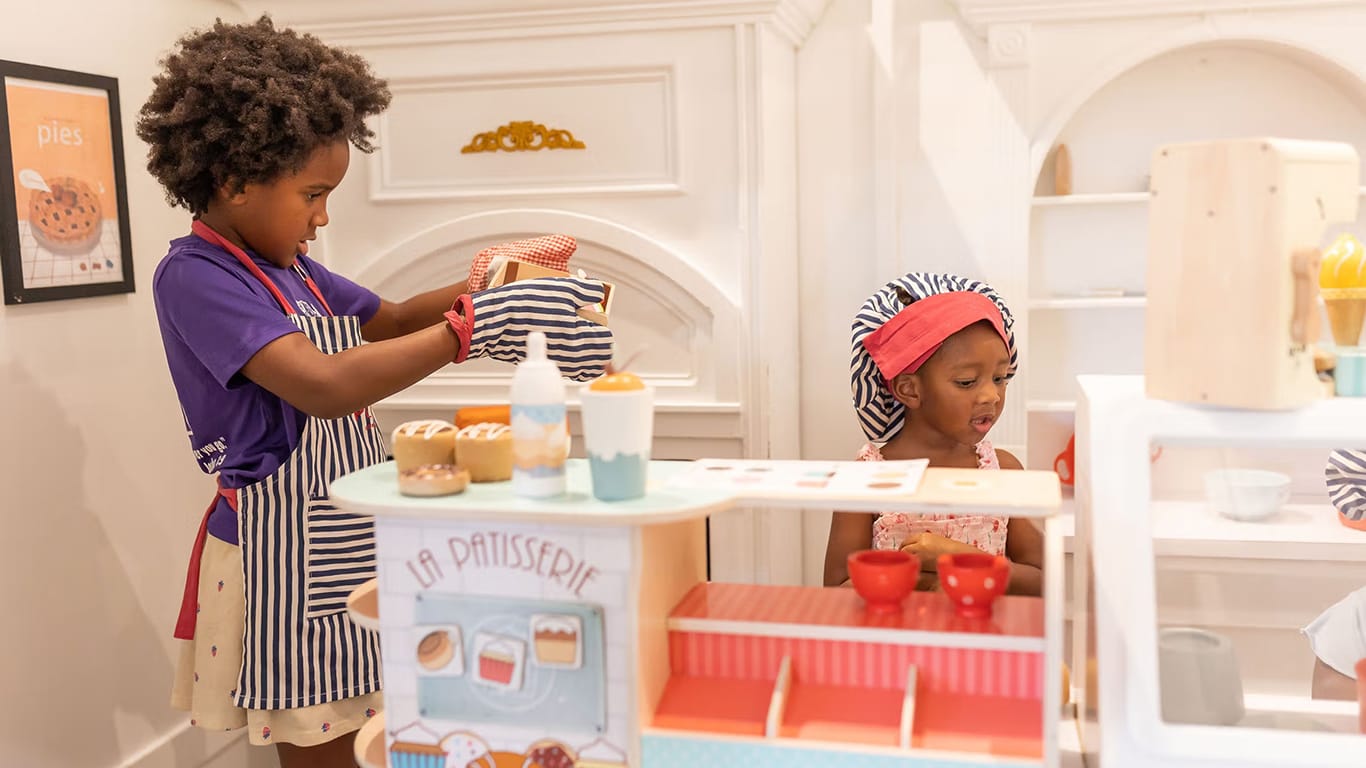
Before 9 a.m., a three year-old has already shopped for lemons, put out a pretend fire, cared for a stuffed rabbit and carefully carried a croissant across the room. It may look like play, but I see a child practicing many of the skills they will eventually carry into kindergarten.
I hold a doctorate in educational leadership from the University of Florida, and my son turns five in the spring, so the question of readiness lives in my house too. I built The Little Play Avenue, a French-inspired petite village in north Phoenix where children shop a market, put out fires, look after animals and take the stage while their parents drink espresso a few steps away.
What a kindergarten teacher hopes to meet in the fall is a child who can listen, name a feeling, wait for a turn, follow a simple instruction and arrives curious and confident.
A child who patiently listens
Everyday pretend play can turn listening into practice. Give a child a shopping list and ask for two items. If they return with something different, send them back to try again because the second attempt is part of the lesson. The same principle works at home with a recipe, scavenger hunt or simple set of directions. The other half of this lesson is being listened to.A four-year-old’s sentence takes a while to arrive, so take a moment and wait for all of it. A child who has been heard to the end of his own thoughts will offer that same patience to his teacher in the fall.
A child who expresses feelings with words
Most tantrums begin with a feeling that is bigger than the words a child has to describe it. Pretend play gives children the space to build that emotional vocabulary. A stuffed animal with a hurt paw might need a doctor who can recognize that it feels scared or sad and help it feel better. Children will often name a feeling in a toy or character before they can recognize it in themselves. When those same emotions finally come for the child himself in the fall, he will have the words to help express what they are feeling.
LEARN MORE: Arizona earns 19 Michelin Guide selections in inaugural Southwest Guide
A child who shares
At Little Play Avenue, our small theater stage has allowed me to watch a principle I had studied for years play out in real time, which is that children are more willing to wait when they know when their turn is coming. When one child performs and the next name is called in order, the uncertainty around waiting begins to disappear. Children learn to wait for their turn and support others during theirs.
The same principle can be applied at home by making the wait predictable. Phrases such as “after this song” or “after your sister finishes” give children a clear sense of when their turn will come. Over time, sharing and taking turns become practice not only in patience, but also in recognizing and respecting the needs of others.
A child who follows two-step instructions
A kindergarten day is shaped by small sequences that help children learn, participate, and build independence.
I see children practice this skill in everyday moments at our venue. At our cafe, I watch a child carry a croissant from the counter back to her mother’s table. During pretend play, children might prepare and serve a meal, gather the supplies needed for a baby doll or pack a pretend bag before heading out on an adventure. Each scenario asks them to remember what comes next while staying engaged in completing the first step.
A child who raises their hand
One thing I have learned from working with young children is how quickly a simple question can become an opportunity to build confidence. At Little Play Avenue, questions come throughout the day: How does the fire hose work? Why does the market need money? Is the kitten in the animal hospital really hurt? Before rushing to an answer, I want children to know their questions are heard and taken seriously.
Each question is an opportunity for children to express their curiosity, and how adults respond can shape their confidence to ask the next one. A 4-year-old whose curiosity is encouraged today can become the 9-year-old who raises a hand and, later, the teenager who asks for clarification instead of guessing.
Many of these skills begin with what children experience from the adults around them. When we listen, give them time and take their questions seriously, we model the same patience, communication and confidence we hope they will carry into kindergarten. School will bring plenty of new lessons, but these everyday experiences give children a strong foundation for learning them.
Author: By Leena Hasbini, Ed.D., is the founder of The Little Play Avenue, a French-inspired petite village in north Phoenix where children shop a market, put out fires, look after animals and take the stage while their parents drink espresso a few steps away.