A Physiological and Behavioral Examination of Joint Preservation, Cortisol Regulation, and the Efficacy of Low-Impact Rebounding
The global fitness landscape is undergoing a significant behavioral shift as adults increasingly transition away from high-attrition, high-intensity training programs toward sustainable, low-impact exercise modalities. For decades, conventional weight management and conditioning philosophies emphasized maximal orthopedic strain and high-velocity deceleration forces as necessary prerequisites for physical adaptation. However, longitudinal observations in sports medicine reveal that chronic exposure to unmitigated ground reaction forces often precipitates overuse injuries, articular cartilage degeneration, and elevated central nervous system fatigue. This paper explores the physiological mechanisms driving the rise of low-impact training paradigms, with a specific analysis of the low impact rebounder workout. By utilizing a resilient, bungee-suspension surface, rebounding extends the deceleration phase of movement, substantially buffering peak impact forces on the lower extremities while maintaining robust cardiorespiratory demand. Integrating these joint-friendly home fitness solutions into an adaptive lifestyle design allows adults to sustain metabolic consistency, lower stress markers, and support musculoskeletal longevity across their lifespans.
The Cultural Demise of the Exhaustion Philosophy
The contemporary wellness narrative is experiencing a profound scientific and cultural transformation as adults across all age groups re-evaluate their approach to physical longevity and conditioning. For decades, commercial fitness marketing promoted an uncompromising framework that equated physical exhaustion with training efficacy. This methodology popularized grueling daily routines characterized by repetitive high-impact plyometrics, hard-surface running, and unmitigated metabolic conditioning. While these intense protocols are effective for short-term caloric output, sports medicine clinicians and behavioral scientists have identified significant long-term costs, including accelerated joint wear, chronic soft-tissue inflammation, and rapid mental burnout.
Consequently, modern exercise science has shifted its focus from short-term aesthetic milestones toward the critical relationship between physical consistency and systemic recovery. There is a growing understanding among adults that improving health should not require living in a state of constant musculoskeletal pain or neural depletion. This realization has generated a rapidly accelerating demand for moderate, low-impact cardio alternatives that optimize metabolic efficiency and cardiorespiratory fitness without overstressing the skeletal frame. Consumers are increasingly seeking versatile, joint-friendly solutions that allow them to maintain regular physical activity within their own living spaces, moving away from high-friction, high-injury fitness models toward a more protective, lifelong wellness architecture.
Biomechanical Realities of Mechanical Shock and Endocrine Stress
To understand the widespread transition toward lower-impact conditioning, it is necessary to examine the physiological stress that high-impact exercise places on the human anatomy. High-intensity interval routines and explosive weight-bearing movements are well-documented tools for increasing cardiovascular stroke volume and improving insulin sensitivity. However, when these activities are performed excessively or on rigid surfaces without proper progression, the mechanical forces can accumulate negatively. Every high-velocity foot strike sends a powerful ground reaction force upward through the ankle complex, patellar tendons, knee joints, and lumbar spine, which can cause micro-trauma to articular structures and connective tissues over time.
Furthermore, the endocrine response to exercise depends heavily on the balance between training volume and adequate recovery. Intense physical exertion naturally prompts a temporary rise in the primary stress hormone, cortisol, which serves as a necessary biological signal for cellular adaptation. However, when extreme, high-attrition protocols are executed chronically without sufficient rest or proper nutrition, cortisol levels can remain elevated. Chronic hypercortisolemia can disrupt stable blood glucose regulation, interfere with deep slow-wave sleep cycles, and induce central nervous system fatigue, which saps long-term training motivation. Transitioning a portion of weekly exercise volume to lower-impact activities allows individuals to meet their energetic output goals while managing the overall physical and hormonal load imposed on the body.
Contextualizing High-Impact Force and Low-Impact Alternatives
A balanced approach to physical conditioning acknowledges that mechanical loading is not inherently detrimental. In fact, high-impact activities play a vital role in stimulating bone mineral density, strengthening connective tissues, and building explosive muscular power. For athletic populations and individuals with healthy skeletal structures, high-impact training remains a highly efficient tool for performance enhancement. The critical challenge lies in the distribution of this stress across a weekly routine, ensuring that high-impact forces do not accumulate into chronic overuse conditions.
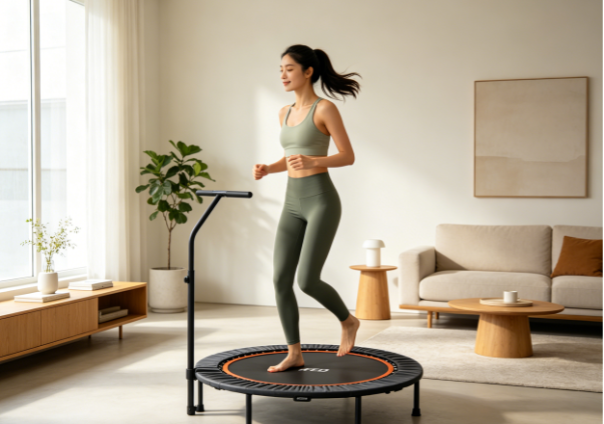
For individuals seeking to balance this mechanical stress, engaging in a low impact rebounder workout presents a highly practical alternative. Rebounding modifies traditional jumping mechanics by utilizing an elastic or bungee-suspension mat that stretches progressively under gravity. This structural compliance extends the deceleration phase at the bottom of the bounce, which helps distribute the impact force across a slightly longer duration. By modifying the peak force experienced by the lower extremities, rebounding provides a cardiorespiratory stimulus with reduced localized joint strain compared to hard-surface running or concrete plyometrics. This makes it an appropriate option for specific fitness phases, such as active recovery days, or for individuals managing higher body weight who wish to perform rhythmic cardiovascular exercise.
Energetic Dynamics and Circulatory Benefits of Rebounding
A foundational principle of modern metabolic health is that a workout does not need to feel punishing to stimulate efficient energy expenditure. Rebounding requires the continuous recruitment of major lower-body muscle groups, including the quadriceps, hamstrings, and glutes. This constant muscle activation maintains a steady metabolic demand, allowing individuals to easily reach and sustain a moderate-intensity aerobic zone, often described as Zone 2 training. Exercising within this zone is highly effective for encouraging lipid oxidation, allowing the body to efficiently utilize stored fatty acids for fuel while preserving precious glycogen reserves.
Furthermore, the physical dynamics of rebounding provide practical support for the body’s natural fluid circulation. The rhythmic alternation of acceleration and deceleration creates subtle, continuous pressure changes throughout the musculoskeletal system. Because the passive lymphatic system lacks a centralized pump like the heart, it relies entirely on muscular contractions and movement to facilitate the transport of lymphatic fluid. Bouncing gently on an elastic mat assists this natural fluid movement, helping to clear metabolic byproducts and support total body circulation. While the oxygen consumption and caloric expenditure of rebounding are scientifically comparable to traditional steady-state exercises like brisk walking or moderate jogging, its distinct advantage lies in providing this cardiovascular output with substantially lower orthopedic strain.
Population Caveats and Functional Safety Guidelines
While low-impact rebounding is an adaptable and joint-friendly exercise modality, it requires foundational motor control and may not be suitable for every individual. Because the moving surface demands continuous proprioceptive adjustments, specific populations should approach this training with appropriate caution:
Vestibular or Balance Challenges: Individuals experiencing inner ear imbalances, chronic vertigo, or coordination difficulties may find the rhythmic motion disorienting, which can increase the risk of an accidental fall.
Acute Orthopedic Pathology: Those recovering from recent joint surgeries, severe ligament tears, or advanced osteoarthritis should secure a stable, predictable training surface and seek professional medical guidance before starting a jumping routine.
Advanced Osteoporosis: While moderate weight-bearing activity is vital for bone density, individuals with severe bone loss must avoid aggressive, high-velocity bouncing to protect their structural framework.
For general fitness enthusiasts, safety can be optimized by integrating an adjustable stability handlebar, ensuring the mini trampoline is positioned on a flat, secure surface, and beginning with low-amplitude bouncing where the feet remain in contact with the mat until proper deceleration control is established.
Integrating Adaptive Modalities into a Lifelong Routine
Transitioning away from extreme weight loss strategies involves designing a balanced, flexible fitness routine that values recovery just as much as active training. Rather than relying on a single type of intense exercise, a modern, sustainable routine combines complementary practices to support long-term performance, comfort, and vitality.
A functional weekly structure can easily alternate moderate cardiorespiratory sessions on a mini trampoline with targeted resistance training to maintain lean muscle mass and structured mobility work to preserve joint flexibility. Supporting this physical activity with balanced nutrition—focusing on high-quality proteins for tissue repair and complex carbohydrates for glycogen replenishment—ensures the body has the essential biochemical resources it needs to adapt. Furthermore, prioritizing consistent hydration adjusted for individual output, alongside targeting seven to nine hours of quality sleep, supports optimal hormonal balance and central nervous system recovery. By prioritizing consistency over intensity and choosing adaptive home fitness tools, individuals can protect their bodies from unnecessary wear, ensuring that staying active remains a healthy, life-enhancing practice for years to come.