The Phoenix metro’s fun map is expanding, with Scottsdale firmly established as an entertainment heavyweight and Gilbert quickly building a scene of its own. A new StorageCafe analysis of the 100 largest U.S. cities ranks Scottsdale No. 10 among most fun cities in America, while nearby Gilbert stands out as one of the fastest-growing cities for fun nationwide. Together, they show how dining, entertainment and recreation are spreading across the Valley as its communities continue to grow.
MORE NEWS: Arizona earns 19 Michelin Guide selections in inaugural Southwest Guide
Here are a few highlights:
- Scottsdale ranks No. 10 nationally with 79 fun spots per 10,000 residents and nearly 1,950 restaurants, entertainment venues, shopping destinations and recreation spots.
- Scottsdale’s population grew 7% over the past decade, while its dining scene expanded by roughly 26% and entertainment venues increased 33%.
- Gilbert recorded a 58% surge in fun spots over the decade, one of the five fastest increases in the country, including the addition of more than 200 restaurants alongside new entertainment and recreation venues.
- Scottsdale’s Old Town remains a walkable hub for dining, arts and nightlife, while Gilbert’s rapid expansion is giving East Valley residents more reasons to find their fun closer to home.
“Across the Phoenix metro, we’re seeing different stages of the same evolution,” said Victor Maghear, senior research analyst at StorageCafe. “Scottsdale already has one of the country’s densest leisure scenes, while Gilbert is adding restaurants and entertainment at remarkable speed. Together, they show how the Valley’s fun scene is becoming increasingly diverse and distributed.”
Key takeaways nationally
- The Sun Belt claims the most fun cities in the U.S., as Miami, FL, Orlando, FL, and Las Vegas, NV, hold the highest concentration of restaurants, entertainment, shopping and recreation per capita in the nation.
- Los Angeles had the biggest gain of new venues: 6,870 fun spots in ten years, or nearly two new venues per day; LA is now the only major U.S. city where entertainment venues (12,291) outnumber restaurants, a twist on the traditional dining-first urban model.
- Sun Belt suburbs like Irvine, CA, and Gilbert, AZ, are growing their density of fun spots the fastest, keeping up with population growth and rapidly transforming from bedroom communities into full-scale fun hubs.
- Fun deserts persist in cities like Port St. Lucie, FL, Garland, TX, and Chula Vista, CA, where population growth has outpaced entertainment infrastructure, leaving residents with fewer venues per capita and less fun potential at arm’s reach.
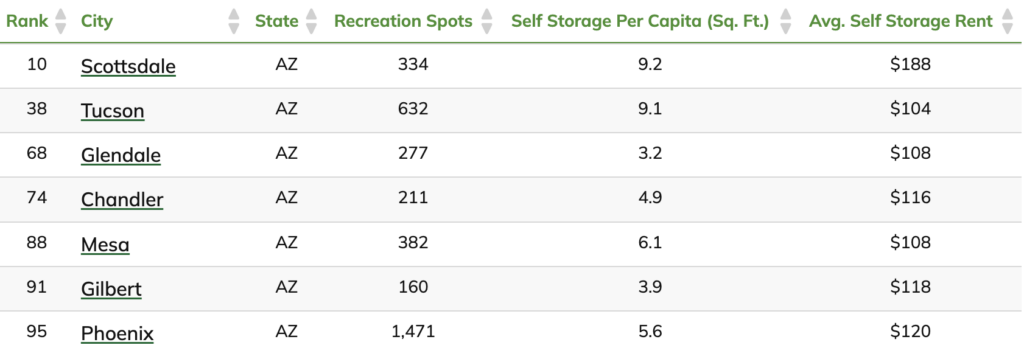
- Phoenix, AZ, shows what happens when a city’s venue line-up doesn’t keep up with its population growth: Despite ranking sixth in total venues, it lands at 95th in fun density with just 31 spots per 10,000 people.
More than half of Americans cut back on leisure spending last year, opting for streaming over waiting in line at shows and delivery apps over spontaneous restaurant nights. But the stay-in revolution isn’t purely financial. In many cities, outings often feel like a logistical puzzle: reservations booked days ahead, thirty-minute drives, packed venues with hour-long waits.
Availability matters just as much as affordability. Spontaneity becomes possible once cities reach that critical density of fun spots: roughly 80 venues per 10,000 residents. When options multiply, competition helps keep prices in check, while free spaces like parks fill the gaps. But the real magic happens at the neighborhood level. Here, smaller bars, corner cafés and intimate venues become those fabled “third places” where regulars recognize your face and new friendships can arise. After all, fifty neighborhood coffee shops create far more human connection than five massive food courts ever could.
“In my experience, better connections is what moves the needle most,” says JoAnne Loftus, president of Archival Designs. “I have seen cities blow their budget on a massive stadium or an arts center that sits isolated by highways. People drive in, watch the show, and drive out. That isn’t a fun city, that’s just a venue. But when you build a wide safe promenade that connects a neighborhood with a waterfront, you change behavior. You enable the “stroll.” People walk from dinner to get ice cream. They bump into friends. The friction of moving around disappears. You can’t program that sort of spontaneity. You must create the pathways for it to occur naturally.”
Where enjoyment potential runs highest, affordability, availability and local interest intersect. That’s the lens behind our ranking of 100 U.S. cities, based on access to dining, entertainment, shopping and recreation venues. We also looked at how the self storage industry supports active lifestyles among the nation’s most vibrant cities — because in places where hobbies thrive, residents often need space for bikes, kayaks, sports gear and creative pursuits without clutter taking over their homes.
Where Arizona cities rank in Top 100 for fun