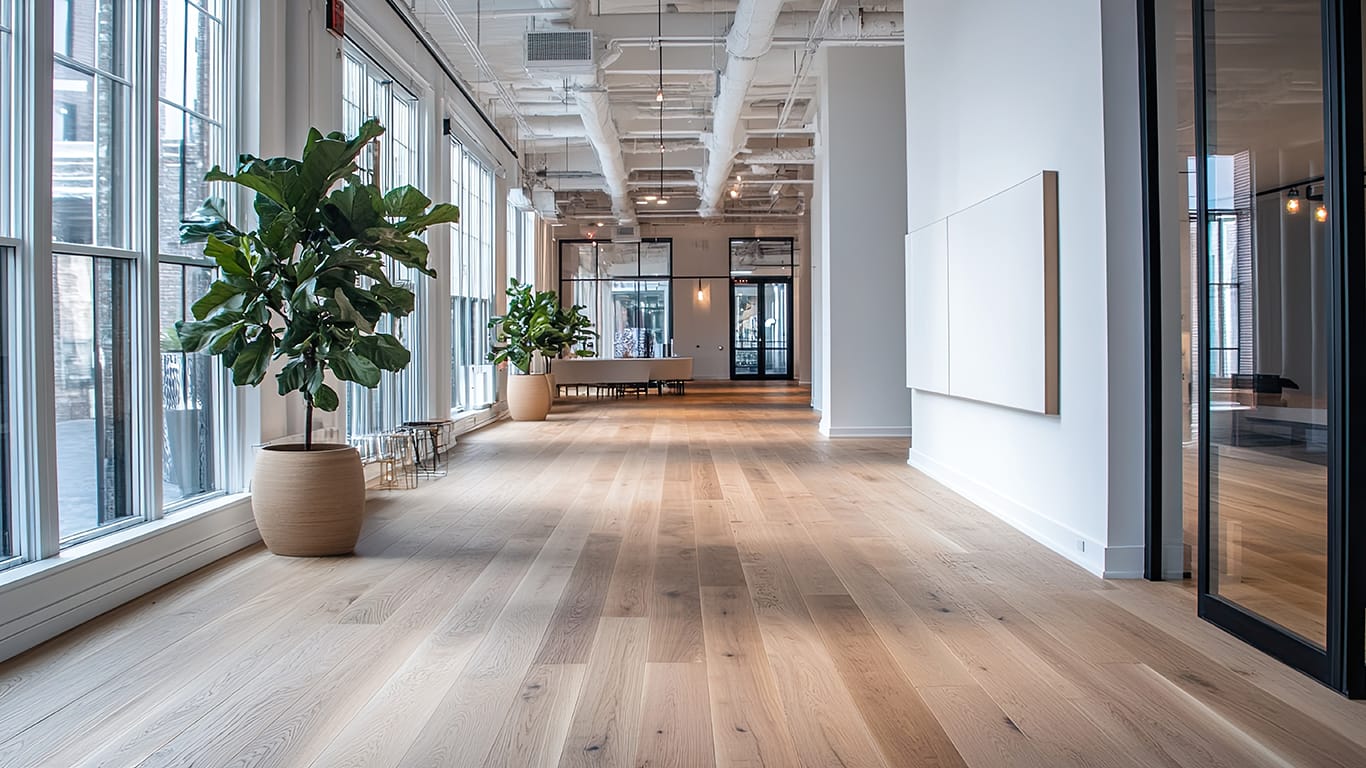
Most flooring advice in the U.S. is written for places with a wet season and a cold season. The desert Southwest has neither in the usual sense. Phoenix gets about 7 inches of rain a year and Las Vegas about 4, according to NOAA’s 1991 to 2020 normals. Summer afternoons regularly pass 110 degrees, and most homes sit on concrete slabs.
That combination changes which floors last and how they should be installed. A product that performs well in Atlanta or Chicago can open gaps, buckle or fade early in Scottsdale or Henderson. For homeowners, investors and property managers who own in the desert, the difference shows up in replacement cycles and repair calls
The desert really has two seasons
For most of the year, the air is very dry. Wood and wood-based products give up moisture and shrink. Then the monsoon arrives. The National Weather Service treats June 15 through September 30 as monsoon season in Arizona, and during those months humidity climbs, storms roll through, and dust storms push fine grit through every gap in a door frame.
Las Vegas sits at the edge of the same pattern. Its monsoon is usually weaker than Phoenix’s, but the swing from very dry spring air to sticky late-summer days still happens.
That swing is what catches floors out. A floor installed in dry April has to cope with humid August, and the reverse.
What heat, dryness and sun do to a floor
Three forces work on desert floors at once:
- Dry air shrinks solid wood, engineered wood and laminate, which all contain wood or wood fiber. Gaps appear between boards and at the walls.
- Heat expands vinyl and laminate. Floating floors, the kind that click together and rest on the slab, need room at the edges to move, or they push up into peaks and buckles.
- Sun through large windows and sliding doors heats the floor surface well above room temperature and fades colors unevenly. A rug that stays in one place for a year often leaves a clear outline.
The floors that last longest are the ones that barely react to moisture and are installed with heat in mind.
Floor by floor
| Floor | How it behaves in the desert | Best use |
| Solid hardwood | Shrinks and gaps for most of the year; swells in monsoon months; built to be nailed to wood, not slabs | Limited; only with careful humidity control |
| Engineered hardwood | Layered core resists shrinking and swelling; can be glued or floated on a slab | Living areas and bedrooms |
| Laminate | Stable in dry air; fiberboard core swells if water reaches the seams | Bedrooms and living rooms away from water |
| Rigid-core vinyl plank | Waterproof and stable; watch heat near large sunny windows | Kitchens, living areas, rentals |
| Porcelain tile | Unaffected by heat, dryness or humidity; stays cool | Entries, kitchens, baths, patios |
| Carpet | Holds fine dust and monsoon grit | Bedrooms only |
Solid hardwood
Solid wood is the hardest floor to keep looking right in the desert. It shrinks through the dry months, then takes on moisture in the monsoon. It’s also designed to be nailed down to a wooden subfloor. On a slab, it needs a plywood layer first, which adds height and cost.
Engineered hardwood
Engineered wood puts a real wood surface over a core of thin layers glued in alternating directions. That construction holds the planks close to their original size as the air changes, and it can be glued directly to concrete. For homeowners who want real wood in a slab home, it’s the practical choice.
Laminate
Laminate is affordable and resists scratches better than many vinyl products. Desert dryness doesn’t bother it much. The risk is water: a slow leak under a dishwasher or refrigerator can reach the fiberboard core, and swollen edges don’t shrink back. It belongs in bedrooms and living areas.
Rigid-core vinyl plank
Rigid-core luxury vinyl, often sold as SPC, has become the default for kitchens, living areas and rental units across both metros. Its core is mostly stone powder and PVC, so it doesn’t swell or shrink with humidity and isn’t damaged by spills.
The desert caution is heat. Direct afternoon sun through a west-facing slider can heat the surface of any floor, and some vinyl products list temperature limits in their installation instructions. Contractors installing luxury vinyl plank flooring in Las Vegas and Phoenix usually recommend rigid-core lines over flexible vinyl for that reason, along with shades or UV film on the sunniest glass.
Porcelain tile
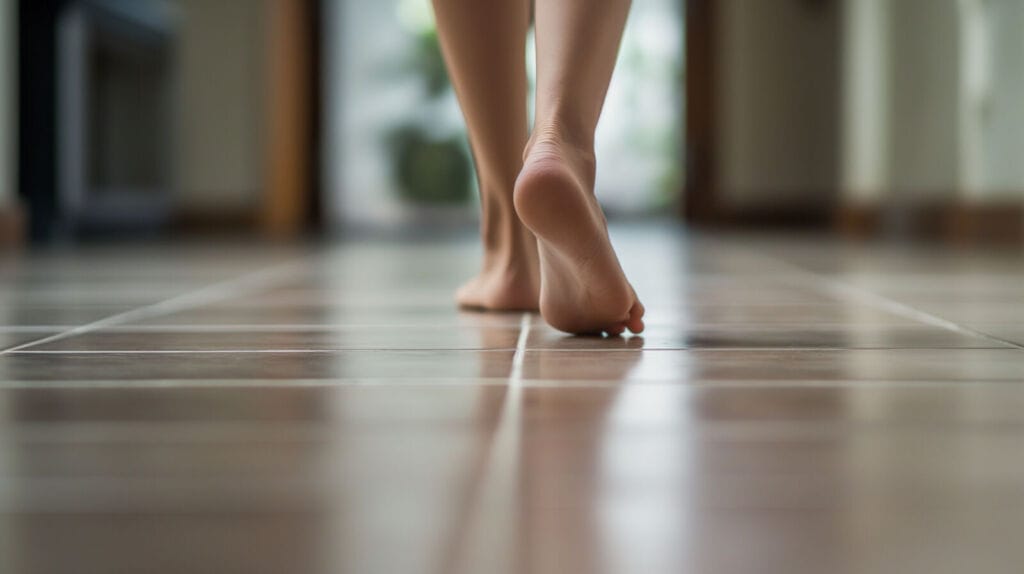
Tile is the most climate-proof floor in the region. Heat, dryness and monsoon humidity don’t affect it, and it stays cool underfoot in July. The work is in the slab: large-format tile needs a very flat surface, and cracks in the concrete can telegraph through. Sealed, mid-tone grout hides hard-water spots and dust far better than bright white.
Carpet
Carpet still has a place in bedrooms, where it’s quiet and soft. In living areas, it collects the fine dust that every monsoon storm pushes through the house.
MORE NEWS: Atari Hotels breaks ground in Roosevelt Row
DEEPER DIVE: 10 Arizona restaurants make Yelp’s Top 100 Mexican food spots
Installation matters as much as the product
In the desert, most early floor failures trace back to how the floor went down. A few steps make the biggest difference:
- Check the slab. It should be flat within the manufacturer’s tolerance and tested for moisture. Slabs in parts of both valleys sit on clay soils that shift, so cracks should be noted and, for tile, covered with a crack isolation membrane.
- Store material indoors. Planks should acclimate in the air-conditioned house, never in a garage that reaches 120 degrees.
- Leave the full expansion gap. Floating floors need space at walls, cabinets and door frames, and they shouldn’t be pinned under heavy islands.
- Plan for the monsoon. A floor installed in very dry spring air should still have room for the slight swelling that comes with August humidity.
- Protect against sun and grit. Shades or UV film on the largest windows, and a solid mat at every exterior door, extend a floor’s life more than any product upgrade.
Owners with property in both cities
Phoenix and Las Vegas share a lot of buyers. Investors own rentals in both, snowbirds split the year between them, and families move between the two metros for work. The climates are close enough that the same floor strategy usually works in both, but the details differ. Phoenix sees a stronger monsoon. Las Vegas runs a little drier most of the year and has its own local contractors, permits and licensing rules.
For anyone managing a property from the other city, the most useful step is to work with experienced flooring installers who handle desert slabs every day and stand behind their work. In Las Vegas, for example, Expert Flooring Solutions sells and installs its floors with its own crews, lets customers take free samples home, offers complimentary design help and backs its installation labor with a lifetime warranty. That kind of single-company setup is easier to manage from a distance than a chain of suppliers and subcontractors.
The short version
In the desert Southwest, choose floors that barely react to moisture, protect them from heat and sun, and install them on a flat, tested slab with room to move. Rigid-core vinyl, engineered wood and porcelain tile handle both the dry months and the monsoon well. Solid hardwood and basic laminate need the most care.