In most of the country, a patio cover is a comfort upgrade. In Arizona it is closer to infrastructure. When summer afternoons stay well above 100 degrees for weeks at a time, an uncovered patio is a space you look at through the window. Shade is what turns it back into living space.
A growing number of Valley homeowners are asking a second question about that shade: if a structure is going to sit in full sun all day anyway, why not let it make electricity?
Why the patio is a good place for solar
Rooftop solar has been common in Arizona for years, but the roof is not always the ideal spot. Some homes have tile roofs that make installation and future repairs harder. Others have complicated rooflines, limited south- or west-facing area, or an HOA that prefers not to see panels from the street. A detached or attached patio structure solves several of those problems at once.
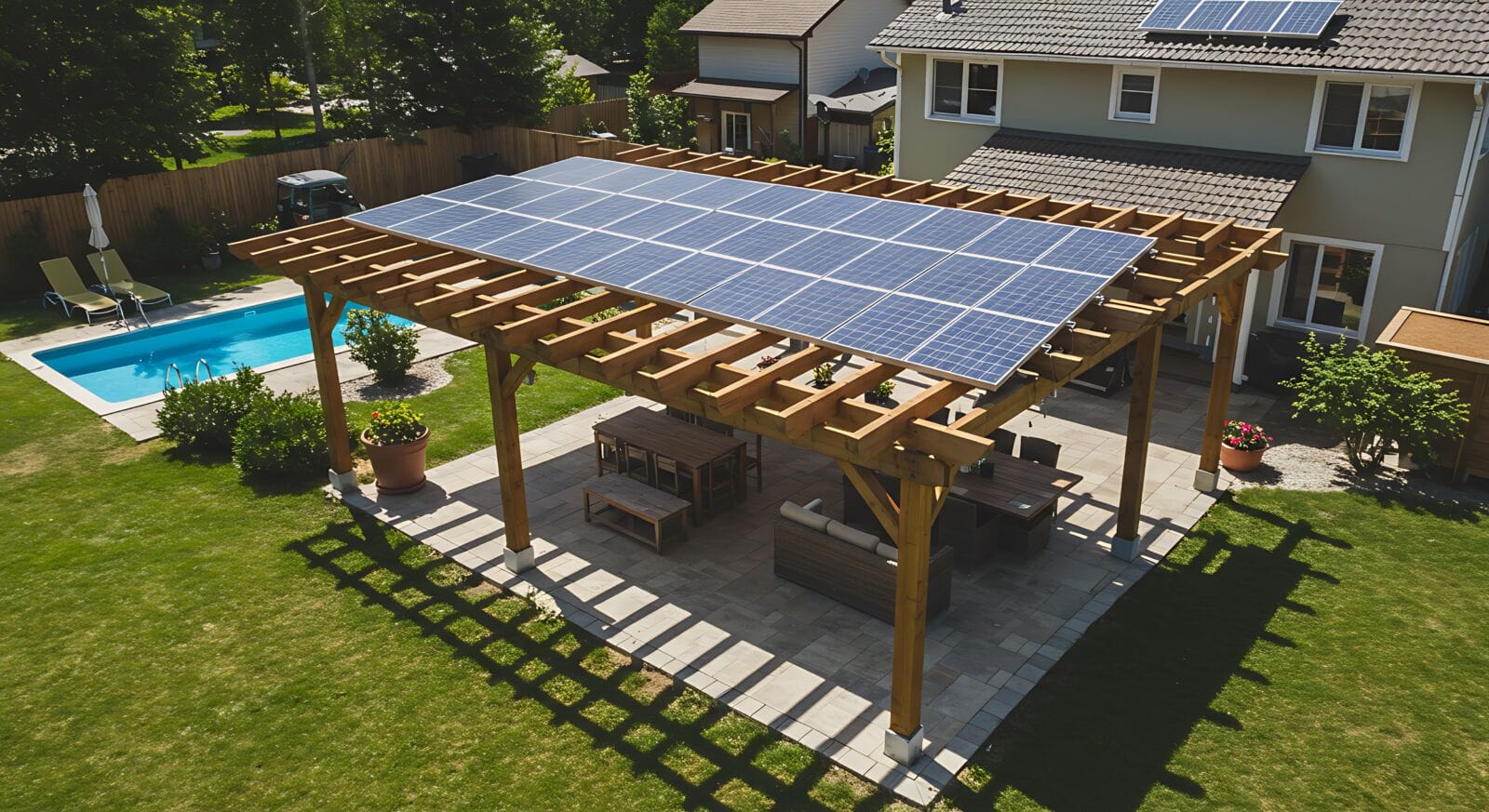
A flat or low-slope patio roof gives an installer a clean, unobstructed surface. Panels can often sit lower in the sightline and away from the street-facing elevation. And because the structure is being built new, the wiring path can be planned from the start instead of retrofitted around existing framing.
There is also a cooling benefit that a roof array does not offer in the same way. Panels over a patio shade the people underneath, and the structure shades the adjacent walls and windows, which reduces heat gain into the house during the hours when air conditioning works hardest.
How the economics have changed
Arizona’s solar math looks different than it did a decade ago. Since the Arizona Corporation Commission moved away from traditional net metering in 2017, most utilities credit the power a home sends back to the grid at an export rate that is typically lower than what the homeowner pays for electricity. Under that structure, solar delivers the most value when a household uses its own power during the day instead of selling it back.
That shift favors systems sized around actual daytime use, and it makes the loads near the patio more interesting. Outdoor living in Arizona tends to be power hungry: ceiling fans, misting systems, lighting, outdoor kitchens, refrigerators, pool equipment, and increasingly an outdoor television. A patio array located right where those loads sit is a sensible match. For homeowners with an electric vehicle, a solar carport adds a large, predictable daytime and overnight load to the picture.
Before committing, homeowners should get a site-specific estimate that uses their own utility’s current rate plan and export rate. Plans differ between utilities and change over time, and a quote built on someone else’s numbers is not much use.
What to look for in the structure
Not every pergola is built to carry solar. An open-slat wood pergola was designed to hold up a few vines, not a few hundred pounds of glass and aluminum that also have to resist monsoon wind gusts. The structure needs to be engineered for the added weight and wind load of an array, and the permit drawings should reflect that.
A solid roof makes the job easier. Insulated aluminum roof panels are a common choice in hot climates because they block heat far better than single-skin metal, and they provide a continuous surface for mounting. Azenco Outdoor, a Florida manufacturer that sells across the country, positions its R-SHADE insulated roof as a platform for this use, with an aluminum frame that can conceal the system’s wiring. The company builds the structure and refers buyers to solar partners for the panels themselves, which is a typical arrangement: the shade structure and the electrical system usually come from different specialists.
That split matters for planning. Ask both parties early who is responsible for the attachment method, the conduit route, and the roof’s drainage, so that rails and penetrations do not interfere with how water leaves the roof during a monsoon downpour. Homeowners weighing the options can find a useful overview of how pergola solar panels fit together, from roof platforms to carports sized for an EV.
MORE NEWS: Atari Hotels breaks ground in Roosevelt Row
DEEPER DIVE: 10 Arizona restaurants make Yelp’s Top 100 Mexican food spots
Permits, HOAs, and resale
A solar patio structure typically involves two approvals: the structure itself and the electrical system, including the utility’s interconnection process. Many Arizona communities also have HOA design review. Arizona law limits how far HOAs can go in prohibiting solar devices, but associations can still have a say in placement and appearance, so it pays to submit drawings before the project is scheduled rather than after.
From a real estate perspective, a well-built shade structure is one of the more visible improvements a seller can offer in this market. Buyers can see it, use it, and understand it in a way they cannot with many behind-the-wall upgrades. Owned solar, properly permitted, can add to that appeal. Leased systems are a different conversation at closing, so owners planning to sell within a few years should weigh ownership versus financing carefully.
The bottom line
In Arizona, the patio cover and the solar array are solving related problems: too much sun and too much demand for power during the hottest hours of the day. Combining them puts one structure to work on both. The key is to treat it as a single engineered project, with a structure designed for the load, an electrical plan matched to real usage, and approvals lined up before the first post goes in.
Built that way, the shade over the patio stops being only a place to escape the heat. It becomes part of how the house pays its own bills.