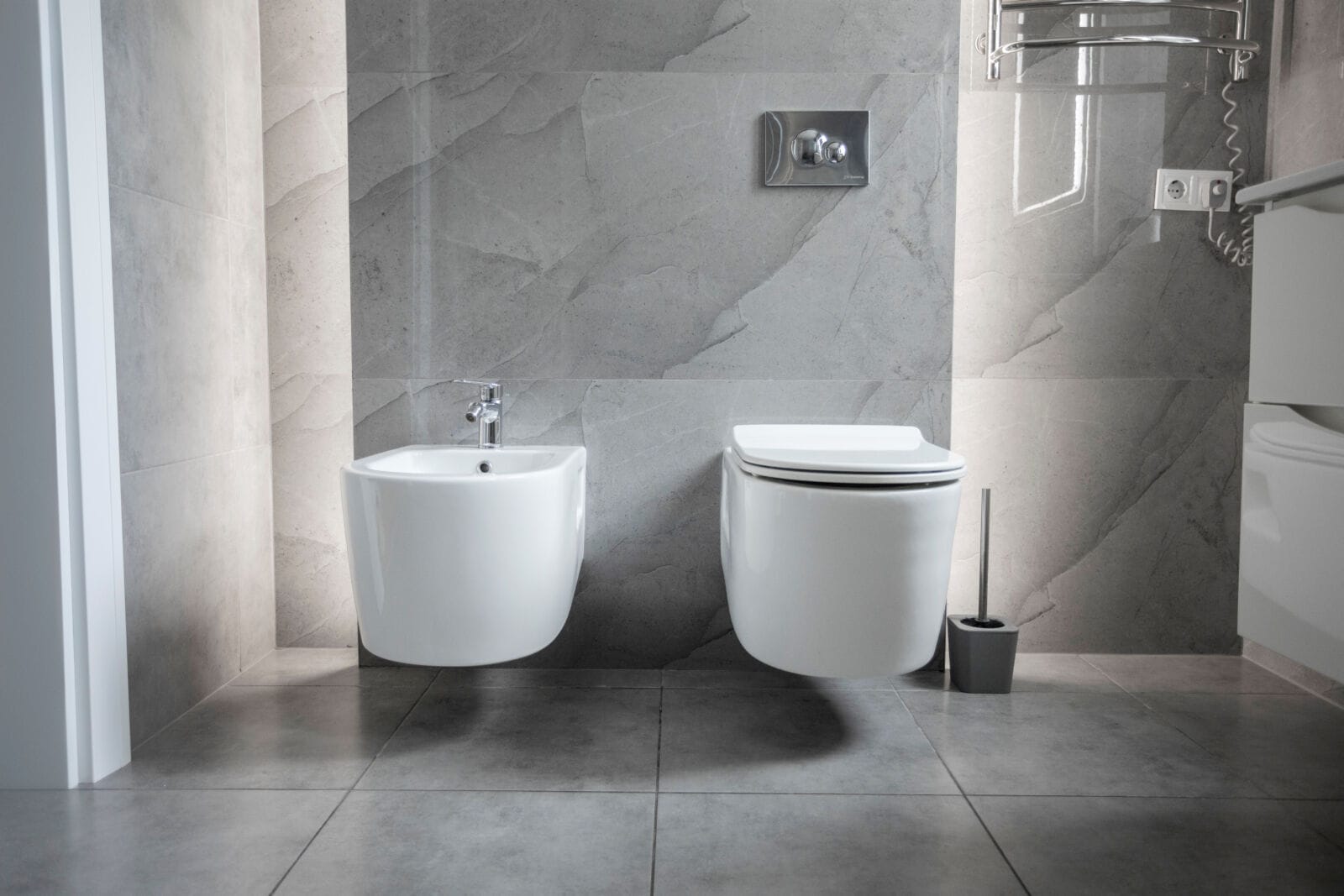
A low-priced bidet can become a bigger bathroom project if it requires an outlet or a different toilet. The advertised price doesn’t cover the plumbing and wiring behind your bathroom walls.
Answer: Set your ceiling after you price the equipment and check the fit, with must-haves separated from extras, then get labor quotes and establish stop rules.
Build a complete bidet budget before buying
Write out your project budget before you compare sale prices. List the fixture and labor on separate lines, and leave room for any supplies or repairs a contractor includes in the estimate.
Step 1: Establish the equipment price range
Choose the product type first, so you compare prices for the same kind of installation.
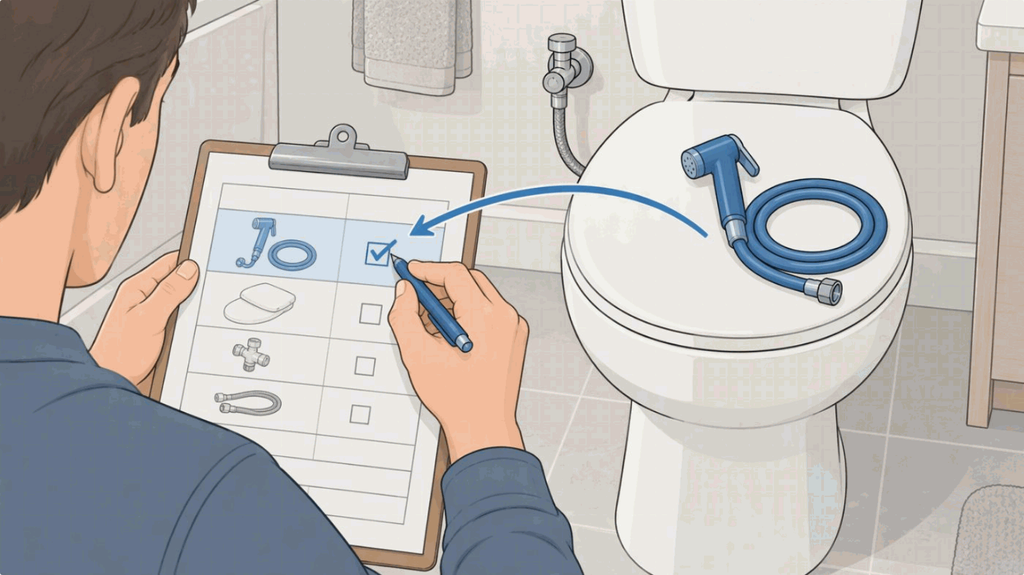
Attachments, electric seats, and toilets with built-in bidets occupy different price tiers, so the answer to how much does a bidet cost depends on the product type and any feature or installation costs. Forbes Home Improvement’s cost guide gives the following equipment prices and approximate totals with installation.
How much does a bidet cost once you include labor? The installed total varies by product type, as the table shows.
| Product type | Purchase range | Total with installation | What to check |
|---|---|---|---|
| Basic spray attachment | $40 to $60 | $100 to $300 | Existing water connection |
| Bidet toilet seat | $100 to $1,000 | $470 to $1,700 | Seat fit and power needs |
| Standalone bidet | $200 to $600 | $500 to $1,500 | Floor space and separate plumbing |
| Toilet with built-in bidet | $1,000 to $2,000 | $1,200 to $2,500 | Toilet replacement and utility hookups |
What does a bidet toilet seat cost? The table prices the seat itself at $100 to $1,000 and puts the installed total at $470 to $1,700.
Approximate installed totals range by product type, from $100 to $300 for a basic spray attachment to $1,200 to $2,500 for a toilet with a built-in bidet.
These planning ranges are dated, and they aren’t local bids. The installed totals already include the product, so don’t add the purchase column again. Start with the simplest type that meets your needs, then enter your chosen model’s current price on the equipment line.
Step 2: Check the toilet and bathroom setup
Compare the product’s fit guide with your toilet before ordering, or you could budget for a seat you can’t mount. Confirm the bowl shape and measure the distance between the mounting holes. Check the clearance behind the seat against the model’s stated dimensions, and note where the controls would sit.
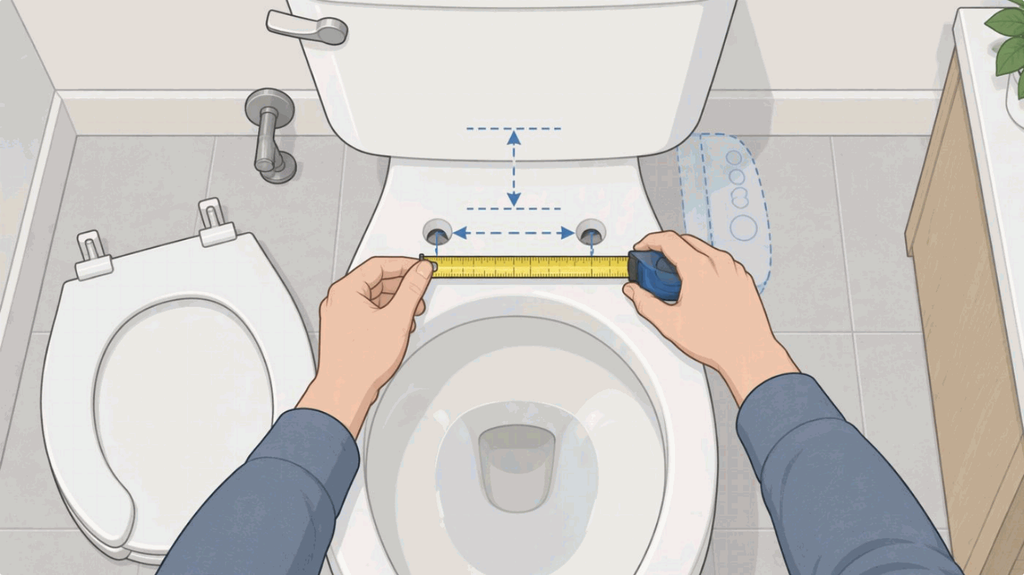
Inspect the water connection and confirm that you can reach the shutoff valve. An electric seat also requires a power check: read its instructions, then compare the specified cord length with the outlet’s location. Don’t base your budget on an extension cord; ask an electrician about a suitable permanent connection.
Give the installer the exact model number and photos showing the toilet and its connections. Ask them to identify anything the photos can’t establish before providing a firm quote.
Step 3: Separate essential features from upgrades
Write down what you need every day, then separate those required functions from comfort upgrades before comparing feature packages. A basic cold-water attachment requires a different buying decision than a powered seat that provides warm water.
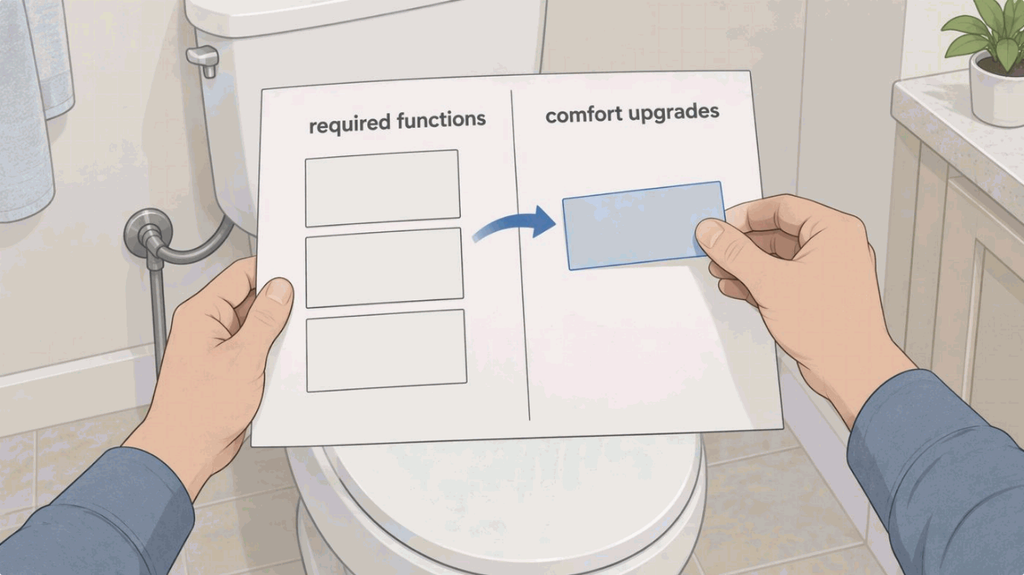
Consider seat heating and air drying as separate buying decisions. Compare actual model prices with and without each feature rather than guessing how much either one adds. The broad price range for seats won’t reveal the added cost of a particular dryer.
The price of a heated bidet seat varies by model. Compare current prices with and without heat instead of assuming there’s a standard premium.
Keep an extra only when you’ll use it and can afford the installation. If you need warm water, find out how your chosen model heats or receives it before pricing any plumbing work.
Step 4: Price any professional work
Get a written labor estimate for installing the exact model in your bathroom setup. Request separate electrical pricing if you need that work. Forbes Home Improvement estimates professional bidet plumbing at $300 to $600.
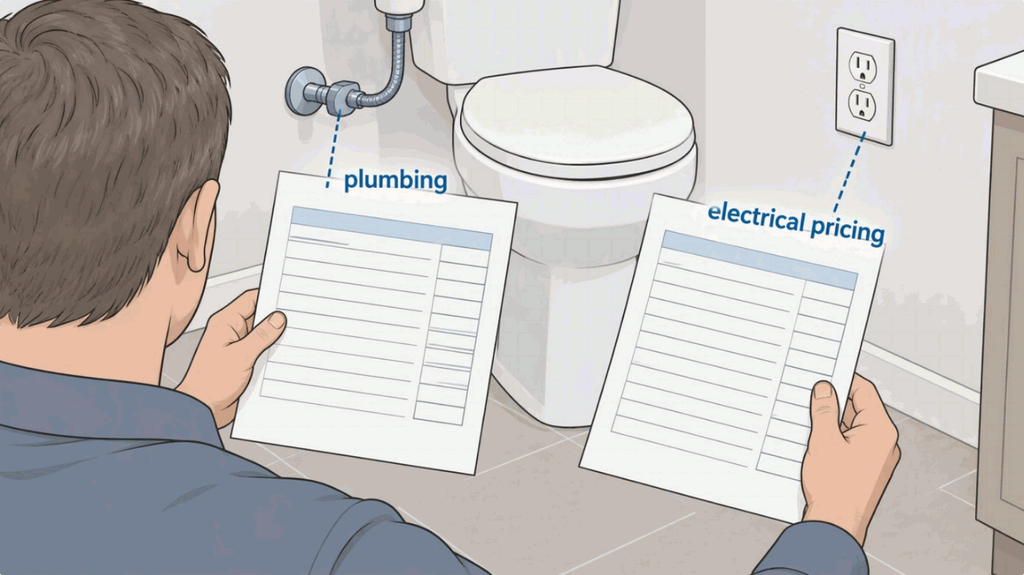
A nearby outlet saves you an electrical expense only when the setup requires no changes. Ask the electrician to compare it with the product’s instructions. Have the plumber list the fittings and supply connections covered by the price, as well as who handles any wall repair.
An itemized quote shows what you’re paying for the bidet upgrade versus bathroom repairs. If you’re installing it yourself, read the instructions before treating labor as free. Stop the work if the shutoff valve won’t close or a connection starts leaking.
Step 5: Set the final ceiling and stop rules
Set a firm project ceiling before authorizing an order by combining the selected equipment price with all quoted work, then adding purchase-related charges. Add any shipping or tax shown at checkout, plus small parts the installer excludes from the quote.
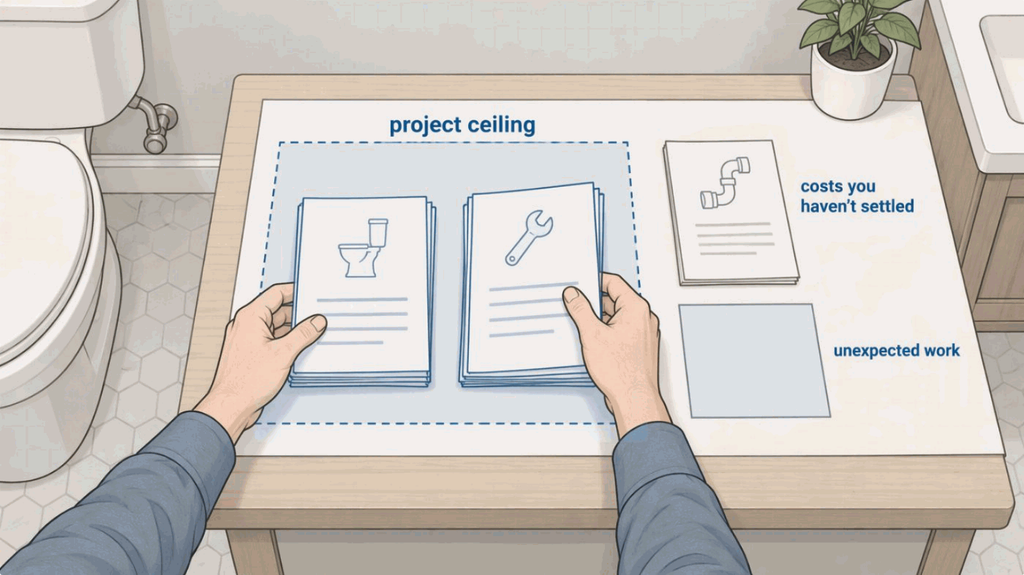
Keep costs you haven’t settled separate instead of entering them as zero. Your total isn’t final if the electrician still hasn’t priced the outlet. Set aside an amount you can afford for unexpected work, and state which repairs that reserve may cover.
Decide on your stop rules before the work begins. You might approve a worn supply hose replacement but require a new decision before anyone opens a wall or replaces the toilet. Include that limit in the installer’s written scope.
What hidden costs should you plan for?
Budget for outlet work and costs related to fit. A separate fixture may also require extra plumbing or floor space. Price a purchase that needs a replacement toilet or wall work as a larger bathroom project.
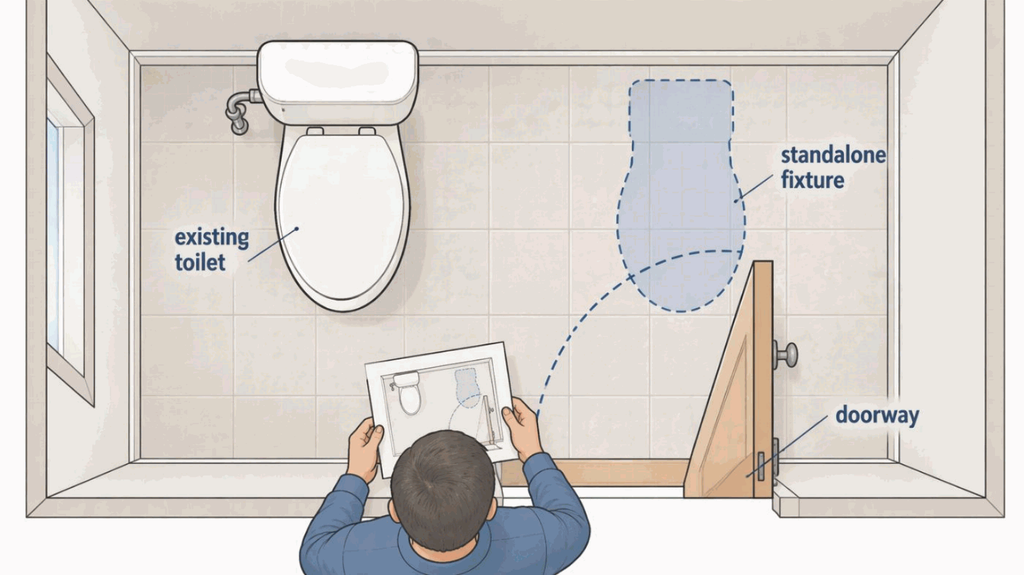
Ask who will pay for patching or painting if the outlet installation requires opening the wall. A toilet-shape mismatch may leave you paying return shipping instead of plumbing costs. Review the seller’s return terms before you remove the packaging.
Mark the footprint of a standalone fixture on the floor before committing to separate plumbing. If it crowds the doorway, request separate prices for any proposed layout changes, including moving the existing toilet.
What will the bidet cost to operate?
Track water and electricity costs with cleaning and maintenance, using the same monthly period as your household toilet paper spending. Record these recurring ownership expenses separately, outside your installation estimate.
| Ledger entry | What to record |
|---|---|
| Water | Estimated added use multiplied by your local usage rate |
| Electricity | Model-specific consumption estimate multiplied by your electric rate |
| Cleaning and maintenance | Approved supplies and replacement parts listed in the manual |
| Toilet paper | Actual household spending before and after installation |
Use the manufacturer’s energy-use information for the model you selected; don’t assume every heated seat consumes the same amount. Include replacement filters only when that model requires them, and consult its manual for the replacement schedule.
Use your current paper spending as the baseline rather than assuming it’ll disappear. Don’t deduct hoped-for savings from the purchase budget. Once installation is complete, record the paper you still buy with the bidet’s recurring expenses.
When the original plan no longer fits
Change the product before you expand the bathroom project. If outlet work pushes you over the ceiling, price a non-electric attachment rather than adding electrical work by default. A seat that fails the fit check should lead you to compare a compatible model before considering a replacement toilet.
Cut optional heating or drying only when the remaining model still does what you need. If warm water was a must-have, compare cheaper models that retain that function instead of settling for a cold-water attachment.
Pause the project when a contractor discovers work outside the estimate. Get a revised scope and compare the new total with your ceiling before authorizing demolition or ordering a replacement fixture.
Keep the upgrade inside its limits
Measure the toilet and inspect its utilities before ordering. Ask tradespeople for estimates on anything the product requires that your bathroom lacks. Choose a product that fits the room and the budget you’ve already approved, keeping the upgrade within its limits.