Hot climates share a few basic realities. Air conditioning is not a luxury, maintenance windows are short, and the summer is long enough to shape household budgets.
For readers in Arizona, where the thermometer regularly tops one hundred and ten, there is still something to learn from how Gulf Coast homeowners manage their own version of a long, demanding summer. The physics are different, but many of the habits translate.
Both regions share the broader story of hot-weather living, and the lessons that work in one place often sharpen the thinking in another. Looking sideways across climates is a useful habit for homeowners and builders alike.
Two Hot Climates, Two Different Challenges
Phoenix is famously dry. Galveston, on the Texas Gulf Coast, is famously not. Both see sustained months of heat, yet the ways homes respond are quite different.
Dry Heat vs Humid Heat
In dry climates, evaporative cooling works well, and the air carries less latent heat. In humid climates, moisture itself is the burden, and air conditioning must dehumidify as well as cool.
That difference matters when you choose equipment, size a system, or plan a renovation. A unit optimized for Phoenix would struggle in Galveston, and a Gulf Coast system would be overbuilt in the desert.
The practical result is that cooling systems in Galveston focus heavily on moisture removal, while those in Phoenix emphasize raw temperature drop. This shapes everything from ductwork design to the kind of filters a household should buy.
How Humidity Changes the Cooling Equation
Humid air feels hotter at the same temperature because the body cannot shed heat as easily through perspiration. Indoor comfort depends as much on relative humidity as it does on the thermostat reading.
Gulf Coast homeowners learn to prize dehumidification. A system that holds indoor humidity near fifty percent will feel comfortable at seventy-six degrees, while a drier system might require sixty-eight to feel the same.
This has real implications for electric bills, since every extra degree of cooling adds up over a long summer. Homeowners who tune their systems for humidity control often spend less overall.
Habits and Equipment That Travel Well
Several practices translate neatly from the Gulf Coast to any hot region. Annual tune-ups ahead of the hot season reduce breakdowns, and clean coils move air far more efficiently than dusty ones.
Scheduling that maintenance with an experienced Galveston air conditioning service is the standard practice along the coast, and the same thinking applies to desert households that lean on their equipment for six months straight.
Local technicians also advise against oversizing units. A larger system cycles on and off too quickly, cooling the air without pulling enough moisture out, which leaves the house feeling clammy inside.
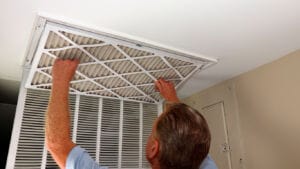
Other common habits include replacing filters monthly during peak season, insulating duct runs through hot attics, and keeping outdoor condenser units shaded and free of debris. These small moves have outsized effects.
Energy Costs and Resilience
Both regions face summers where electricity demand surges and grids strain under the load. In Texas, this has driven interest in whole-home surge protection, battery backups, and more efficient variable-speed systems.
Arizona readers facing similar grid pressures may recognize the pattern. Even modest investments, like a programmable thermostat tied to time-of-use rates, can lower a household’s exposure to peak pricing.
Resilience also means planning for storms or heat emergencies. Gulf Coast homeowners keep a short list of contacts for power, water, and HVAC, since repairs during a heat wave become harder to schedule when every household on the block has the same problem.
Simple preparation goes a long way. A clean coil, a tested backup, and a stocked pantry together outperform any single expensive upgrade.
A Shared Lesson for Hot-Climate Living
The underlying message is simple. In any hot climate, comfort is a system, not a single appliance.
Insulation, humidity control, equipment maintenance, and household habits all pull together or against each other. Learning from a region on the far side of the hot map, where the challenges rhyme without matching, is one of the quieter benefits of a national conversation about climate and home.