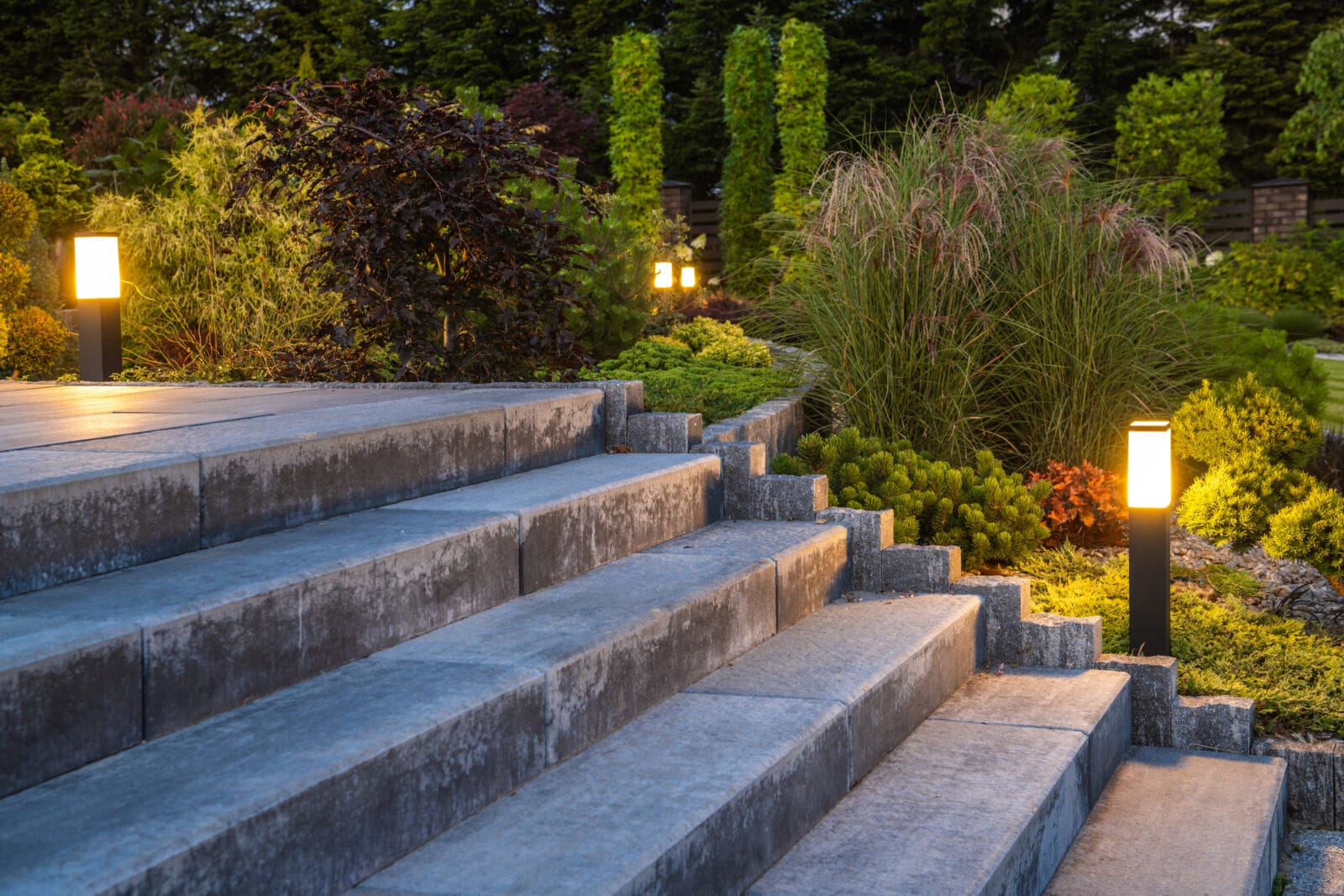
A set of broad stone steps can be the nicest part of a garden in the afternoon. The edges line up neatly, the planting softens the surrounding walls, and the path from the patio to the lawn feels natural. After sunset, though, the same steps may look surprisingly flat. Someone approaching from the house can see the illuminated patio but not the exact point where one level ends and another begins.
The problem is not always a lack of light. A bright fixture can create a deep shadow behind a step, while light reflected off pale paving may make neighboring surfaces look almost identical. A person carrying a plate or watching a child may miss a subtle change in height that was obvious an hour earlier.
Outdoor steps need to work under both conditions. Their dimensions, surface texture, edge contrast, and lighting should help people recognize changes in level without having to study the ground. Thinking about all four elements together produces a more useful result than simply adding more fixtures once the landscape is finished.
Shadows Can Make One Step Look Like Two
Floating steps are often designed with a recess beneath each tread. In daylight, that shadow line gives the steps a clean, light appearance. At night, a strong light from one side can exaggerate the recess, making it difficult to judge where the solid surface begins. A light aimed across the treads can also cast the shadow of a railing or nearby shrub onto the walking area.
Another tricky arrangement is a short flight of steps beside a retaining wall. The wall may catch most of the light, leaving the lower tread in darkness. From the top, the first two steps might be clear while the final step blends into the path below. That last change of level is easy to overlook because people expect the walking surface to continue.
Look From Both Directions
Lighting that works while walking up may fail when walking down. People descending need to see the front edges of the treads and the landing below. Test the view from the house, the garden, and any side approach, rather than standing in one spot and admiring the lighting effect.
Consistent Step Geometry Is Still Essential
Lighting cannot compensate for badly proportioned steps. When one riser is noticeably taller than the others, a person may stumble because the foot expects the next step to be the same height. A tread that is too shallow can make descending uncomfortable, even when every edge is illuminated.
Outdoor stairs should be designed to meet applicable dimensional, handrail, and landing requirements. The correct details depend on where the steps are built and how they are used. Uneven stone thickness or a change between materials must be accounted for during installation, not disguised afterward with a strip of lighting.
Surface grip deserves equal attention. Smooth stone may become slippery with moisture, frost, or debris. An eye-catching finish is not necessarily suitable for every step. The finished surface should offer appropriate traction while remaining reasonably easy to clean.
Dark Paving Can Hide a Change in Level
A black or charcoal step against an equally dark landing can create an almost continuous shape at dusk. The reverse problem appears when light-colored paving reflects so much light that individual edges disappear. In both cases, the issue is insufficient visual distinction between one level and the next.
For projects involving steps, professional landscaping services can help coordinate the shape of the stairs, the paving pattern, and the transition into surrounding paths. A contrasting nosing or carefully chosen material change may make a step easier to read without turning it into a harsh stripe. The decision should work with the overall design and any relevant accessibility requirements.
A low wall or planting bed alongside a stair can provide visual context, but it should not crowd the walking route. The surrounding features need to make the path clearer, not conceal it.
More Light Can Actually Make Visibility Worse
Homeowners sometimes react to a dark staircase by installing the brightest available floodlight. That can create glare, particularly when the fixture points toward someone coming up the steps. The eye adapts to the bright source, while the area immediately beyond it appears darker by comparison.
A better approach is to illuminate the walking route and changes in level without placing an exposed light source directly in people’s sightlines. Shielded fixtures, carefully positioned low-level lights, or suitable step lighting may help, depending on the stair construction. The important measure is whether the tread edges remain visible from normal approaches.
Avoid the Spotlight-and-Shadow Effect
A single concentrated beam may illuminate the middle of a staircase while leaving the sides dark. It can also turn railing posts and plants into sharp moving shadows. Several carefully planned light sources may provide a more even result, but adding fixtures indiscriminately can introduce clutter and unnecessary brightness. Test the proposed positions after dark before permanently installing them.
Outdoor Wiring Needs Its Own Design
Outdoor lights face rain, temperature changes, garden equipment, and occasional water exposure. Fixture ratings, cable protection, electrical connections, and the location of controls all matter. A covered fixture is not automatically suitable for every outdoor location, and a cable buried beneath a planting bed still needs the appropriate installation method.
When homeowners compare top electrician services for an outdoor lighting project, it makes sense to ask how the lighting plan will be supplied, controlled, and protected, not just which fixtures look attractive. A qualified electrician can assess suitable circuits, equipment, and installation requirements. This matters especially where new wiring must pass beneath paving or connect to an existing exterior electrical system.
Low-voltage landscape lighting can be useful, but it is not exempt from product instructions and electrical safety considerations. Homeowners should avoid improvised connections or ordinary indoor extension cords as permanent outdoor wiring.
Plants Can Undo a Good Lighting Plan
A small ornamental grass may seem harmless beside a recessed light when the garden is newly planted. By the following summer, its leaves can block the beam or throw striped shadows across the steps. Shrubs may grow in front of wall fixtures, and fallen leaves can cover lights set close to the ground.
Think about mature plant size when locating fixtures. Leave enough room to reach lights for cleaning and replacement, and place vegetation so it does not hide important step edges. Seasonal pruning helps, but the design should not depend on cutting plants back constantly just to keep the staircase visible.
Test the Route Under Real Conditions
Before accepting a finished project, walk the route after sunset from every normal entrance. Do it with the surrounding house lights on and off, since light from windows or doors can change how the outdoor fixtures appear. Notice whether the top and bottom landings are easy to identify and whether any step seems to disappear into the paving.
Watch for glare when looking toward the house. Check whether a handrail casts a confusing shadow or whether the final step becomes harder to see as someone approaches it. A photograph can help compare views, but walking the route is more informative than judging it through a camera screen.
If the problem involves existing uneven steps, loose paving, or missing safety features, address the physical defect rather than trying to solve everything with lighting. If fixtures flicker, have damaged housings, or show signs of water inside, leave electrical repairs to a qualified professional.
A well-designed staircase should not demand special attention every time someone uses it. The strongest outdoor layouts make each change of level easy to understand in daylight, at dusk, and after dark. Good proportions and clear edges establish the route; thoughtful lighting helps people follow it confidently long after the garden’s daytime details have faded from view.