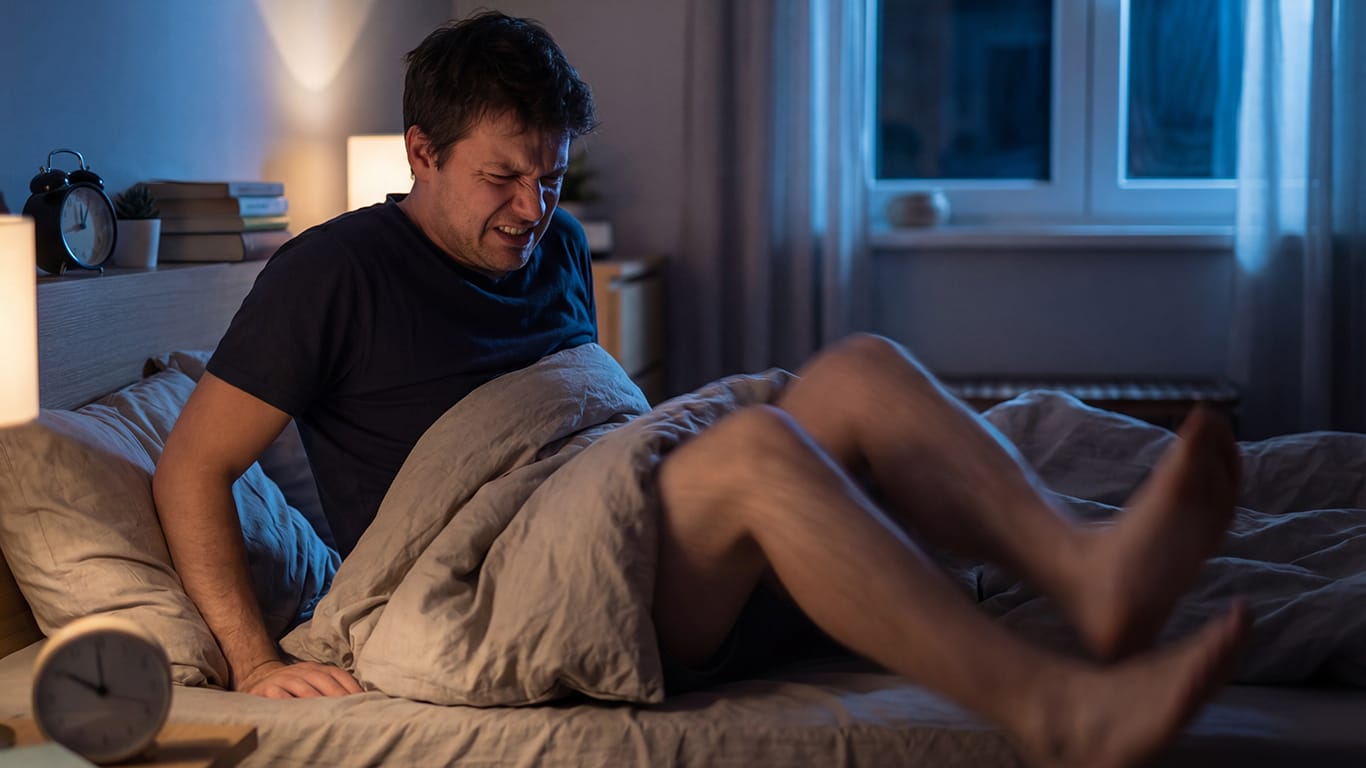
For most of his adult life, Andy Gritti felt this intermittent, odd, electric restlessness in his legs. Still, in the 1990s, he persevered, playing pick-up basketball several nights a week in Chicago.
“It felt like this energy, like I’m almost being tasered from the inside out,” he said. He assumed it was fatigue.
When he moved to Scottsdale, he had an executive physical at the Mayo Clinic. There, he was given a pamphlet about restless leg syndrome. Lots of information, but no real solution.
“The good news is we know what it is,” the clinician told him. “The bad news is we don’t have a way to treat it.”
Restless Leg Syndrome — also called Willis‑Ekbom disease — is a neurological sensory‑motor disorder, not a muscle problem. Sufferers describe the sensations as electricity under the skin, crawling or buzzing, deep bone itch and internal pressure.
DEEPER DIVE: Here are the winners of the 2026 Foodist Awards
INDUSTRY INSIGHTS: Want more news like this? Get our free newsletter here
Neither stretching, massage, nor ice eases the symptoms. The sensations come from the brain’s misfiring regulation of movement and sensory signals, especially in pathways involving dopamine and iron handling.
Gritti compares it to “being Tasered from the inside out.” The symptoms’ timing is unsettling. They intensify at rest, especially at night, and relieve only with movement. RLS often starts episodic — once a week, then twice. Over years or decades, it can become nightly, then severe, then something far worse: augmentation, a medication‑induced escalation where symptoms start earlier, hit harder, and spread to the arms. Gritti lived that progression in real time.
By 2019, Gritti said “the beast” hijacked his legs, his arms, his sleep and then his life.
He went weeks without sleep.

“You can go to really dark places,” he said. “There are many suicide stories that go with this disease.” He understood why.
Doctors cycled him through the Mayo algorithm — A column, B column, C column — until he reached the top of the chart, the heavy‑duty meds no one wants but everyone with severe RLS eventually meets. Later, he’d learn that dopamine agonists can make RLS worse. “I believe it did,” he said. “Nobody’s fault. It’s just one of those things.”
He stopped doing anything that required energy. “You start conserving,” he said. “You withdraw.” Even his general practitioner — someone he trusted — told him, “You need to dig into this, because I don’t know that much.”
The irony is nobody — even medical professionals — knows much about RLS.
So, when a Google Alert surfaced news that a non‑drug device — Nidra — had received FDA approval, Gritti didn’t hesitate to try it.
He cold‑messaged the CEO on LinkedIn, expecting nothing. Instead, the CEO wrote back within a day and offered to jump on a call. “I was blown away that this guy cared that much,” Gritti said. “From the top.”
By late 2023, his RLS specialist at Scripps in San Diego — where he traveled for treatment — asked Gritti if he wanted to try the first version of the device. Gritti laughed. “Man, I’ve been looking at this way before you were.”
The results were immediate.
“It was amazing,” he said. “Immediately, I saw positive results.” To ensure proper placement, he tattooed two tiny brown dots on his legs to mark the exact placement of the peroneal nerve. “At night, the last thing you want to do is gymnastics,” he said. Now he just glances down, aligns the bands, hits the button, and falls back into bed.
Now, he spends time on Reddit answering strangers who, like him, are scared, exhausted and dismissed. “There’s not enough knowledge in the medical community,” he said. “If this device had existed earlier, I may not even have the severity I have today. It just works,” he said. “And that’s all I needed.”