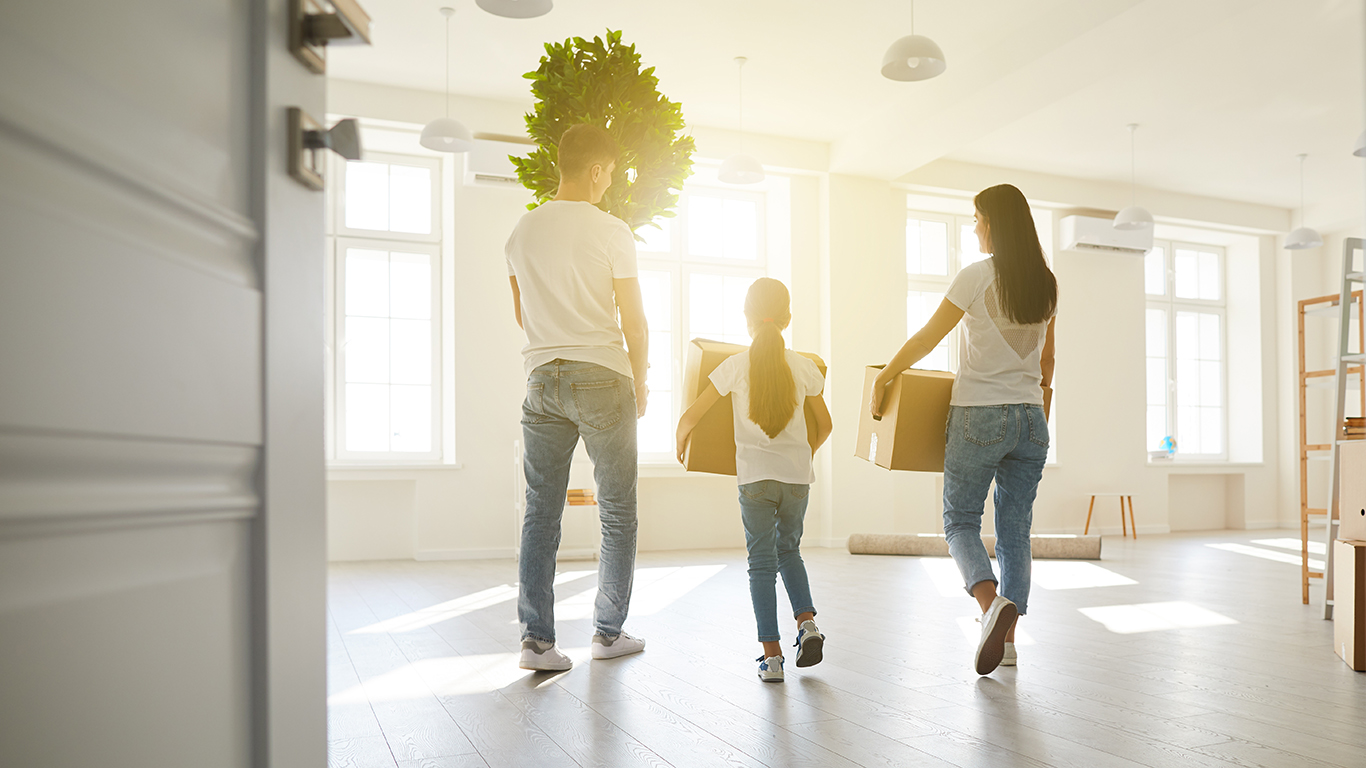
How to personalize your new home: 18 tips for making it your own
Moving into a new home presents an exciting opportunity to transform empty rooms into personalized spaces that reflect individual style and values. Industry experts share practical strategies for adding character and warmth to a house, from selecting paint colors and upgrading fixtures to displaying meaningful collections and creating custom zones. These professional insights offer homeowners actionable ways to make a new property feel like home from the moment they move in.
DEEPER DIVE: Read all the Ranking Arizona Top 10 lists here
INDUSTRY INSIGHTS: Want more news like this? Get our free newsletter here
- Apply a Bold Wallpaper Mural
- Select Timeless, Architectural Furniture
- Showcase Collections to Tell Your Story
- Upgrade Doors and Touchpoints
- Refresh Rooms in Signature Hues
- Replace Lighting and Install Dimmers
- Feature Wildlife Prints for Personal Meaning
- Anchor Spaces Through Cohesive Neutrals
- Design a Custom Entry Zone
- Choose Paint Colors You Love
- Scatter Cozy Details From Day One
- Prioritize a Purpose-Built Work Area
- Center a Beloved Instrument
- Hang Family Portraits for Warmth
- Craft an Identity-Driven Office
- Create a Meaningful Memory Display
- Build a Window Bench With Storage
- Transform Floors With Decorative Concrete
Apply a Bold Wallpaper Mural
One of my favorite ways to personalize a new home is to add a wallpaper mural in a small space like a powder bath. In one project in The Woodlands, we used a botanical mural to bring depth, color, and texture into a tight room without changing the layout. That single choice instantly made the space feel intentional and unique, almost like a piece of art you live with. It also made it easier to keep everything else simple and cohesive, since the mural could lead the palette and finishing touches. The result was a room that felt elevated and personal, which directly boosted overall satisfaction with the home’s look and feel.

Select Timeless, Architectural Furniture
I created a sense of the personal in my home by selecting modern and mid-century pieces that will age well, such as the Hommage A Michel Ducaroy Partir Ducaroy Sofa, or classic varieties like the LC10 Coffee Table En Tube: Moyenne Square. These designs have strong proportions, honest materials, and thoughtful construction, which makes the space feel intentional instead of temporary. Living with strong architectural furniture makes the space feel permanent and creates a calm atmosphere that allows one to make it their own while not compromising design integrity, which is valuable to me.
Fewer, but better, pieces can lift a home’s ambiance. Emphasize silhouettes, not ornament. But when balanced and seated at the proper height in good upholstery, each piece is distinctive and has its moment. A comfortable, curated living space will allow the form to be appreciated, while proper space for each piece will allow a lasting relationship with the home to grow.

Showcase Collections to Tell Your Story
I’ve moved a lot in the past twenty four years I’ve been an art and antique dealer. Different cities. Different states. Different countries. Each move reminded me of the importance of feeling collected. That the experiences of my past have all contributed to this very moment. In a new place, a new home.
And so to feel at home, I always turn to my collections. Those pieces that are part of my history. Those pieces with amazing back stories. Those pieces with great memories.
When I’m settling in to a new home, I see it as a new opportunity. The floor plans, the wall space, the windows and the layout. The bones and structure of the home help shape where my collections will go on display. The same old pieces, but in a new light and creating a new dialogue.
Paintings that have never hung side by side can now be in close proximity. Lighting that has always been by a certain chair now illuminates a new area. Sculpture and objects that had always been displayed separately can now start a new conversation.
This is how I feel at home. I’m bringing my past with me through the art and antiques I’ve collected over the years, but I’m living in the present through the arrangement and design of the display of the works.
So take what you already have, those pieces that are part of your story. Then write a new chapter, start a new story and engage in new dialogue. Make your home your own, personalize your experience and enjoy your moment.
Upgrade Doors and Touchpoints
Doors set the tone for how your home feels.
Most production homes are equipped with hollow core doors that weigh less than 15 pounds and sound like cardboard when closing them. That cheap rattling thud just follows you from room to room, and your brain registers it whether you realize it or not. Swapping those out for solid core doors for 150 to 250 dollars a unit made a difference in the weight, the sound and the feel of every single room.
Each one comes in at 50 to 60 pounds as compared to those builder grade 12 to 15 pound versions. The difference between hollow core and solid core door is something that you get first with your ears, before your eyes, you know. So when that door closes and it has that weight to it, that real weight to it, your brain translates that space as permanent and intentional space. You can paint walls, and you can buy furniture all day long, but if all the doors in your house sound like they come from a motel, your house is temporary no matter how much you spent on decorating it.
I did brushed brass on all 14 doors for less than 800 dollars total. Lever handles, hinges, strike plate and all matching, and when you walk through a home and every single handle has the same finish, has the same weight in your hand, that reads to be a deliberate decision.
Most homeowners mix and match over the years and end up with three different kinds of the metal in the same hallway. That is a lot of visual noise that adds up pretty quickly. The stuff you touch 20 times a day is going to make more of a difference to how you feel in your house than anything you put on a wall. You will get the same effect when you replace dated light switch plates with flat panel toggles at the rate of 4 dollars a pop. Small cost. Massive return in the deliberateness in space.
Satisfaction is compounded on upgrades geared towards the daily physical interaction.
The best use of personalization is when it is pointed towards the parts of your home that you can physically interact with on a routine basis. Even the applied cabinet face reglazing or the installation of soft close cabinet hinges for 3 to 5 dollars per door will alter the feeling of a kitchen from rental to permanent.

Refresh Rooms in Signature Hues
The first thing I always tell clients — and the thing I did myself — is to walk every room before unpacking a single box and ask: what does this space need to feel like me?
In my case, I repainted two rooms within the first week. Sounds simple, but it changed everything. The previous owners had gone with safe, builder-grade greige throughout. I swapped the main living area for a warm terracotta that matched the Colorado light I’d been craving, and the home office got a deep navy that made me actually want to work in there. Those two decisions cost less than $800 total and turned a house I’d bought into a home I loved.
I’ve watched this play out with hundreds of buyers over 20+ years. The ones who delay personalizing — who live with someone else’s choices for months or years — consistently tell me they feel less settled, less emotionally invested. And emotionally invested owners take better care of their properties. They maintain them, they improve them, and they’re more thoughtful about timing a future sale.
From a real estate standpoint, paint and lighting are the two highest-ROI personalization moves. New fixtures and a fresh coat in your own colors run $1,000-$3,000 in most cases and make the home feel completely yours. And when you eventually sell, a clean, well-maintained home in a neutral palette photographs better and attracts stronger offers.
The satisfaction piece isn’t separate from the investment piece — they’re tied together. When you feel at home, you invest in the home, and that pays off.

Replace Lighting and Install Dimmers
The first thing I did was upgrade the lighting fixtures throughout the house. The builder had installed these super basic, cheap-looking fixtures everywhere, the kind with those frosted glass domes that just scream rental property. I replaced them with fixtures that actually matched my style, like modern black pendant lights in the kitchen and cleaner, more industrial-looking fixtures in the bedrooms and hallways.
It sounds simple, but swapping out those lights completely transformed how the house felt. Good lighting that fits your taste makes such a bigger difference than people realize. When I’d flip the switch and see fixtures I actually liked instead of those generic builder specials, it finally felt like my space.
I also added dimmer switches in the living room and master bedroom. Being able to control the mood of a room is huge. Bright when you need it, low and relaxed when you want to wind down. That level of control made me feel way more at home than just dealing with whatever basic on-off switches came with the place.
The biggest change was adding under-cabinet lighting in the kitchen. It wasn’t there originally, and working in a dim kitchen was frustrating. Once I installed those LED strips, cooking became actually enjoyable instead of feeling like I was working in a cave.
After finishing the electrical work, my whole attitude about the house changed. I wasn’t just living in someone else’s leftover choices anymore. Every room reflected what I wanted, and that made me genuinely happy to be there. Now when I walk in and turn on the lights, it feels like home, not just a house.

Feature Wildlife Prints for Personal Meaning
I’ve spent much of my life moving between countries, lodges, and field camps. Because of that, when I finally settled into my new home, I knew I wanted it to reflect not just where I live but where I’ve been.
One of the first things I did was create a curated wall of my own wildlife photography from places that shaped me, including the Serengeti in Tanzania and the Maasai Mara in Kenya. Instead of treating my work as archived files on hard drives, I printed large-format, museum-quality pieces, lions at golden hour, elephants moving through dust at dawn, and a quiet portrait of a leopard resting in an acacia tree.
This simple decision had a surprisingly powerful impact.
First, it grounded the space in my personal story. Travel can be exhilarating, but it’s also transient. Seeing those moments daily transformed my house into a visual narrative of my life’s work. It wasn’t just decor, it was memory, effort, risk, and wonder framed on the walls.
Second, it created emotional continuity. As someone who spends time in wild, open landscapes, I’m deeply connected to natural light, texture, and stillness. Bringing those elements indoors made the transition between “expedition mode” and “home life” feel seamless. The space feels intentional and authentic, not staged.
Finally, it elevated my overall satisfaction because it reinforced identity. A home should reflect who you are at your core. For me, that’s storytelling through wildlife and landscape. Every time I walk into the room, I’m reminded why I do what I do.

Anchor Spaces Through Cohesive Neutrals
I anchored my new home with one signature element: a warm, earthy neutral palette paired with handcrafted textiles. I repeated that anchor softly across cushions, throws, art, and lighting so each room felt part of a single whole. Because the elements were consistent but not identical, the spaces felt curated rather than matchy, and that made daily living more comfortable. That cohesion and intentionality is what drove my overall satisfaction with the home.

Design a Custom Entry Zone
One of the most important things I did to make my new home feel like my own was to design a “landing zone” that fit exactly how my family actually lives, not how a builder or stager thinks we should live. I walk through houses all day, but when I bought my personal home it still felt like someone else’s until we tackled that front entry.
Instead of leaving it as a plain hallway, we built in a custom wall of hooks and cubbies sized for our stuff — work bags, kids’ backpacks, shoes, keys, mail — and added a big piece of art from a local artist that means something to us. It sounds simple, but that one change turned the first 10 feet of the house into “our story” instead of a generic passageway.
Practically, it cut down clutter and daily stress, because everything had a home the moment we walked in. Emotionally, it was the first space where I looked around and thought, “This doesn’t just look nice; this works for us.”
As an investor, I’m always thinking about resale, but as a homeowner, that project reminded me there’s a huge difference between a house that photographs well and a home that quietly supports your daily life. That little, highly personal upgrade changed how I felt about the entire place — it went from “a good buy” to “our base,” and that boost in day-to-day comfort honestly mattered more than any fancy finish or trendy feature.

Choose Paint Colors You Love
I usually recommend to homeowners who want their new place to feel like theirs is to change the paint. Builder-grade colors are safe and neutral, but they can also make a house feel a little like a showroom. Once you swap those out for colors you actually love, the whole mood shifts.
I’ve seen it happen all the time. A warmer tone in the living room suddenly makes the space feel more welcoming. A softer, calming shade in the bedroom turns it into a true retreat at the end of the day.
That simple change often makes a bigger difference than people expect. When the walls reflect your personality instead of the builder’s default, you start to feel more connected to the home. That’s usually the moment when everything clicks and it finally feels like you’ve truly settled in.

Scatter Cozy Details From Day One
One thing I did to personalize my new home was add small personal touches right away, like framed photos, fresh flowers, and candles throughout the space. As a professional organizer, I’ve seen how much your environment affects how you feel day to day, so I wanted my new home to feel warm and lived-in from the moment I moved in. Those little details and small personal touches really made a big difference because they immediately helped my new house feel like my cozy new home, and honestly made the transition of moving into my new home much easier!

Prioritize a Purpose-Built Work Area
The first thing I did was set up my workspace exactly the way I wanted it.
I know that sounds simple, but when you work from home and run a side project on top of a full time job, your desk is where you spend most of your waking hours. Getting that space right made the whole home feel like mine.
I rearranged the room so the desk faces a window with natural light. I got a monitor arm so I could position the screen at the exact right height. I added a small bookshelf next to the desk for the few physical books I actually reference. None of this was expensive, maybe two hundred dollars total, but the effect was immediate. I walked into that room on day one and it already felt like a place I had built for myself.
Everything else in the house came later. Furniture, art on the walls, kitchen setup. But the workspace was the anchor. Once that felt right, the rest of the house followed naturally because I was spending time in it happily rather than just passing through.
If you are someone who works or creates at home, my advice is to prioritize that one space first. The rooms you spend the most hours in shape how the whole home feels more than anything else.

Center a Beloved Instrument
On the first day, I moved into my present home and set my piano right in the living room. Not a guest room, not tucked away. Before medical school, I studied classical music in college, so that instrument means something to me. Sitting at that piano after a full day of procedures is how I actually reset. Most folks choose furniture that is pretty to look at in photos, but in my experience it is the thing that makes a home yours that draws you back to who you were before your career took over.

Hang Family Portraits for Warmth
When I moved into my new place, the first thing I did was hang up family photos. Not in a perfect gallery wall, just a simple mix of frames along the hallway. Some are old childhood pictures, some are recent trips, one is a blurry photo that makes me laugh every time I see it.
At first the house felt clean but empty, like I was staying in someone else’s space. The moment those photos went up, it shifted. I would walk past them and feel grounded. It reminded me that this was not just a new address, it was my life continuing in a new setting.
It sounds small, but seeing familiar faces on the wall made the space warmer. It turned rooms into memories in progress instead of just square footage. That simple change made me feel settled much faster than buying new furniture ever could.

Craft an Identity-Driven Office
When I moved into my new home, I personalized the workspace first because that is where I spend most of my creative energy building Brandualist. I installed warm lighting, framed meaningful milestones from key campaigns, and added a clean planning wall for quarterly goals. It was not about decoration, it was about identity. Every morning, I see visual proof of growth and direction. That alignment between environment and ambition increased my daily satisfaction more than any furniture upgrade could.

Create a Meaningful Memory Display
The most exciting part of turning our new London home into an actual home for us was when the kids came up with the idea of a huge photo wall in the living room. Instead of storing our memories in gadgets, we started to display fortnightly photos of friends, family and our trips. We turned the house into “our house.” When I come back exhausted and just want to be alone, there is this wall and all the meaning in it — the purpose of why I’m doing what I do. For anyone setting up a new home, picking one focal area and filling it with something deeply personal, it’s life changing in my experience.

Build a Window Bench With Storage
It took long months of searching, going for showings, and attending open houses for me to sadly realize that there was no way I would find my dream house on the market with the budget I had to work with. The problem wasn’t the scarcity of homes within my price range. In fact, every home I saw in the market had attractive qualities and features, but no one house had all the features I needed to call the space my own, and the ones that came close enough to being perfect were priced far above what my budget could afford.
However, after making a decision, the one thing I did to personalize my new home and make it feel like a sanctuary was building a window bench in my bedroom. You see, this improvement was literally a case of me killing two birds with one stone because not only was I getting a cozy reading nook, which helped to amp up the aesthetics of the room, giving it the therapeutic vibe I love so much, a vibe that is elevated by the peaceful and serene outdoor view of trees, making it easier for me to feel connected to and relax in the presence of nature and also makes the room itself feel more spacious and peaceful, but I was also getting additional storage units to help improve the need for storage space in the room.
I love how this improvement is just as functional as it is aesthetic and therapeutic, which for me is proof of the value of this investment.

Transform Floors With Decorative Concrete
Decorative concrete floors are one of my favorite details a homeowner can do because it’s something that is truly theirs. Choosing a decorative concrete finish or specialty coating for the garage floor, patio or entry way is something you see every day and can be as bold or as subtle as you want. Paint colors and furniture come and go, but your garage floor awaits you everytime you walk in the door…and you get to customize the color, texture and shine.
For as little as $3-$12/sq. ft., your typical 400 square foot garage or patio can go from dull builder concrete to a conversation piece. Best of all is the area you choose to decorate is typically one that no one else decorates. Every time you step on that garage floor you chose…it’s yours. Whether it’s a durable epoxy with metallic flakes, a terracotta stain or non-slip textured coating, you’ll enjoy walking on your DIY project.