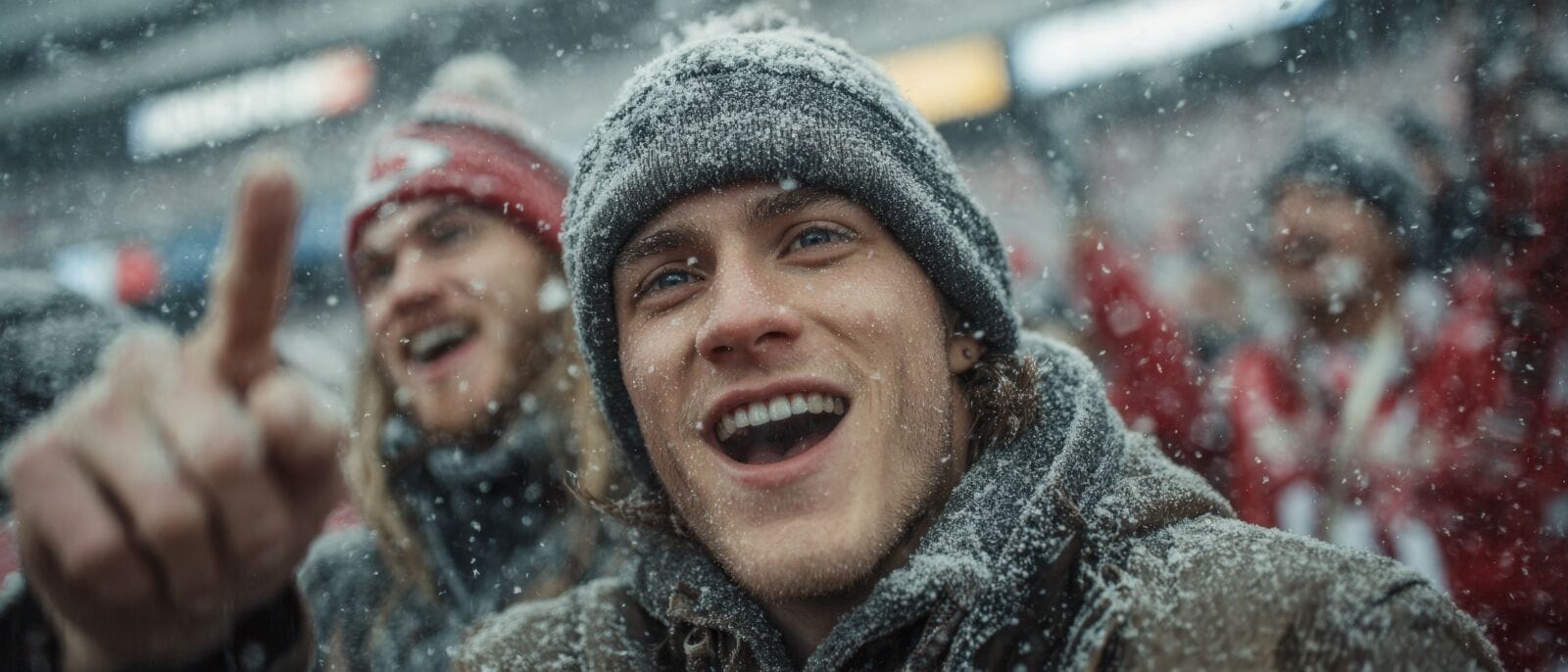
Watching a game outside is harder on the body than most people expect. You sit still for three hours or more, often on metal or concrete seating that pulls heat straight out of you. Add wind moving through an open stadium, and the cold sets in long before the game ends. By halftime, plenty of fans are more focused on their frozen hands than the score, and by the fourth quarter some have already left early just to warm up in the car.
Regular winter clothes struggle here for one simple reason: they were built for walking around, not sitting still. Standing insulation relies on movement to keep blood flowing and heat generating. A stadium seat removes that movement entirely. This is exactly the gap that heated clothes are built to close, since they add warmth directly instead of depending on your body to make more of it on its own.
Fans usually solve this the wrong way, by wearing more layers than the seat or the walk to the parking lot actually needs. That adds bulk without fixing the real problem: sitting still drains heat faster than moving does, no matter how many sweaters get stacked on top of each other or how thick the outer coat is.
Why sitting still is colder than walking around
Movement keeps blood flowing to your hands, feet, and skin. Sitting still for a game slows that down. Add a cold metal bench under you, and heat pulls out from below as well as from the air around you. That’s why the same 40-degree afternoon feels much colder in the stands than walking to your seat or grabbing food at halftime, when you’re at least moving again for a few minutes. Wind makes it worse still, since a stadium built in an open bowl shape rarely blocks much of it, and moving air pulls heat away from skin far faster than still air does.
Game day heated gear compared
| Gear | Runtime | Best for |
| Heated vest | 4 to 6 hours per charge | Warming the core, fits easily under a jersey |
| Heated gloves | 4 to 8 hours per charge | Cold hands from holding drinks, phones, railings |
| Heated seat pad | 4 to 6 hours per charge | Blocking cold from metal or concrete bleachers |
| Heated socks | 4 to 8 hours per charge | Feet on cold concrete or standing room sections |
What to check before you leave for the game
- Charge every battery fully the night before, not the morning of, since most games run longer than people expect once tailgating is included.
- Bring one spare battery if the game includes a long tailgate before kickoff, since that adds several extra hours before the game even starts.
- Check the return policy and warranty before buying gear right before a big game, in case sizing needs an exchange after the fact.
- Pack gloves and a seat pad even if you already own a heated jacket, since a jacket alone still leaves hands and the seat itself cold.
- Test every piece at home first, so you’re not learning how the settings and controls work for the first time in the parking lot.
How to layer for a full game without looking bulky
Keep the heated piece as your only real insulation layer. A thin base layer underneath and a light windproof shell on top is usually enough, even in the real cold, because the heated piece is doing the actual work. Save the thick puffy coat for the walk to the car after the game, when the battery matters less, and bulk matters less too. This also matters if you’re wearing team colors, since a bulky coat tends to hide the jersey most fans actually want visible in photos, and it makes climbing through a packed row of seats much harder than it needs to be.
Conclusion
Cold at an outdoor game comes from sitting still, not from the air temperature alone. Regular coats and extra layers do not fix that, since they depend on movement your seat does not allow. Heated clothes solve it directly by warming your core, hands, and the seat itself instead of just holding heat in. Charge everything the night before, bring gloves and a seat pad along with any jacket, and keep the rest of your outfit light. Do that, and the fourth quarter feels the same as the first, no matter how long the tailgate or the game runs, and no matter how cold the bleachers get underneath you by the time the final whistle blows.