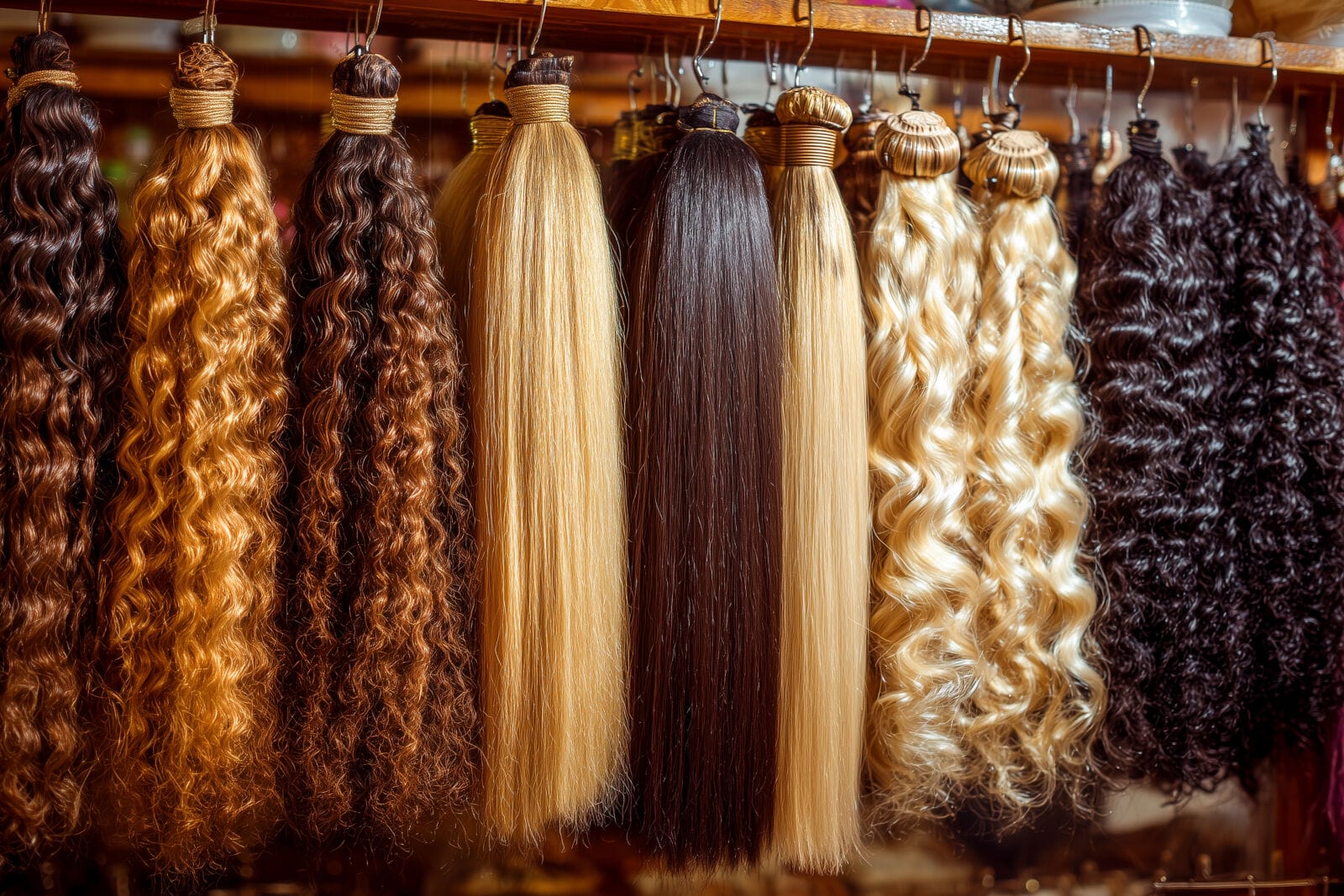
The Ultimate Guide to Human Hair Bundle Types: Finding Your Perfect Texture Match
Choosing hair bundles gets confusing surprisingly fast.
Straight sounds straightforward. Then you encounter body wave, loose wave, deep wave, water wave, kinky straight, curly, and other textures that can look remarkably similar in carefully styled product photos.
The differences become much more obvious after installation.
Some textures are designed for sleek styles. Others give you volume before you’ve done much styling at all. Certain wave patterns are relatively easy to refresh, while tighter curls usually ask for more attention to moisture and detangling.
So instead of choosing a bundle because it looks good in one photo, think about what you want your hair to do every day.
This guide breaks down the major human hair bundle textures and the type of wearer each one tends to suit.
Start With Texture, Not Length
Length usually gets most of the attention when shopping for bundles.
But texture may have a bigger effect on how the finished installation actually looks.
Take 20-inch straight hair and 20-inch curly hair. Although they’re sold at the same measured length, they won’t necessarily appear equally long when worn. Curly hair contracts into its pattern, while straight hair falls closer to its full measured length.
They won’t have the same volume either.
Curly and wavy textures occupy more horizontal space, which can make them appear fuller. Straight hair generally creates a sleeker silhouette.
Before deciding between 18, 20, or 22 inches, ask a more important question:
Do I want sleekness, movement, volume, or defined texture?
Your answer immediately narrows the field.
Straight Bundles: Sleek and Versatile
Straight human hair bundles are one of the most versatile starting points.
They create a smooth, polished appearance and make length particularly noticeable because there’s little curl shrinkage.
Straight hair also works well for people who enjoy changing their look with heat styling. Depending on the hair and its condition, it can be curled or waved and later returned to a straighter finish.
The trade-off is volume.
Because the strands naturally fall downward, straight hair doesn’t create the same visual fullness as a curly texture. If you want a very dense straight installation, bundle quantity and placement become more important.
Straight bundles are worth considering if you prefer:
- Sleek, polished hairstyles
- Clearly visible length
- Easy brushing and detangling
- A flexible base for heat styling
- A lower-volume silhouette
They’re also a practical option if you’re unsure which texture you’ll want several weeks from now.
Body Wave: The Middle Ground
Body wave is one of the easiest textures to understand once you see it installed.
It isn’t straight, but it isn’t highly defined either.
Instead, the hair falls in broad, soft waves that create more movement and body than straight bundles without producing an obviously curly appearance.
That makes body wave a useful middle ground.
You can wear the natural wave pattern for a relaxed look, straighten it for a sleeker finish, or use heat tools to create more defined curls.
The wave pattern may loosen after washing or repeated styling, so don’t assume it will always return to exactly the same appearance it had when first unpacked.
Body wave is particularly appealing to someone who wants versatility but finds completely straight hair a little too flat.
Loose Wave: More Movement Without Tight Curls
Loose wave sits somewhere between body wave and more defined wave patterns.
The waves tend to have greater shape and separation than body wave while remaining relatively relaxed.
Visually, that means more texture without jumping all the way into deep curls.
Loose wave can work particularly well for long installations because the pattern adds movement throughout the lengths. It also creates more visual fullness than straight hair.
For someone who wants a soft, romantic look rather than highly structured curls, loose wave is worth considering.
Just remember that wave definition still requires care.
Brushing aggressively can stretch out the pattern, while heavy styling products may cause sections to clump together and lose some of their natural movement.
Deep Wave: When You Want More Definition
Deep wave makes a much stronger texture statement.
The wave pattern is tighter and more defined, creating noticeable volume and dimension throughout the installation.
Because the hair bends outward instead of falling completely straight, deep wave can appear significantly fuller even when you’re working with a similar amount of hair.
This is a good choice if volume is one of your priorities.
However, more texture usually means a slightly different maintenance routine.
Strands can cross over each other more easily, particularly around the nape. Gentle detangling and regular moisture become more important than they would be with a simple straight style.
Deep wave suits someone who wants the texture to remain a visible part of the hairstyle rather than merely adding a little movement.
Water Wave: A Softer, Less Uniform Finish
Water wave is often chosen for its loose, flowing texture.
Rather than looking perfectly uniform from root to tip, the pattern can create a more relaxed combination of bends and curls.
That variation is part of the appeal.
The finished result can feel less structured than a highly defined deep-wave style while still providing considerably more texture than body wave.
Water wave also responds well to styling that emphasizes a slightly tousled or wet-look finish.
If you prefer every section to look perfectly identical, this may not be your first choice. If you like texture that feels freer and less controlled, it may be exactly what you’re looking for.
Curly Bundles: Maximum Texture and Volume
Curly bundles make volume part of the hairstyle from the beginning.
Because curls expand outward, they can create a much larger silhouette than straight hair. You can then control that size through curl separation, layering, product choice, and styling.
This makes curly hair especially useful for anyone chasing a full, dramatic look.
But there’s a trade-off.
Curly textures usually need more attention during detangling. They can also react more noticeably to dryness, friction, and heavy product buildup.
You shouldn’t approach them with the same maintenance routine you’d use for straight hair.
Instead of frequent dry brushing, curls generally benefit from careful section-by-section detangling and styling that respects the existing pattern.
If you enjoy the maintenance process, the payoff is a texture with enormous personality and styling potential.
Kinky Straight: Texture Without Curls
Kinky straight occupies an interesting space in the bundle world.
From a distance, the hair appears relatively straight. Look closer and you’ll see more texture and body than you’d expect from silky straight bundles.
The effect can resemble natural textured hair that has been blown out or straightened.
That makes kinky straight especially useful when the goal is fullness without defined waves or curls.
It can also help create a different type of blend when some natural hair is being left out, depending on the wearer’s own texture and styling method.
If silky straight feels too sleek but curly hair feels like too much maintenance, kinky straight offers another direction entirely.
How Human Hair Changes Your Options
Texture matters, but so does the fiber itself.
With quality human hair weave bundles, you generally have more freedom to wash, condition, curl, straighten, and restyle the hair than you would with many synthetic alternatives.
That versatility is one of the reasons human hair remains popular for sew-ins and other longer-term installations.
But “human hair” doesn’t mean indestructible.
Every round of bleaching, coloring, high-temperature styling, and aggressive detangling can affect the condition of the strands.
If you buy curly bundles and constantly straighten them, for example, don’t assume the original curl pattern will remain unchanged indefinitely.
Choose a texture reasonably close to the style you expect to wear most often. You’ll spend less time forcing the hair to behave differently from its natural pattern.
Your Leave-Out Should Influence the Decision
If your installation includes leave-out, texture matching becomes more important.
The extensions don’t necessarily need to match your natural hair exactly in its untouched state. They need to match how you intend to style your natural hair.
For example, someone with naturally textured hair who plans to blow-dry the leave-out may find that a slightly textured straight bundle blends more naturally than an extremely silky one.
Likewise, matching curly leave-out involves more than simply choosing “curly” extensions.
Curl diameter, definition, density, and shrinkage all affect the blend.
The smaller the amount of manipulation required to make your natural hair and extensions meet in the middle, the easier the style may be to maintain.
Think About Your Morning Routine
One of the best ways to choose a texture is to imagine an ordinary Tuesday morning.
How much time do you actually want to spend on your hair?
Straight bundles may require relatively little work when they’re properly protected overnight.
Loose waves might need a quick refresh.
Highly defined curls could require sectioning, moisture, and reshaping in areas that became compressed while you slept.
None of these routines is objectively difficult. They simply require different levels of involvement.
If you enjoy styling your hair every morning, a high-maintenance texture may not bother you at all.
If you want to get dressed and leave, choose accordingly.
Match Texture to Lifestyle, Not Just Appearance
If you’re still deciding, narrow your options by asking what matters most.
Choose straight hair when versatility and sleekness are priorities.
Look at body wave when you want softness and movement without committing to defined texture.
Consider loose or deep wave when you want the pattern itself to become a visible part of the hairstyle.
Go curly when maximum volume and curl definition are the goal.
And consider kinky straight when you want body and natural-looking texture without an obvious wave or curl pattern.
Then think about maintenance.
The style you love in a product photo has to survive your commute, workouts, sleep routine, weather, and the amount of time you’re actually willing to spend maintaining it.
Your Perfect Texture Is the One You’ll Still Love on Week Three
It’s easy to choose bundles based on how they look immediately after installation.
The better test is imagining them several weeks later.
Will you still enjoy refreshing those curls? Will you wish your straight hair had more body? Are you likely to straighten the deep-wave bundles every morning because you never really wanted waves in the first place?
Those questions tell you much more than a texture name.
Human hair bundles give you considerable styling freedom, but starting with a texture that already matches your preferred look reduces the amount of manipulation required to maintain it.
That’s ultimately the simplest way to choose.
Don’t search for the texture that looks best in isolation.
Find the one that looks like the hair you’ll actually want to wear.