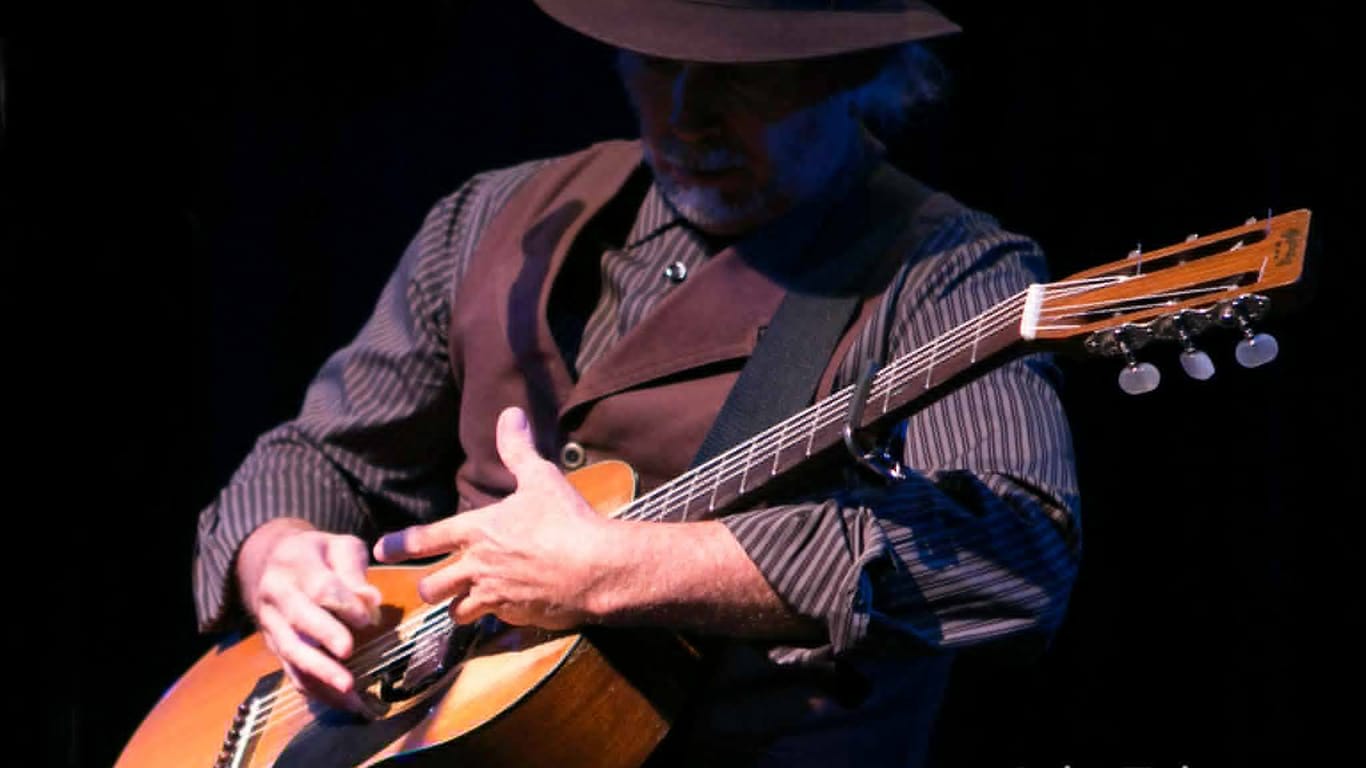
Roy Rogers, the blues‑rock slide guitarist, is a towering figure in American roots music, celebrated for his work with the Delta Rhythm Kings and for producing several landmark recordings by John Lee Hooker.
Even with all his success, Rogers still feels excited when his efforts are recognized. During this year’s Oscars, a winner mentioned John Lee Hooker’s song “The Healer,” which he produced.
LEARN MORE: The 15 best public and private high schools in Metro Phoenix
FOOD NEWS: 25 places for great patio dining in Arizona
At 75, he still lights up when his work gets recognized. When a composer at this year’s Oscars thanked his father for bringing home Hooker’s “The Healer” when he was a kid, Rogers nearly fell out of his chair.
“How nice,” said an obviously touched Rogers the day after the Oscars. “To hear Hooker’s name mentioned like that, in front of a billion people … it was shockingly good.”
Rogers is also truly excited to return to the Musical Instrument Museum in Phoenix on Saturday, March 21. “You’re very fortunate to have that there,” Rogers said. “It’s a stunning place.”
He remembered the last time he performed in Arizona — opening for Bonnie Raitt at the Arizona Financial Theater — and how engaged the audiences were. “They appreciate good music,” he said. “It’s always a pleasure to play for that.”
Rogers is considered one of the world’s preeminent master Delta slide guitarists, with many decades of touring the globe. With more than 20 recordings to his credit, Rogers has garnered eight Grammy nominations for producing, as a recording artist, and as a songwriter.
His collaborations have earned major media accolades worldwide. He has produced critically acclaimed, Grammy-nominated recordings for Hooker and Ramblin’ Jack Elliott, and he has collaborated with Raitt, Carlos Santana, Béla Fleck, Allen Toussaint, Sammy Hagar and Ray Manzarek, among others.
For Rogers, the magic of a show isn’t about flash or perfection. It’s about connection.
“When you connect on stage as musicians, then the audience connects,” he said. “You’re not trying to impress anybody. You’re just trying to make it real.” And with blues, he adds, there’s no faking it. “You either do it with your heart and soul, or you shouldn’t be doing it.”
Rogers felt the pull to record for the first time since before the COVID-19 pandemic. The result is “The Sky’s the Limit,” a half-acoustic, half-band album that reflects where he is now. “I make a record when I feel like I’ve got something to say,” he explained. “Not to tour, not because it’s time. Because something’s there.”
He sees each album as a snapshot of a moment in his life. “They always reflect where you are at a certain time,” he said. “That’s the way life works for all of us. Music just makes it visible.”
Working with artists across genres has always been intentional for him.
“I want to stretch it,” he said. “You can be in a genre, but it’s great to stretch the envelope.” That philosophy led him to projects like StringShot, a collaboration blending blues and Latin music with Brazilian guitarist Badi Assad and Paraguayan violinist Carlos Reyes. The album was released just as COVID hit — “like a stone,” he said — but he’s still proud of the experiment.
Rogers has observed the music industry change — touring, promotion, technology, and the entire ecosystem. He described music as “the canary in the coal mine” for how technology can both support and threaten art. But he’s not bitter. He’s pragmatic. “Either you make use of it, or you don’t,” he says. “You use what works for you.”
What hasn’t changed is the soul of the music. “With roots music, you’re going for the feeling,” he says. “You’re not going for a hit. You’re going for something honest.”