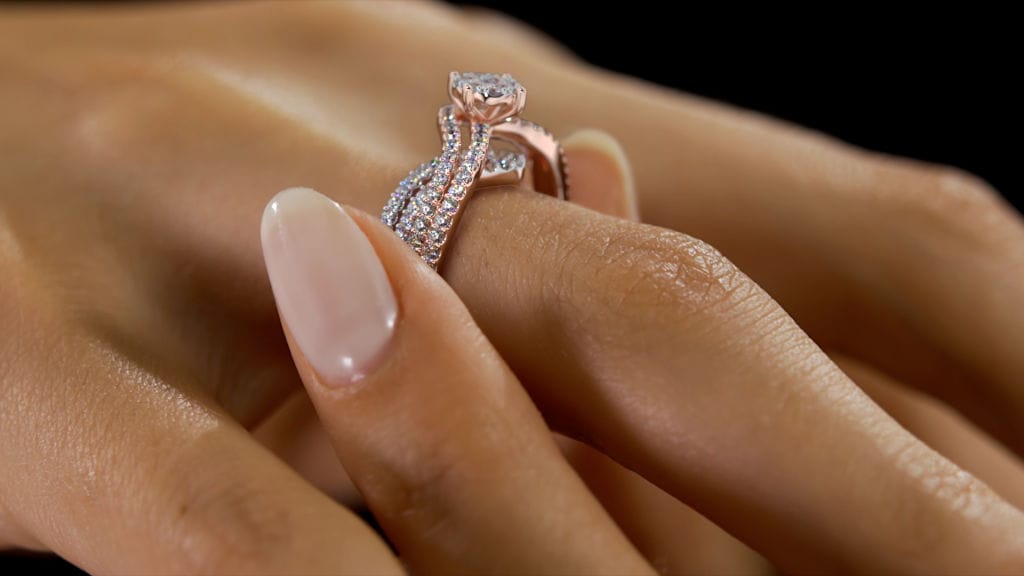
Building a custom ring should feel exciting, not overwhelming. But between choosing a diamond, picking a shape, deciding on a setting, and settling on a metal, it’s easy to see why so many first-time buyers freeze up somewhere in the middle. Breaking the process into a clear sequence turns what feels like an enormous decision into a series of small, manageable ones.
Step One: Choose Between Lab-Grown and Natural
The first real fork in the road is deciding between a lab-grown or natural diamond. Both share identical chemical, physical, and optical properties the same brilliance, the same hardness with origin being the only real difference. That distinction shows up almost entirely in price, since lab-grown stones typically cost 60 to 85 percent less than a natural diamond of equivalent grade. For a 1-carat stone, that can mean the difference between spending several thousand dollars and spending a fraction of that, freeing up budget for a larger stone, a better clarity grade, or a more elaborate setting.
Buyers researching discover more here will find this decision made easier from the start, since Rare Carat lets shoppers filter specifically for lab-grown stones from the very first search rather than sorting through a mixed catalog.
Step Two: Pick a Shape That Suits the Design
Shape comes next, and it’s worth choosing early since it influences almost every decision that follows. Round diamonds maximize brilliance and remain the most classic choice; oval and marquise shapes elongate the finger and appear larger per carat; emerald and asscher cuts show off clarity more directly, since their broad, open facets leave inclusions with nowhere to hide. None of these shapes are objectively better the right one depends on personal style and how the finished ring is meant to look on the hand.
Every diamond, regardless of shape, comes with certification from GIA, IGI, or GCAL, and as the merchant of record on every order, Rare Carat backs that certification with a two-step in-house verification matching each stone’s microscopic laser inscription against its certificate under high magnification, then confirming authenticity through UV fluorescence testing.
Step Three: Settle on a Carat Weight
Carat weight is where budget and appearance intersect most directly. A smaller carat weight suits buyers who prefer understated, everyday elegance, while larger sizes make more of a statement. Because lab-grown diamonds cost considerably less than natural stones at the same size, this step often becomes less about compromise and more about genuine preference, since budget constraints loosen considerably compared to shopping exclusively in natural diamonds.
Step Four: Choose a Setting Style
The setting is where a ring’s personality really comes through. A solitaire keeps things minimal and timeless. A halo adds visual size by surrounding the center stone with smaller diamonds. Pavé bands bring continuous sparkle down the shank, and a cathedral setting lifts the stone higher for added presence and light exposure. With more than 1,700 ring styles available, there’s enough range here that most buyers find a starting point close to what they had in mind before any customization even begins.
Smart filters and personalized recommendations make narrowing this selection manageable, letting buyers search by shape, setting, and metal simultaneously rather than scrolling through the full collection one option at a time.
Step Five: Pick a Metal
Metal choice affects both the ring’s appearance and its long-term wear. Platinum and white gold offer a clean, modern look, though white gold requires occasional rhodium replating to maintain its brightness. Yellow gold reads warmer and more traditional, while rose gold sits somewhere in between, often complementing diamonds with warmer undertones particularly well.
Step Six: Get a Second Opinion Before Finalizing
Even after working through shape, carat, setting, and metal, many buyers want reassurance before committing to a final design. A team of more than 100 GIA-trained gemologists is available specifically for this, offering free guidance focused on helping buyers feel confident in their choice rather than pushing toward a particular sale. Buyers building out a coordinated look can also explore matching options, including Rare Carat Online‘s drop earring collection, to see how the same certified lab diamonds carry across categories beyond just rings.
Step Seven: Confirm the Details That Back the Purchase
The modern, easy-to-use website ties every prior step together, and the underlying technology helps customers identify quality options quickly rather than leaving comparisons to guesswork. Every ring is handmade in the USA, one piece at a time, in workshops based in New York and New Jersey, with strict quality inspections before shipping in premium packaging with carefully prepared, insured delivery.
Step Eight: Buy With Confidence
Smooth returns and exchanges, along with education-focused customer support that continues after checkout, mean a custom order can be reconsidered without friction if the finished piece doesn’t feel quite right. This consistency has helped the brand hold a top-ranked position among online jewelers on Trustpilot, backed by thousands of verified customer reviews.
The Bottom Line
Building a custom lab diamond ring doesn’t need to feel complicated once it’s broken into a clear sequence: choose the diamond type, pick a shape, settle on carat weight, select a setting and metal, then confirm everything with expert guidance before finalizing. Followed in that order, the process moves quickly, and the ring that comes out the other end tends to feel like it was actually designed with real intention rather than assembled under pressure.
Video Guide: Watch: What to Know Before You Buy