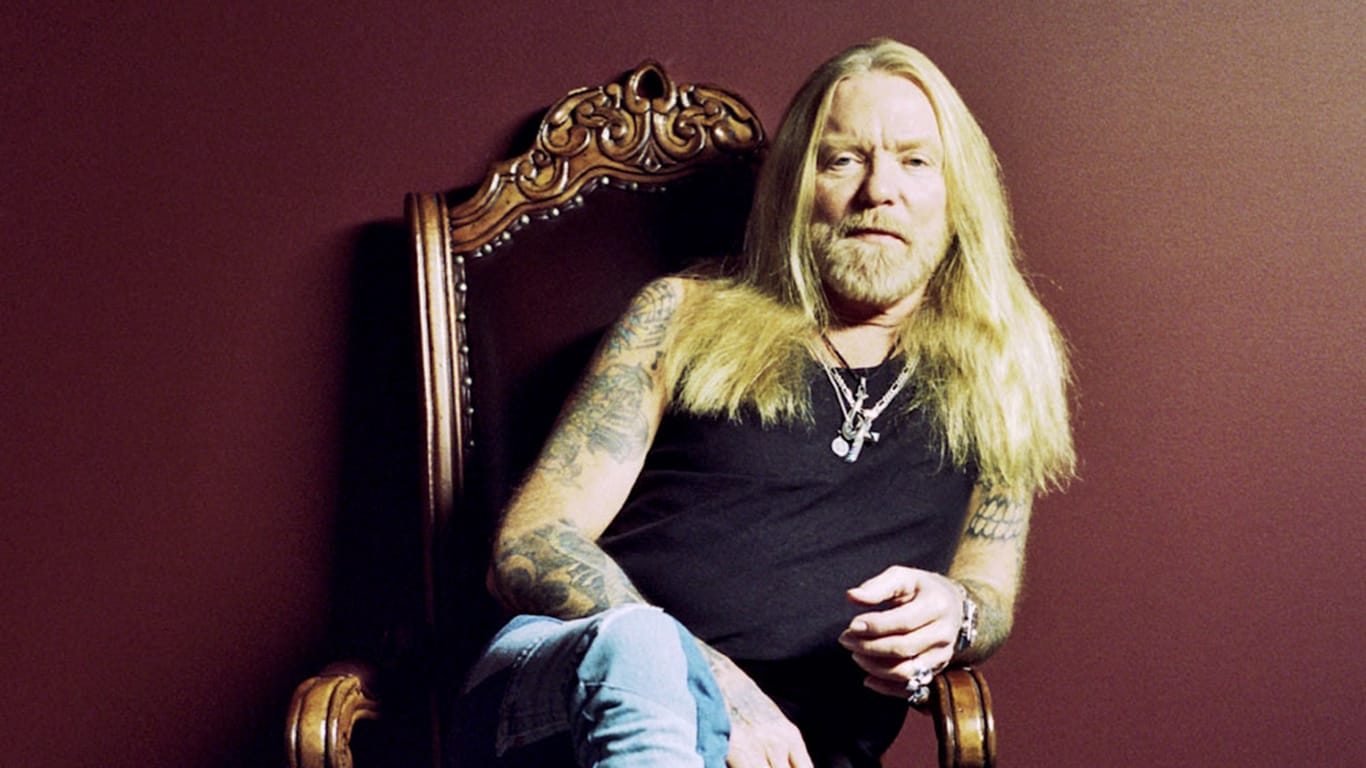
Gregg Allman’s longtime manager, Michael Lehman, vividly remembers when the songwriter-vocalist truly let him in.
In a hushed voice, Allman spoke about his brother Duane’s death and how mourning changed his life.
“He would talk about his brother almost on a daily basis whenever we were together,” Lehman said. “I guess I had a place in my heart that opened up to that wounded individual.”
That vulnerability is the foundation of a 14‑year partnership and a friendship that lasted until Allman’s death in 2017. The relationship is celebrated in “Gregg Allman: The Music of My Soul,” the new feature documentary Lehman helped produce.
“Gregg Allman: The Music of My Soul” will screen on Saturday, Oct. 17, at the new Hilltop Theatre at 5356 N. Litchfield Rd., Litchfield Park. According to Lehman, $2 from each ticket sold will benefit the Gregg Allman Scholarship funds or local charitable organizations dedicated to the performing arts.
The documentary, directed by Grammy and Golden Globe Award-winning filmmaker James Keach.
DEEPER DIVE: Here are Arizona’s Most Admired Companies of 2026
“Gregg’s story resonated with me — especially his relationship with his brother, Duane,” Keach said in a statement. “I have a very close relationship with my brother, Stacy. We worked together for years on many great projects, including “The Long Riders,” which was formative for the Carradine and Quaid brothers and for us. The thought of losing my brother at such a young age really got to me.”
Lehman is proud of the project.
“It’s a beautiful film,” he said. “Greg gets to tell about 80% of the story by himself. Different than a lot of music docs where there’s a ton of talking heads.”
After Allman died, Lehman stepped away from music for a time, as Allman’s death affected him profoundly. When he finally returned to the idea of a documentary, he realized the archival footage they had — decades of interviews, performance, and candid moments — allowed Allman to speak directly to the audience.
“Some of the things that come out of his mouth are mind‑blowing,” Lehman said.
One line resonated with him: “Everyone has the blues. You come out of your mama’s womb, crying and you have the blues.” It’s the kind of observation that reveals not just a musician, but a philosopher — someone who understood suffering as a universal condition and turned it into art.
The film traces Allman’s life from childhood to his final years, weaving together personal tragedy, musical triumph, and the complicated path between the two.
Born in Nashville in 1947, Allman grew up in the shadow of his father’s murder — a trauma that shaped both him and Duane, and later the music they made together. When Duane died in 1971, Allman spiraled into addiction, a battle he later confronted with clarity and honesty.
“He overcame drug and alcohol dependency,” Lehman said. “And he wished, if he could save one person from going through what he went through, it would all be worth it.”
Keach, who has explored the lives of artists like Glen Campbell and Linda Ronstadt, understood immediately how trauma informed Allman’s creativity. In the film’s production notes, he explains that “understanding trauma from the formative years of a person’s life is central when telling their story.”
Lehman agreed — and believed Keach’s close relationship with his own brother made him uniquely suited to tell Gregg and Duane’s story.
But the documentary isn’t only about loss. It’s also about the joy Allman found in music, the friendships he built, and the humanity he carried with him. Lehman describes him as “a true Southern gentleman,” someone kind‑hearted and deeply thoughtful. “He was bright and articulate and a real deep thinker,” he said. “He was a lover of people and mankind.”
That humanity extended to the way Allman approached music. Growing up in the South during a time of racial division, he rejected those boundaries, grounding his sound in Black blues traditions and collaborating with Black musicians.
The film highlights how the Allman Brothers Band became one of the few integrated rock groups of the era — a quiet but powerful act of cultural defiance.
For Lehman, preserving that legacy is personal.
“I want the world to know the Gregg behind the music,” he said. “Not only the lead singer of the Allman Brothers Band, but the person he was.”
The film also explores Allman’s complicated relationship with fame, including his marriage to Cher and the pressures of public life. But at its core, “The Music of My Soul” is about connection — the bond between brothers and bandmates, and between Allman and the people who loved him.
Lehman was one of those people. Their friendship was built on trust, humor, and a shared sense of purpose. Along with Allman’s best friend Chank Middleton, they jokingly called themselves “the Three Musketeers.” Lehman nudged Allman toward new creative projects — studio albums, live recordings, his autobiography — during a period when Allman had clarity and focus. “I wanted to over‑deliver,” he said. “Polish this diamond that still had a lot left in him.”
Even now, Lehman continues to run Allman’s businesses, oversee archival releases, and serve on the Allman Brothers Band board. He also manages Rev Run and co‑manages Run DMC, but Gregg remains the artist who “got under [his] skin in a whole different way.”
The screenings of “The Music of My Soul” reflect that devotion.
After the film premiered in traditional theaters, Lehman noticed something: audiences responded to it like a concert. Fans came in groups — sometimes dozens at a time — and the experience felt communal, electric, and alive. That’s why this fall’s screenings are being held in music halls, clubs and performing arts centers.
“It should be experienced more like a live concert than a traditional film,” Lehman said. “It gives audiences the chance to gather with friends, enjoy a beverage, browse exclusive merchandise, and celebrate Gregg’s incredible legacy together.”
For Lehman, that communal experience mirrors the way Allman lived — connected to people, shaped by relationships, and always reaching for something honest.
“He just really, really got under my skin,” Lehman said. “You could feel the pain and suffering he lived through every day. It was hard not to allow that to seep into your soul.”