Stretch Zone regional manager Zach Mueller has witnessed hundreds of small breakthroughs in his studios, but one moment stays with him. He recalls stretching a 75‑year‑old client for several months.
One afternoon, the man sat down in a rolling chair, crossed his legs, and began to cry. “He said, ‘I haven’t been able to cross my legs like this in 30 years,’” Mueller recalled. “Moments like that remind you why we do this.”
Mueller said clients have sworn that the brand’s practitioner‑assisted stretching eases their pain, restores mobility, and helps them reclaim everyday movements they thought were gone forever. Now, the company has scientific evidence to back it up.
MORE NEWS: Atari Hotels breaks ground in Roosevelt Row
DEEPER DIVE: 10 Arizona restaurants make Yelp’s Top 100 Mexican food spots
In an industry‑first research study published in the Journal of Musculoskeletal Disorders and Treatment, Stretch Zone’s proprietary method demonstrated measurable improvements in pain reduction, mobility, sleep, energy and overall quality of life.
“People feel better, move better and live better because of Stretch Zone; and now we have the data to prove it,” said Tony Zaccario, president and chief executive officer.
The study — titled The Stretch Zone Effect — followed 32 adults over 30 days as they participated in Stretch Zone’s standardized practitioner‑assisted stretching program. Participants were brand new to the method and did no stretching outside the study, ensuring clean, controlled data. Researchers compared once‑weekly versus twice‑weekly sessions and 30‑minute versus 60‑minute appointments.
The results were striking, Mueller said:
- 78% saw reduced pain, tension, and discomfort.
- 66% reported higher energy and reduced fatigue.
- 58% slept better and recovered more effectively.
- 85% improved their range of motion.
- 61% found daily activities—bending, lifting, walking—easier.
- 90% reported full‑body health benefits.
Those who stretched two to three times weekly saw 25% greater gains in flexibility. Participants improved back flexion by 8 to 11 degrees — mobility that can meaningfully affect daily life. Two 60‑minute sessions per week produced the strongest gains in trunk, hip, and shoulder mobility.
“These numbers translate into bending to tie a shoe, turning to check a blind spot or walking up stairs without discomfort,” Zaccario said.
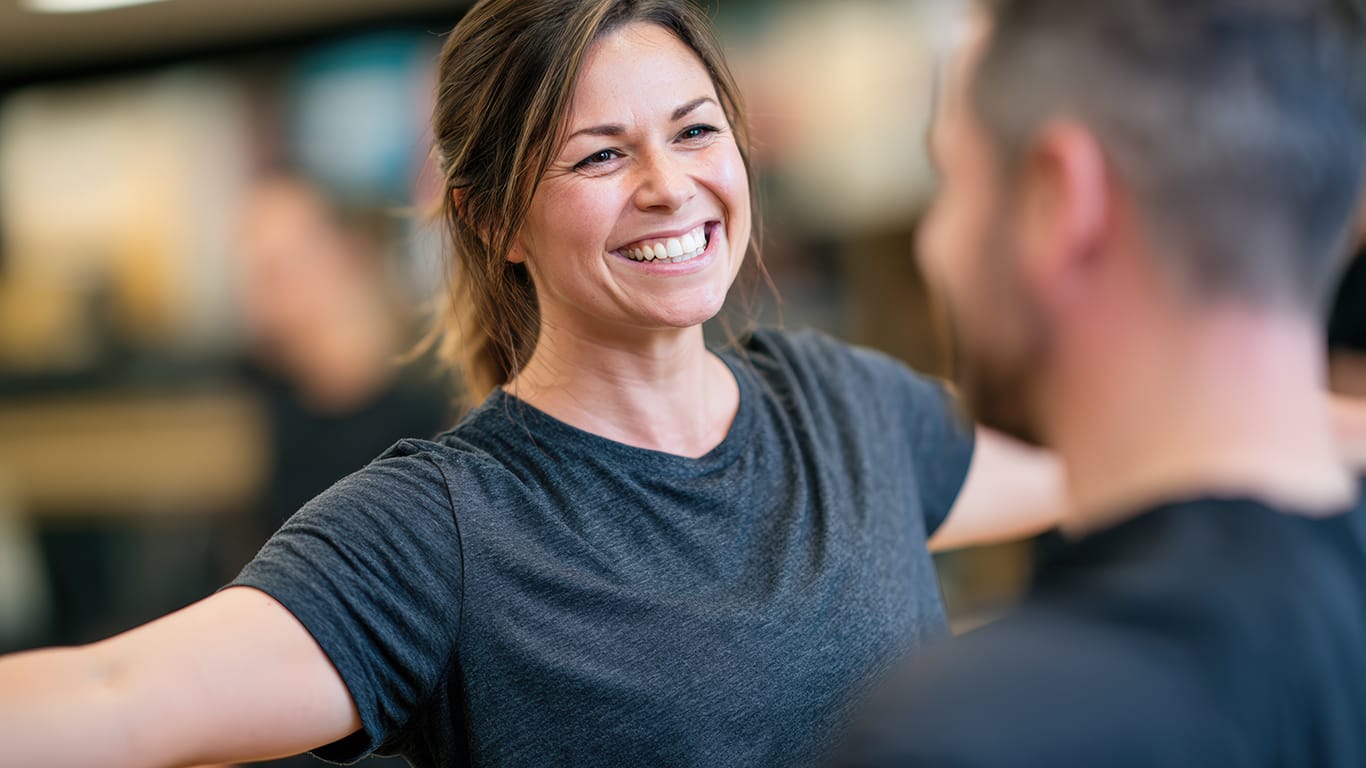
To understand why the method works, Mueller says prospective members need to see a session in action. Stretch Zone practitioners don’t simply guide clients through stretches—they move the client’s body for them. Clients stay completely relaxed while practitioners use a patented strapping system to stabilize the body and isolate specific muscles.
“We call it lazy yoga,” Mueller said. “You’re able to achieve a much deeper and more effective stretch than you could on your own because you’re not using your own muscles to do the work.”
Every practitioner holds a degree in exercise science or a related field and is certified through the Stretch Zone Method, a rigorous program combining online coursework with intensive in‑person testing. Sessions begin with a consultation and intake form to identify goals, background, and any contraindications. Practitioners have more than three 30-minute stretch cadences memorized; two 30-minute stretches specifically for the lower body. Then, we have one 30-minute stretch for the upper body.
Mueller said it comes down to communication.
“We make sure that they’re relaxed and breathing. They communicate with us, then we do our stretches. The stretches work great.”