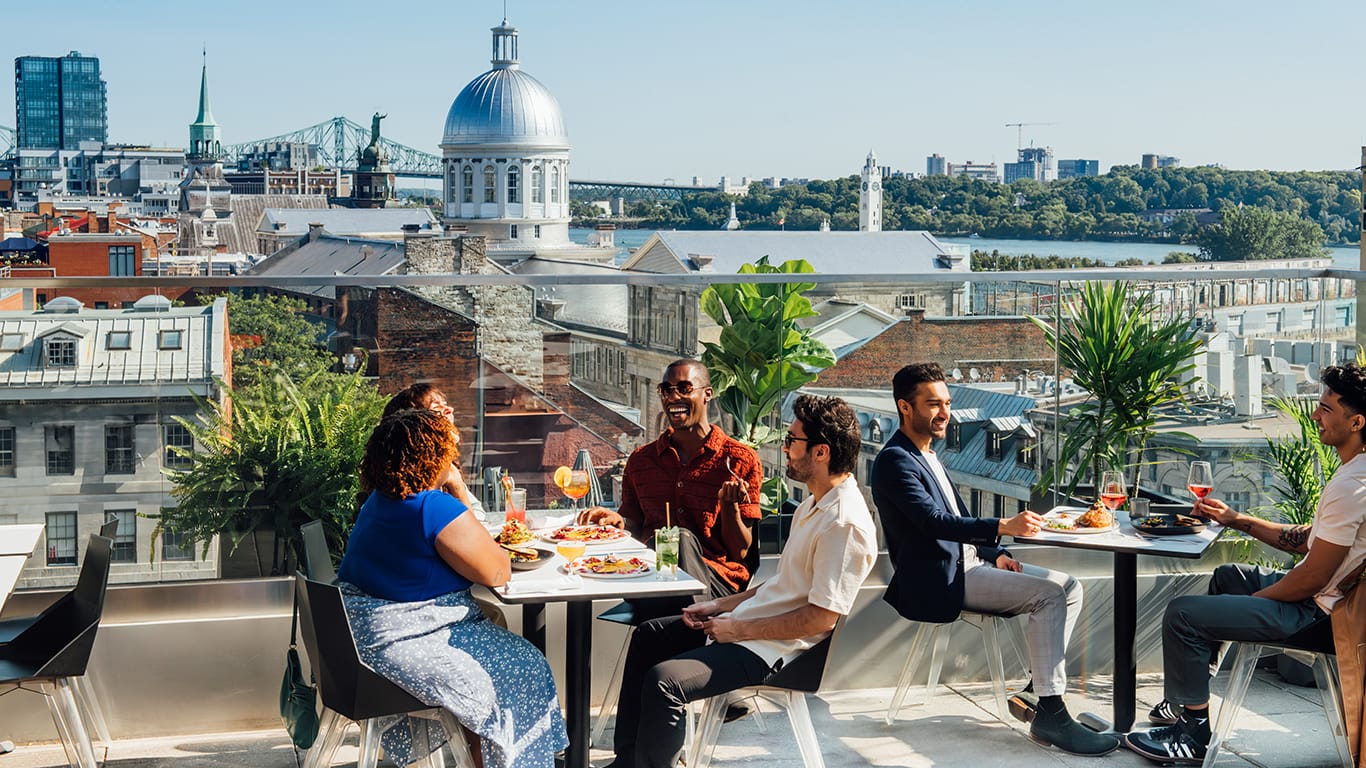
Montréal welcomes visitors like family. You feel it everywhere — in the way museum guides linger to answer one more question, in the hotel staff who seem genuinely proud of its city, and in the locals who stroll Old Montréal’s cobblestones as if they’re sharing their living room with you.
That warmth starts at Montréal-Pierre Elliott Trudeau International Airport (YUL), where employees don’t just point you toward baggage claim — they help you lift your suitcase and send you off with a “bonne journée.”
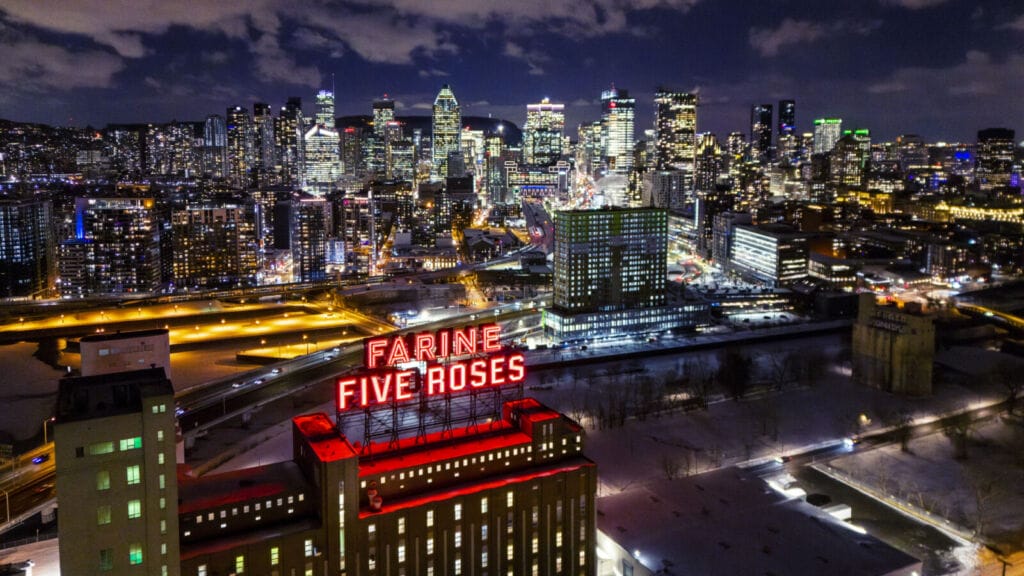
My Phénix Limousine driver keeps the theme going, narrating the ride as industrial blocks give way to 19th‑century stone buildings and the skyline rises behind the St. Lawrence River. By late October, the sugar and red maples are in full flare — the kind of red that makes you stop mid‑sentence.
DEEPER DIVE: Here are Arizona’s Most Admired Companies of 2026
Saturday: Candlelight, neo‑baroque drama, and a classic deli finish
My home for the next four days is Hôtel Place d’Armes, a luxury boutique hotel stitched together from four historic buildings at the corner of Place d’Armes and Saint‑Jacques Street. Its neoclassical façade — limestone blocks, symmetrical windows, Corinthian pilasters — reflects the era when Saint‑Jacques was considered Canada’s Wall Street.
The interior renovation respects the bones: tall windows, carved moldings, and preserved stonework that hint at the building’s former life as a bank headquarters. Even the hallways feel rooted in history, with exposed brick and original beams nestled among modern touches.
Martine Venne from Tourisme Montréal meets me for the evening. She’s the kind of guide who turns a walk into a conversation, pointing out architectural details most people miss — the ironwork balconies, the carved lintels, the way Old Montréal’s street grid still follows the 1642 settlement. She moves through the city with the relaxed generosity of someone who genuinely delights in sharing it.
We start at the Rialto Theatre for Candlelight: Halloween Classics. Built in 1924 by architect Raoul Gariépy and inspired by the Paris Opera House, the Rialto is a neo‑baroque jewel box — gilded plasterwork, a domed ceiling, and a theatrical sweep that makes even a string quartet feel grand.
The lobby’s marble columns and ornate friezes set the tone before you even enter the auditorium. Artificial candles line the stage (real ones would be a fire hazard), and the musicians play “Thriller,” “Ghostbusters” and seasonal classics with a mix of precision and playfulness. The banter is in Québécois, but the energy makes translation unnecessary.
The organizers want classical music to feel accessible — the same way Bugs Bunny once did — and the formula works: local musicians, iconic venues, and thousands of candles turning familiar music into something cinematic.
After the show, Martine leads me to Outremont’s Lester’s Deli, a neighborhood spot known for its smoked meat sandwiches. Montréal smoked meat is brisket cured for about 10 days with a spice blend heavy on peppercorns and coriander, smoked low and slow, then steamed until it practically sighs when sliced.
Lester’s version leans slightly sweeter and fattier, hand‑cut and stacked high. The sandwich arrives with mustard, crisp pickles, and a side of coleslaw that tastes exactly like a deli should — simple, cold, and crunchy. The neighborhood adds its own charm: leafy streets, families out for evening walks, and a deli counter that hasn’t changed much in decades.
Sunday: Old Montréal on foot, market‑fresh lunch
Breakfast at Hôtel Place d’Armes sets the tone for the day, and at 10:30 a.m. I meet a guide from MTL Detours for a walk through Old Montréal. The neighborhood brims with centuries of stories — narrow streets that still follow the original French colonial grid, stone warehouses converted into galleries, and the smell of roasted coffee drifting from cafés tucked into 18th‑century storefronts.
Artists set up near the port, especially around Place Royale, one of the city’s oldest public squares. Shopkeepers sweep their doorways. Church bells echo off the limestone. My guide points out the subtle differences between French colonial stonework — thick walls, small windows, utilitarian lines — and the later British‑influenced commercial buildings with their taller façades and decorative cornices. It’s a neighborhood that rewards curiosity; every alley seems to hide something worth discovering.
The tour ends at Place Jacques‑Cartier, a lively square that leads directly to Maggie Oakes, where lunch is waiting. The restaurant is known for its beef, dry‑aged on site for at least 35 days in temperature‑controlled rooms lined with Himalayan salt blocks.
The signature grilled cuts live up to the reputation: deep flavor, perfect char and a tenderness that only comes from patient aging. The maple‑roasted carrots are a quiet standout, a nod to Québec’s fall harvest and the region’s syrup producers.
Other dishes include bison tartare seasoned with juniper and herbs, escargots toast with garlic butter that soaks into the bread, and a French onion soup layered with sweet, caramelized onions and a cap of broiled Gruyère.
After a relaxed afternoon, dinner is at Time Out Market Montréal, a food hall that gathers some of the city’s best vendors under one roof. Chefs chat with diners, locals mix with travelers, and the whole space hums with Montréal’s food culture. You can wander from Portuguese chicken to gourmet burgers to pastries from a local pâtisserie. One stall serves ramen with pork‑bone broth simmered 12 hours; another offers fresh pasta tossed with Quebec cheeses. It’s a snapshot of Montréal’s culinary diversity in one building.
Monday: A legendary steakhouse, a cathedral of light, and jazz in the old port
Breakfast is at the hotel, and lunch takes me to Moishes, Montréal’s oldest steakhouse. Open for 85 years, Moishes is known for perfectly aged meat, crisp linens, and a dining room that feels timeless without trying.
Their rib steak — aged 28 days and broiled at high heat — arrives with the classic half‑sour pickles that define Montréal steakhouse tradition. The servers move with the confidence of people who’ve worked there for decades, and the room’s dark wood, leather banquettes, and soft lighting make it easy to linger. Even the sides feel rooted in tradition: hand‑cut fries and coleslaw with just enough vinegar.
The afternoon is free for exploring. The area around Hôtel Place d’Armes is dense with cafés, shops, and historic buildings, including Notre‑Dame Basilica. Even if you’ve seen photos, the real thing is different.
Designed by James O’Donnell, an Irish Protestant who converted to Catholicism during the project, the basilica’s interior is a riot of color: deep blues, gold leaf, carved wood, and stained‑glass windows that tell Montréal’s founding story rather than biblical scenes. The vaulted ceiling’s star pattern draws your eyes upward, and sunlight pours through the glass and onto the Casavant organ, which has more than 7,000 pipes.
Peppered throughout the week is the Moment Factory‑created AURA Experience.
“These immersive experiences breathe new life into heritage sites after dark,” said Maite Godin, Moment Factory’s media relations manager. “They illuminate centuries of tradition, artistry and craftsmanship in new and unexpected ways.”
With pixel‑by‑pixel projection mapping, AURA highlights architectural details often overlooked in daylight — the curvature of vaulted ceilings, the texture of stone columns, the carved pulpit. The orchestral score moves through the nave, making the basilica feel like an instrument.
Technical equipment is concealed within housings that match the existing materials, creating a permanent installation that respects the site’s integrity.
Dinner is at Modavie, a bistro known for nightly jazz and French comfort food. The restaurant sits on a corner of Saint‑Paul Street West, with two floors and a warm, lived‑in feel. Jazz starts at 7 p.m., usually standards and light swing, filling the space with a relaxed energy that makes conversations stretch longer than planned.
The menu leans classic: duck confit with crisp skin, lamb dishes braised until tender, onion soup with a thick cheese cap, and a wine list that encourages you to stay for the second set.
Tuesday: Memory, food and a slow farewell
The final day begins with a late checkout and a short walk to the MEM – Centre des mémoires Montréalaises. The museum shares the city’s history through its neighborhoods, communities and evolving identity. Exhibits highlight the folks who shaped Montréal — early settlers, immigrant communities, artists and activists — and the space feels personal and wide‑reaching. It’s a museum built around stories rather than artifacts, and the result is unexpectedly moving.
Le Central, right next door, is ideal for lunch. With 25 food stalls, the gourmet hall showcases Montréal’s culinary range: ramen with pork‑bone broth simmered for 12 hours, herb‑brined rotisserie chicken, pastries like kouign‑amann, tacos, and more.
One stall specializes in fresh pasta; another serves Montreal‑style bagels warm from the oven. It’s the kind of place where you wish you had room for a second lunch. The atmosphere is lively but not chaotic, and the mix of vendors reflects the city’s blend of tradition and innovation.
By mid‑afternoon, it’s time to return to the hotel and prepare to leave. A TAXELCO cab arrives precisely at 3 p.m., and the ride to the airport offers one last look at the skyline. Montréal doesn’t rush the goodbye. It lets you take your time.