A Quiet Year Breaks in Tampa
For most of 2026, Florida’s dengue numbers looked unremarkable. The state had logged dozens of travel-associated cases, people who picked up the virus somewhere else and tested positive after coming home, but no sign of local transmission. That changed in late July, when the Florida Department of Health in Hillsborough County confirmed the state’s first locally acquired dengue case of the year. Days later, Miami-Dade County reported a case of its own, a locally acquired infection with no connection to international travel.
Neither county is treating the news as a crisis. Both moved quickly into standard surveillance and mosquito abatement mode, the same response Florida has run for years whenever a local case appears. But the timing is notable. August is when Florida’s mosquito populations, and its disease risk, typically climb, and two local cases inside a single week is enough to put mosquito control back on the radar of residents and providers such as Mira Home heading into the most active stretch of the season.
What “Locally Acquired” Actually Means
Florida tracks dengue in two separate columns, and the distinction matters more than most homeowners realize. Travel-associated cases involve someone who contracted the virus outside the state and later tested positive after returning home. Florida had logged 43 of those through the middle of July this year, a figure that has tracked fairly steadily with international travel patterns.
Locally acquired cases are different. They mean a mosquito within Florida bit an infected person, picked up the virus, and later bit someone else nearby, completing the transmission cycle entirely within the state. That is the scenario health officials watch most closely, because it signals the virus has found a foothold in the local mosquito population rather than arriving as an isolated, one-off infection.
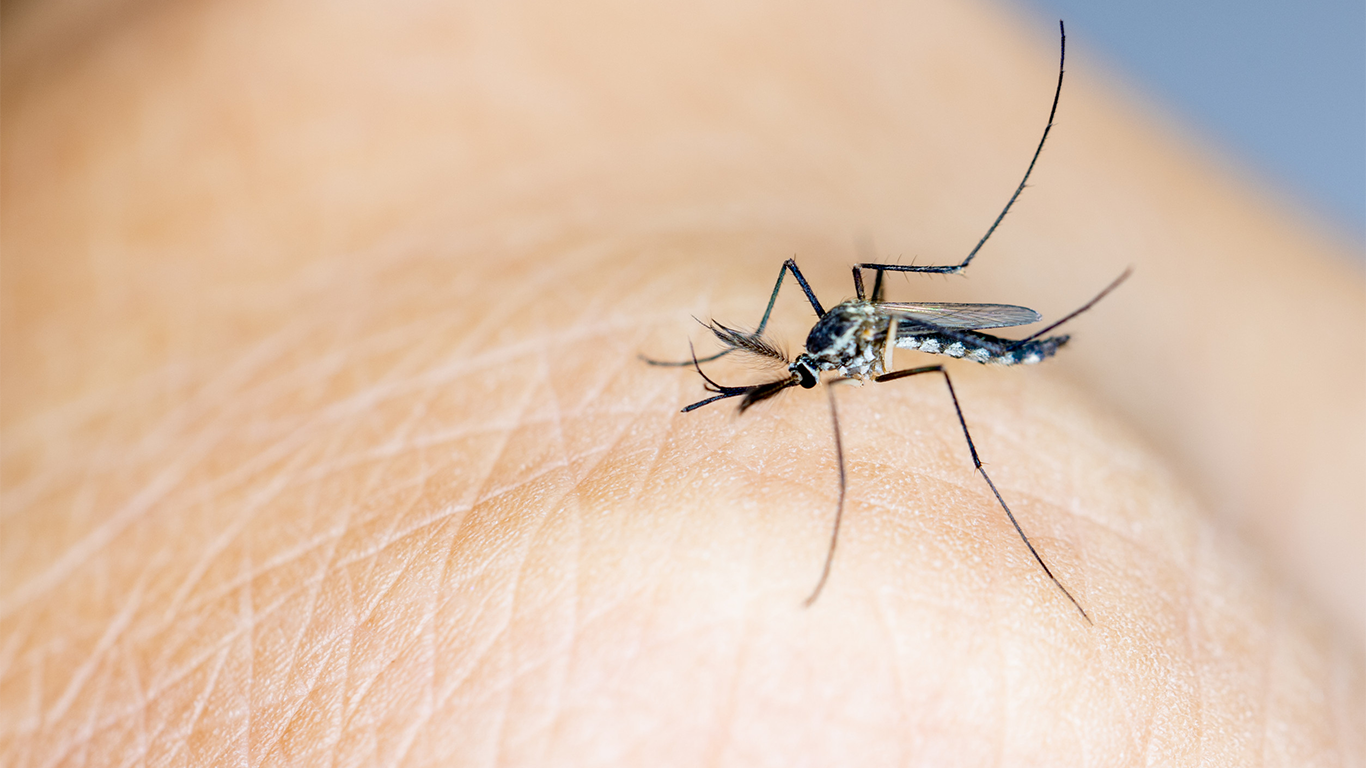
Dengue spreads through the bite of an infected Aedes aegypti mosquito, the same species responsible for most of Florida’s mosquito-borne disease concerns. Symptoms, when they appear, typically show up within about two weeks of a bite and can include fever, joint and muscle pain, and occasionally a rash. The virus does not spread directly from person to person, which is part of why local transmission always traces back to the mosquito population itself.
Florida’s Surveillance System Is Built for This
Florida runs one of the more methodical mosquito-borne disease tracking systems in the country, largely out of necessity. County health departments file weekly arbovirus reports tracking West Nile virus, dengue, chikungunya, and several other mosquito-transmitted illnesses county by county, and those numbers shape how aggressively local mosquito control districts respond.
When Hillsborough and Miami-Dade confirmed their cases, both counties activated the response most residents never see directly: increased mosquito trapping near the reported exposure sites, targeted larvicide and adulticide treatment, and outreach to nearby households. In 2025, Florida logged 62 locally acquired dengue cases statewide, almost all of them handled through exactly this kind of fast-moving, localized response rather than anything resembling a widescale outbreak.
This Isn’t Florida’s First Time
Florida has managed local dengue and Zika transmission before, most notably during the 2016 Zika outbreak centered in Miami’s Wynwood neighborhood, which prompted an intensive, multi-month mosquito control response involving aerial spraying, door-to-door inspections, and a temporary travel advisory for pregnant women. That outbreak, unlike this year’s dengue cases so far, involved sustained local transmission over an extended period rather than isolated incidents.
The comparison matters mostly for calibration. What happened in 2016 was a genuinely large public health response to sustained transmission. What Hillsborough and Miami-Dade are dealing with now is, so far, two separate and apparently unconnected cases, each triggering the smaller-scale, localized response Florida’s system is built to handle routinely. The infrastructure built and refined since 2016, weekly county-level arbovirus reporting, rapid trap deployment, targeted treatment, is precisely what allows this year’s cases to stay contained rather than escalate.
Companies Like Mira Home Respond
Mira Home, which operates across Florida, Georgia, Ohio, Michigan, Indiana, Illinois, Kentucky, and Utah, is one of the residential providers whose Florida customers are likely paying closer attention to standing water and yard maintenance following the Tampa and Miami-Dade cases.
That residential layer matters because most mosquito breeding happens far from where a county’s trapping program can reach. A birdbath, a clogged gutter, or a saucer under a potted plant can produce more mosquitoes in a season than a nearby retention pond, simply because it sits closer to where people actually spend time outdoors. Companies like Mira Home built their mosquito service around that gap, treating the yard-level breeding sites that public programs are not positioned to reach on a private, residential basis. Providers like Mira Home typically fold that kind of yard inspection into standard residential mosquito service rather than treating it as an add-on.
None of this replaces what county mosquito control districts do. It supplements it, and this month is a reasonable moment for that supplement to matter more than usual.
“Our technicians are trained to spot the kind of standing water most homeowners walk past every day, and this time of year, that’s often the difference between a quiet season and a call to the health department.” (John P. Taylor, CEO of Mira Home)
DEEPER DIVE: Arizona has 6 of the 30 happiest cities in America
INDUSTRY INSIGHTS: Want more news like this? Get our free newsletter here
What Homeowners Can Actually Do
The prevention advice for local dengue transmission is almost identical to what Florida residents already hear about West Nile virus and other mosquito-borne illnesses, and that familiarity is exactly why it is easy to tune out. It is still worth repeating during an active local transmission window.
Standing water is the single biggest factor homeowners control directly. Anything that holds water for more than a few days, gutters, tarps, unused planters, old tires, becomes a potential breeding site. Screens on windows and doors should be checked for tears, since a single gap is enough to let mosquitoes into a home. Outdoor activity during dawn and dusk, when Aedes aegypti mosquitoes are most active, is worth limiting during an active local case window, and EPA-registered repellents remain the most reliable personal protection when spending time outside cannot be avoided.
Miami-Dade health officials have echoed the same guidance since confirming their case. For now, the Hillsborough and Miami-Dade cases remain isolated incidents rather than the start of a broader outbreak. But they are a reminder that Florida’s mosquito season does not wait for anyone’s attention, and the response, from county health departments down to the yard-level treatments companies like Mira Home provide, works best when it starts before a case shows up in a report rather than after.