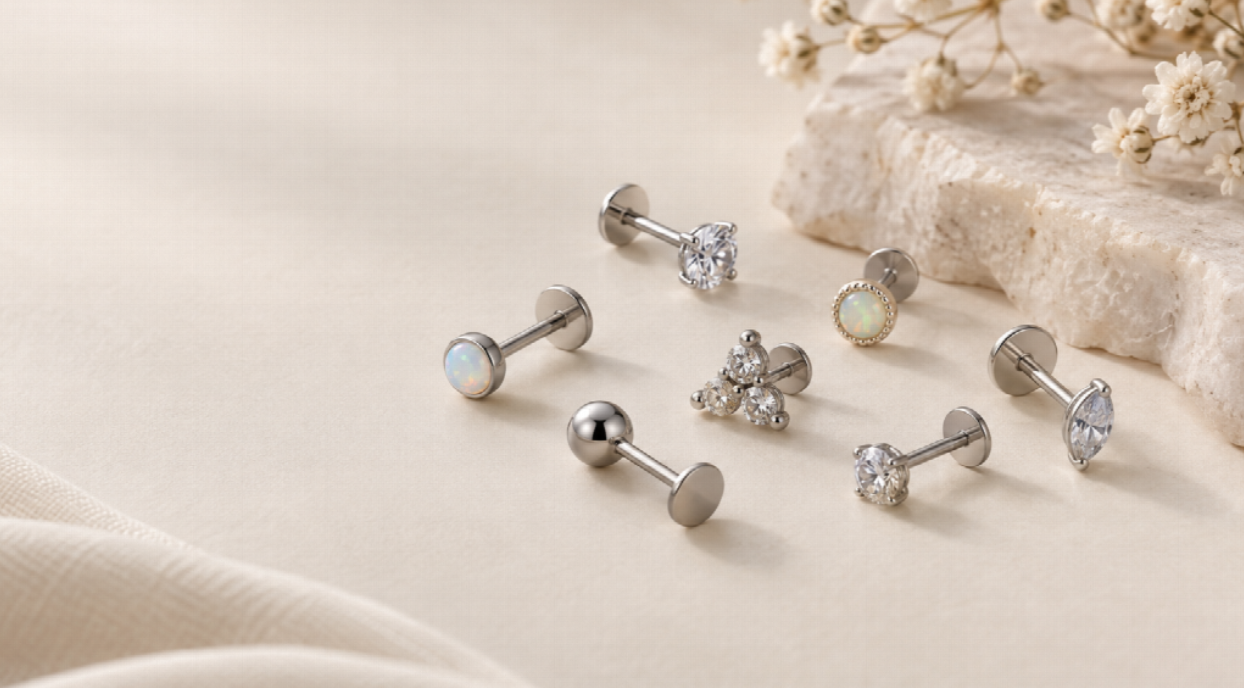
The hardware behind a stud earring is easy to ignore until it starts pressing against your ear. A traditional butterfly back leaves the post and clasp exposed, so they can press against the skin when you wear headphones, lean against a headrest, or sleep on your side. With several piercings, the extra hardware can feel crowded. Flat-back earrings replace the butterfly clasp with a smooth, low-profile disc.
Flat-back earrings look simple, but the fit depends more on the backing itself. Post length and gauge need to suit the piercing, while the closure and material also affect how the piece wears. These small details matter, especially if you plan to keep the earrings in for long periods.
What Are Flat Back Earrings?
Flat-back earrings are a type of stud earring built around three main parts. The decorative top sits on the front of the ear, the post passes through the piercing, and a smooth disc sits at the back. Unlike a butterfly clasp, the disc forms a flat end behind the ear. The front can be plain metal or set with stones, clusters, or other decorative details, while the back stays flat and compact.
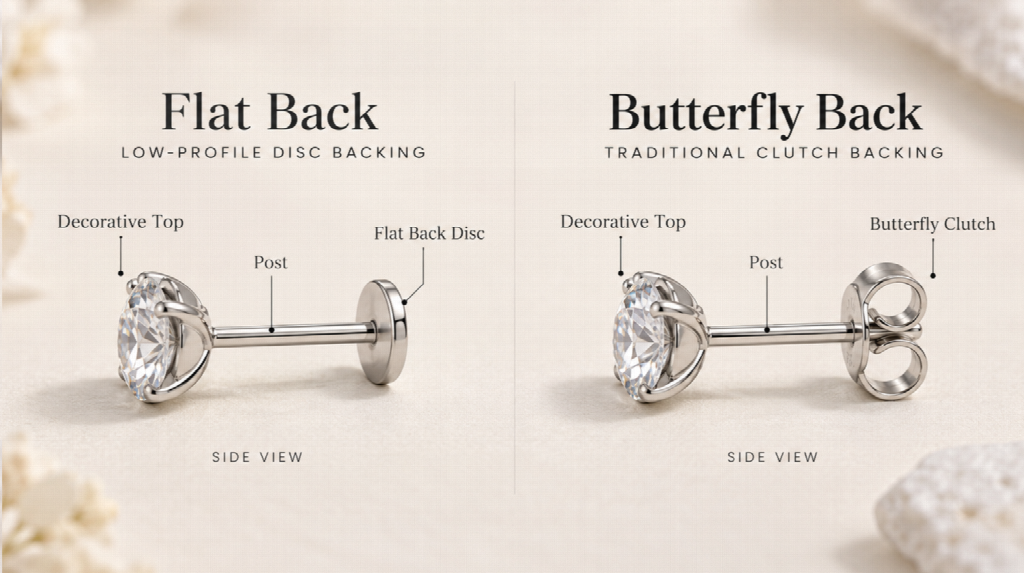
Flat back earrings usually come in two styles: threadless and internally threaded. Threadless earrings use a small pin that pushes into the post and stays in place once fitted. Internally threaded earrings work more like a screw, with the top twisting into the post. Both are common, but the parts aren’t always interchangeable, so check the connection type before buying a separate top or post.
Popular Flat Back Earring Brands to Know
Flat back earrings can look similar at first, but brands often take very different approaches. Some focus on titanium and styling, while others emphasize premium everyday wear, piercing services, or screw-on designs. Those differences shape both the products and the wearing experience.
Tireya
Tireya is a newer earring brand focused on flat-back jewelry. Its earrings use ASTM F136 titanium, and the brand offers titanium posts in several lengths. Front designs include simple metal studs, opal, cubic zirconia, moissanite, and more decorative shapes. Many current styles are priced under $30. If you want clear material specifications without limiting your design choices, Tireya’s flat-back earrings cover both simple and more decorative looks.
Tini Lux
Tini Lux builds much of its jewelry range around titanium, with flat backs forming a large part of the collection. The styles go beyond simple studs, with opal, crystal, pearl, and shaped fronts available for different ear placements. Many pieces are designed for lobes, helix, tragus, or conch piercings, giving you more options when putting together an ear stack.
Maison Miru
Maison Miru is best known for its Nap Earrings, a premium flat-back line made for everyday wear. Many pieces pair clean, minimalist fronts with push-pin backs. Prices sit higher than most brands in this guide, with individual Nap Earrings often around $100 or more. The overall look is polished and understated, with clean shapes and minimalist detailing across the collection.
Studs
Studs combines flat-back jewelry with piercing services and ear styling. Many product pages list placements such as the lobe, helix, flat helix, and conch, so you can see where each design is intended to sit. Its studios also offer piercing consultations and jewelry changes, bringing the product and piercing experience together in one place.
ComfyEarrings
ComfyEarrings is known for screw-on flat backs made for long wear. Many styles use an 18G, 6 mm post with the brand’s 6 mm wide backing. The brand also designs many of its earrings with sleeping and overnight wear in mind. The collection includes classic studs, small gemstones, and simple decorative shapes for everyday use.
A Quick Brand Comparison
Each brand approaches flat-back jewelry differently. Tireya combines ASTM F136 titanium with varied designs and accessible pricing. Tini Lux emphasizes titanium jewelry with more fashion choices, while Maison Miru takes a more premium minimalist approach. Studs combines jewelry with piercing services, and ComfyEarrings is known for screw-on backs designed for daily wear.
Tireya’s flat-back earrings show how much the front design can vary. MINIMAL keeps the look simple, COLOR adds brighter tones, SPARKLE brings more shine, and LUXE features clusters and more detailed shapes. The front may look very different, but the flat backing still brings the same basic strengths and drawbacks.
Pros and Cons of Flat Back Earrings
Flat back earrings leave less hardware behind the ear than traditional butterfly backs. That flatter shape can be useful for daily wear, but the experience still depends on the fit. Post length, gauge, placement, and the way the top attaches all affect how the earring sits on your ear.
- Pros of Flat Back Earrings
The main advantage of flat back earrings is the smooth, compact backing behind the ear. It leaves less hardware sticking out, which can feel more comfortable when you wear headphones, a helmet, or rest your head on a pillow. The flat disc also works well with multiple piercings because each backing sits close to the ear. You still get plenty of choice on the front, from simple studs to gemstones and cluster designs.
- Cons of Flat Back Earrings
Flat back earrings can take some practice to insert, especially when the post goes in from behind the ear. Helix and tragus piercings can be harder to reach, and small fronts are easy to drop or misalign. Sizing also matters. A post that is too long may shift during wear, while one that is too short can feel tight. Gauge and closure compatibility need attention when replacing individual parts.
| Pros | Cons |
| Less hardware behind the ear | Can take practice to insert |
| Works well with headphones and multiple piercings | Post length needs to suit the piercing |
| Available in many front styles and sizes | Gauge and connection type need to match |
| Works with simple and decorative looks | Small tops can be harder to handle |
How to Choose Flat Back Earrings
Choosing flat-back studs requires focusing on physical dimensions before settling on a decorative top. An attractive front piece will not feel right if the post length is off, the gauge clashes with your piercing hole, or the attachment mechanism is incompatible.
- Material. Flat back describes the shape of the backing, not the metal used to make the earring. Look for a clearly stated material such as titanium, solid gold, or niobium. For example, Tireya uses ASTM F136 titanium across its earring range, so you can check the material standard directly on the product information.
- Post length. This measurement controls how much space sits between the front and the backing. A longer post may leave extra movement, while a shorter one can feel too tight. If you already own a flat back that fits well in the same piercing, its post length can give you a useful reference.
- Gauge. Gauge refers to the thickness of the post, not its length. Common sizes include 16G, 18G, and 20G, while measurements such as 6 mm or 8 mm usually refer to post length. The gauge should match your existing piercing.
- Closure type. Threadless and internally threaded tops connect to the post differently. If you are buying a top or post separately, check which system it uses before pairing the parts. Compatibility can also vary between brands, even when the jewelry looks similar.
- Front size and placement. Small studs work well in second lobes or as supporting pieces in an ear stack. Larger stones and clusters carry more visual weight. The space around a lobe, helix, flat, or conch also varies, so the front should fit comfortably within the area around the piercing.
FAQs About Flat Back Earrings
Why does my flat back earring still stick out?
A flat backing doesn’t always sit completely flush with the ear. Post length plays a big role in how much space remains behind the piercing. If the post is longer than you need, the earring may move or tilt slightly. Ear thickness also varies by placement, so checking the post length is usually the first step.
Are flat back earrings hard to put in?
Flat back earrings may take a little practice at first, especially when the post needs to pass through the piercing from behind the ear. Helix and tragus placements are often harder to reach, and small tops can be tricky to hold. Using a mirror usually makes the process clearer, and insertion tends to feel easier once you get used to the motion.
Can you sleep in flat-back earrings?
Many people choose flat-back earrings for sleep because the smooth disc sits close to the ear and leaves less metal sticking out behind it. That shape can feel more comfortable against a pillow than a traditional backing. Post length still matters, though. A good fit should leave enough room for the earring to sit comfortably without moving too much or feeling tight.
Conclusion
Flat-back earrings change the part that sits behind your ear, while leaving plenty of freedom in the front design. The disc keeps the backing compact, and the front can range from simple metal studs to stones and clusters. Fit still depends on the post length, gauge, closure, and placement, so those details matter just as much as the style you choose.
Brands use the same basic structure in different ways. Some put more attention on fashion, some combine jewelry with piercing services, and others design for long wear. Tireya is one example of a brand that combines ASTM F136 titanium specifications, flat-back styles, several post-length options, and a broad mix of decorative fronts, covering both simple everyday studs and more decorative styles.