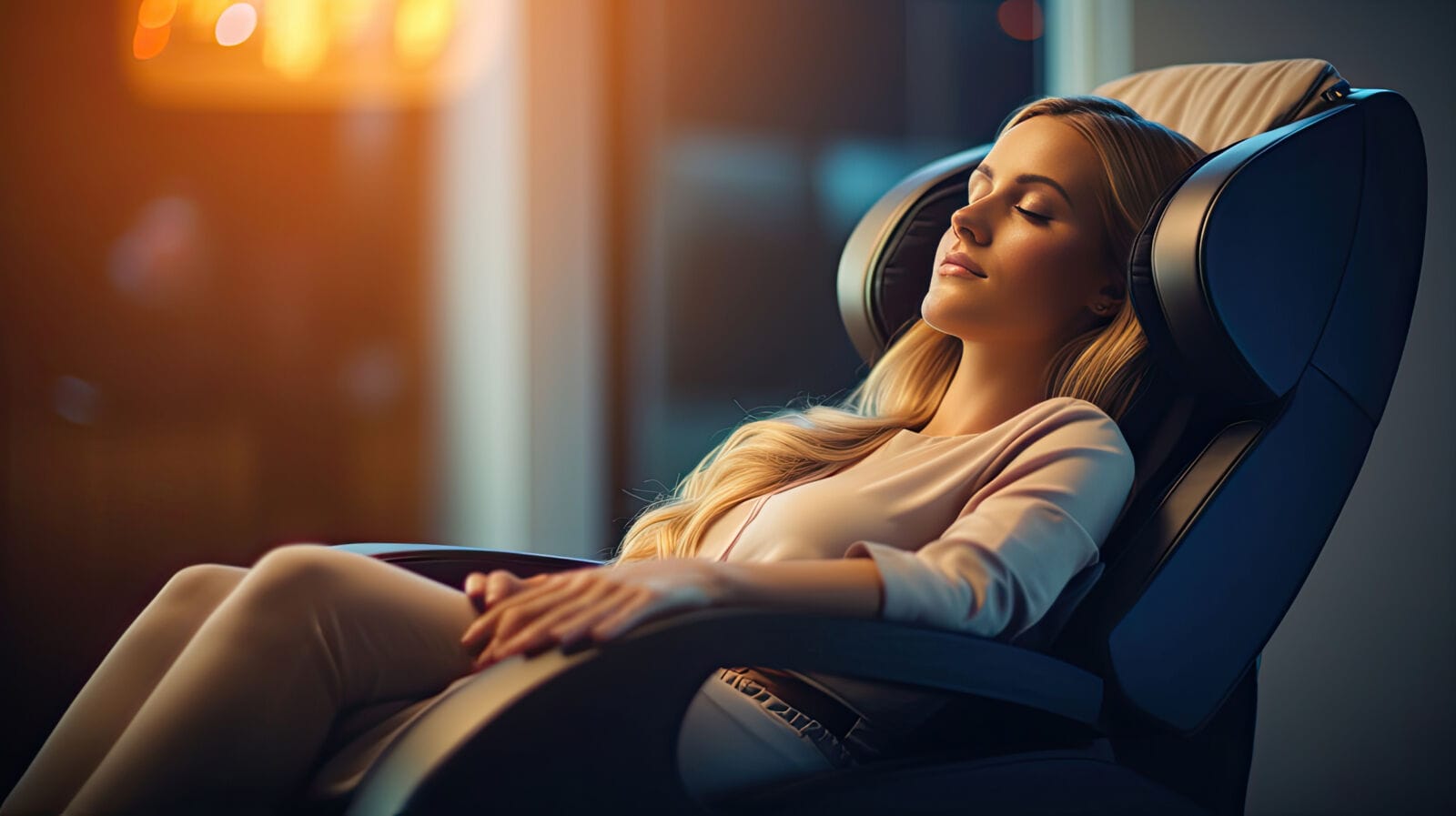
The massage chair market has changed more in the past two years than in the previous two decades. According to Future Market Insights, the global massage chair industry was valued at approximately $3.5 billion in 2025 and is projected to exceed $6.5 billion by 2032, a growth trajectory driven not by novelty but by a fundamental shift in how consumers approach daily wellness, stress recovery, and preventive self-care at home.
The chairs available in 2026 bear little resemblance to the bulky, single-function recliners of a decade ago. Today’s leading models incorporate artificial intelligence, vibroacoustic sound therapy, zero gravity positioning, and real-time body scanning in ways that were previously confined to clinical and rehabilitation environments. For buyers navigating this expanded landscape, the central question is no longer whether a massage chair is a reasonable purchase; it is which features actually justify the investment and which are marketing window dressing.
Two products have emerged as particularly representative of the 2026 market’s most meaningful advances: the Lifevibe VAT Chair Prime and the Real Relax PS6500. Together, they illustrate the two most consequential directions in modern massage chair technology: sound-based resonance therapy and AI-driven personalisation, and both are worth understanding in detail before any serious buying decision.
The Features That Separate a Good Massage Chair From a Great One in 2026
Not every premium-priced massage chair earns its cost. A well-designed chair in 2026 should do more than knead the surface muscles along your back; it should adapt to your body, address fatigue at a systemic level, and offer enough programmatic depth to remain genuinely useful over years of regular use. The features worth prioritising fall into a fairly clear hierarchy.
Zero gravity positioning: the biomechanical baseline
Zero gravity is no longer a premium differentiator; it is effectively a baseline expectation for any chair at a serious price point. The position, inspired by NASA research into neutral body posture during spaceflight, reclines the user so that knees are elevated above the heart, distributing body weight evenly across the chair’s surface and decompressing the lumbar spine. Research consistently shows that this position reduces intervertebral disc pressure and improves circulation, creating conditions under which massage therapy is both more effective and more comfortable.
According to a 2026 market analysis from Research and Markets, zero gravity chairs now account for over 60 per cent of global massage chair revenue, a figure that reflects their established clinical rationale and broad consumer acceptance. The meaningful differentiator in 2026 is not whether a chair offers zero gravity, but how many positions it offers and how precisely those positions are calibrated for spinal decompression rather than simply reclining at an arbitrary angle.
SL-track design: full-spine coverage as a non-negotiable
Track design determines how much of the spine a chair’s roller system can address. S-track designs follow the natural cervical and lumbar curves but stop at the lower back. SL-track designs extend the same path down through the sacrum and into the upper hamstrings, the area where lumbar tension most commonly concentrates in people who sit for extended hours. For anyone purchasing a massage chair primarily for back and lower body tension relief, an SL-track configuration is functionally superior and worth prioritising over chairs that offer more massage programs on a shorter track.
4D roller mechanics: replicating the nuance of human touch
Standard 3D rollers move along three axes up/down, side to side, and in/out, enabling depth adjustment. Fourth-dimensional roller systems add a time-based variability element, modulating the speed and rhythm of each movement to create non-repeating, human-like massage patterns. The result is a massage that avoids the mechanical predictability that causes users to habituate and stop registering the therapy over time. For buyers intending to use a chair daily, 4D mechanics represent a meaningful longevity advantage in terms of sustained therapeutic effect.
Vibroacoustic Therapy: The Feature Redefining What a Massage Chair Can Do
Of all the technological advances appearing in 2026’s massage chair market, vibroacoustic therapy VAT represents the most clinically significant departure from what the category has traditionally offered. And no product demonstrates this more clearly than the vibroacoustic massage chair from Lifevibe.
VAT is not a new technology. Its origins trace to Nordic rehabilitation medicine in the 1970s and 1980s, where Dr Olav Skille and colleagues documented how low-frequency sound vibrations, specifically in the range of 30 to 120 Hz, could produce measurable physiological responses: muscle relaxation, improved blood circulation, nervous system regulation, and reductions in pain perception. Over the decades, studies have indicated improvements in emotional regulation, sleep quality, and stress response in patients exposed to calibrated VAT protocols. The technology has been used in psychiatric hospitals, rehabilitation centres, and specialist wellness clinics for decades.
What Lifevibe has accomplished is the first successful translation of this clinical technology into a consumer-grade home product. The Lifevibe VAT Chair Prime, which won the MUSE Design Awards Platinum prize in 2025 for innovation in vibroacoustic engineering, operates on a fundamentally different therapeutic principle than every other massage chair on the market. Where conventional chairs apply mechanical pressure to surface and mid-layer muscles, the Lifevibe Prime converts low-frequency audio into sonic waves delivered through the chair’s structural components that travel deep into muscles, fascia, nerves, and even skeletal tissue at a cellular level.
SonicWave™ dual-drive mechanism
The Lifevibe Prime’s engineering centres on what the company calls the SonicWave™ Massage Mechanism, a dual-drive system that combines precision 3D rollers with synchronised vibroacoustic resonance. The two systems operate in coordinated synchrony rather than independently, creating what the brand describes as resonance-based therapy rather than pressure-based therapy. The effect is unlike anything a standard massage chair produces: a full-body hum that encourages the nervous system to downregulate while the rollers address mechanical tension simultaneously.
SonicSync™ and Music Sync mode
Built on top of this foundation is SonicSync™, a frequency-to-body matching algorithm that calibrates vibroacoustic patterns to specific therapeutic goals. The chair’s 25 auto programs include specialised SonicSync modes: Sleep, designed to guide the nervous system toward rest through lower-frequency resonance; Focus, which uses higher frequencies for alertness and cognitive clarity; Dhyana, a meditation-oriented mode synchronised to ambient soundscapes; and Music Sync, which pairs the vibroacoustic output with the user’s own audio in real time through Bluetooth connectivity.
The Music Sync mode is particularly significant from a wellness-technology standpoint. Research in the field of sound therapy has long documented the physiological impact of music on the autonomic nervous system, heart rate variability, cortisol levels, and subjective stress experience, all of which respond measurably to musical input. By translating that audio input into synchronised bodily vibration, the Lifevibe Prime creates a sensory environment in which sound is not merely heard but physically felt throughout the entire body simultaneously.
Complementary features of the Lifevibe Prime
Beyond its VAT capabilities, the Lifevibe Prime offers a comprehensive conventional feature set: SL-track coverage, zero gravity positioning, full-body airbag compression across shoulders, arms, legs, and feet, heating therapy for the lumbar region and calves, foot rollers, six massage techniques including Shiatsu and Tuina, auto shoulder detection for precise roller positioning, and an LCD touchscreen. Wireless charging, Bluetooth speakers, USB connectivity, and a reading lamp round out a feature profile designed to make the chair a genuine lifestyle fixture rather than a single-purpose wellness appliance. A five-year warranty and 30-day money-back guarantee accompany the purchase.
AI Soreness Detection: How the Real Relax PS6500 Learns Your Body
While Lifevibe has advanced the sensory and therapeutic dimensions of massage chair technology, Real Relax has pursued a different and equally compelling frontier: genuine artificial intelligence integration for personalised pain point identification. The 4D zero gravity massage chair PS6500 is the most technically sophisticated implementation of AI-driven body analysis available in the consumer massage chair market as of 2026.
The PS6500’s headline AI featur Intelligent Soreness Detection, uses a combination of pressure sensors and infrared scanning technology to map the user’s body at the outset of each session. The system, powered by an upgraded AI algorithm, analyses detected tension patterns against a map of the body’s acupuncture points and myofascial pressure zones to identify where soreness is concentrated. It then generates a personalised massage program targeting those specific areas with appropriate technique and intensity without the user needing to manually specify what is bothering them or where.
In practice, this means the chair can distinguish between a user experiencing upper trapezius tension from a day of desk work and one with lumbar fatigue from physical activity and deliver materially different sessions to each. According to Real Relax’s published product documentation, the PS6500 maps 20 Hall 3D detection points across the body to achieve this level of spatial resolution, enabling what the brand describes as 360-degree full-body targeted relief rather than generalised back massage.
4D roller mechanics and the 51.6-inch SL-track
The PS6500’s mechanical foundation matches its AI capabilities. Its 4D massage rollers extend outward between 1.1 and 2.5 inches, enabling deep Shiatsu-style pressure and Thai-influenced lumbar stretching that replicates the force profile of a trained human therapist’s hands. This extensibility range, combined with 13 massage techniques, 5 intensity levels, 7 body zones, and 3 roller widths, creates a configurability matrix that makes it genuinely difficult to exhaust the chair’s range across even daily use over several years.
The super-long 51.6-inch SL-track follows the full spinal curve from the cervical vertebrae through the sacrum and into the upper hamstrings, one of the most comprehensive coverage profiles in the consumer chair market. For users whose tension patterns concentrate at the lumbar-gluteal junction, this extended coverage is clinically meaningful rather than merely a specification talking point.
Zero gravity, Thai stretch, and graphene heating
The PS6500 offers three zero gravity positions more than most chairs in its class, alongside a Thai Stretch program in which the leg and shoulder airbags inflate to compress and hold the body while the backrest adjusts and the rollers perform targeted lumbar and spinal mobilisation work. This combination mimics the passive joint mobilisation techniques of traditional Thai massage with a degree of fidelity that conventional roller-only chairs cannot approach.
Graphene heating across the lumbar and back regions is a material choice that delivers more even, penetrating warmth than conventional wire-based heating elements, supports muscle dilation and blood flow enhancement as an adjunct to the mechanical massage. The chair’s 28 WaveFlow airbags distribute compression across shoulders, arms, hips, calves, and feet with five adjustable intensity levels, covering the full body in a sequential wave pattern that promotes venous return and reduces peripheral fatigue.
Smart control ecosystem
The PS6500 supports four control methods: voice control, touchscreen panel, smartphone app, and quick-access physical buttons, addressing the full range of user preferences and use contexts. The chair’s 27 auto programs include modes spanning Joint Care, Athlete, Meditation, Sweet Night, and Vitality Recovery, a breadth of pre-designed sessions that position it as a genuinely versatile wellness platform rather than a back-pain-only device. HiFi-grade 3D surround Bluetooth speakers, built-in white noise options including rain and ocean waves, and wireless charging complete an ecosystem designed for sustained daily integration into a modern home environment.
How These Two Chairs Fit Into the Broader 2026 Wellness Technology Landscape
The Lifevibe VAT Chair Prime and the Real Relax PS6500 occupy complementary rather than competing positions in the market. They represent different philosophies about where the most meaningful therapeutic innovation lies, and understanding that distinction helps buyers identify which direction better matches their needs.
The Lifevibe Prime is built for users whose primary wellness goals centre on nervous system recovery, sleep quality, stress regulation, and mind-body integration. Its vibroacoustic foundation addresses dimensions of recovery, emotional regulation, parasympathetic activation, and deep fascial release that no roller-based system reaches. Published studies on VAT spanning more than four decades have documented improvements in muscle tension, blood circulation, immune support, and emotional well-being benefits that accumulate with regular use in ways that mechanical massage alone does not replicate.
The Real Relax PS6500 is built for users whose primary needs are precision physical therapy, targeted soreness relief, deep tissue work, spinal mobilisation, and post-activity recovery. Its AI-driven detection system eliminates the guesswork from session customisation and ensures that each use is genuinely responsive to the body’s current state rather than repeating a fixed program regardless of daily variation in tension patterns. For physically active users, people managing chronic musculoskeletal discomfort, or households where multiple users with different body types and pain profiles will share the chair, the PS6500’s adaptive intelligence provides a meaningful functional advantage.
What the Market Data Says About Where Massage Chair Technology Is Heading
According to market analysis from Pristine Market Insights, robotic massage chairs incorporating AI-powered customisation and 4D roller systems now hold approximately 55 per cent of global market share, a figure that has grown steadily as the cost of sensor technology and AI processing has fallen within the consumer price range. The same research identifies personalisation and body scanning as the two most consequential product development priorities for the next product generation cycle.
Separately, industry analysts tracking the zero gravity chair segment project continued growth driven by corporate wellness adoption, commercial installations in offices, spas, and wellness centres are growing at approximately 18 per cent annually, reflecting a broader institutional recognition that recovery-focused furniture delivers measurable productivity and wellbeing returns. What was once a luxury residential purchase is increasingly being evaluated as a legitimate business infrastructure investment.
Both Lifevibe and Real Relax are positioned at the leading edge of these trends rather than trailing them. Lifevibe has introduced sound-based resonance to the consumer market before any comparable competitor, earning recognition for clinical innovation in the process. Real Relax has built the most accessible and feature-complete AI personalisation system available at its price tier. Both brands reflect a mature understanding of what the wellness technology consumer of 2026 actually wants: not more buttons, but better outcomes, chairs that understand the body and respond to it intelligently.
Making the Right Choice: A Practical Framework for Buyers
The right massage chair in 2026 is the one whose core technology aligns with your primary recovery objective, not the one with the longest feature list or the most aggressive promotional pricing. A few guiding principles simplify the decision significantly.
If your dominant concern is stress, anxiety, sleep disruption, or the systemic fatigue that accumulates from sustained cognitive and emotional load, the vibroacoustic therapy approach and specifically the Lifevibe Prime’s SonicSync platform, addresses these at a neurological level that roller massage does not. The science behind VAT is established, the clinical history spans four decades, and the Lifevibe Prime is the only consumer product currently delivering it in a form designed for daily home use.
If your dominant concern is physical soreness, musculoskeletal tension, post-exercise recovery, or back pain with a specific location that varies from day to day, the PS6500’s AI soreness detection and 4D roller depth provide a more targeted mechanical response than any fixed-program chair. The chair’s ability to find your pain points without manual input is not a convenience feature; it is a clinically meaningful capability that produces materially better therapeutic outcomes for users whose tension profile changes regularly.
If both dimensions apply and for most adults managing the compounded demands of professional and personal life in 2026, the two chairs will address genuinely different physiological needs and are more complementary than competitive. The more useful question in that case is which dimension is underserved in your current wellness routine, and which investment addresses the larger gap.
The best massage chair is the one you actually use every day. In 2026, the technology will exist to make that daily use feel less like a session and more like a genuine conversation between the chair and your body, one that gets more useful over time. That shift, more than any individual feature, is what makes the current generation of chairs worth serious consideration.