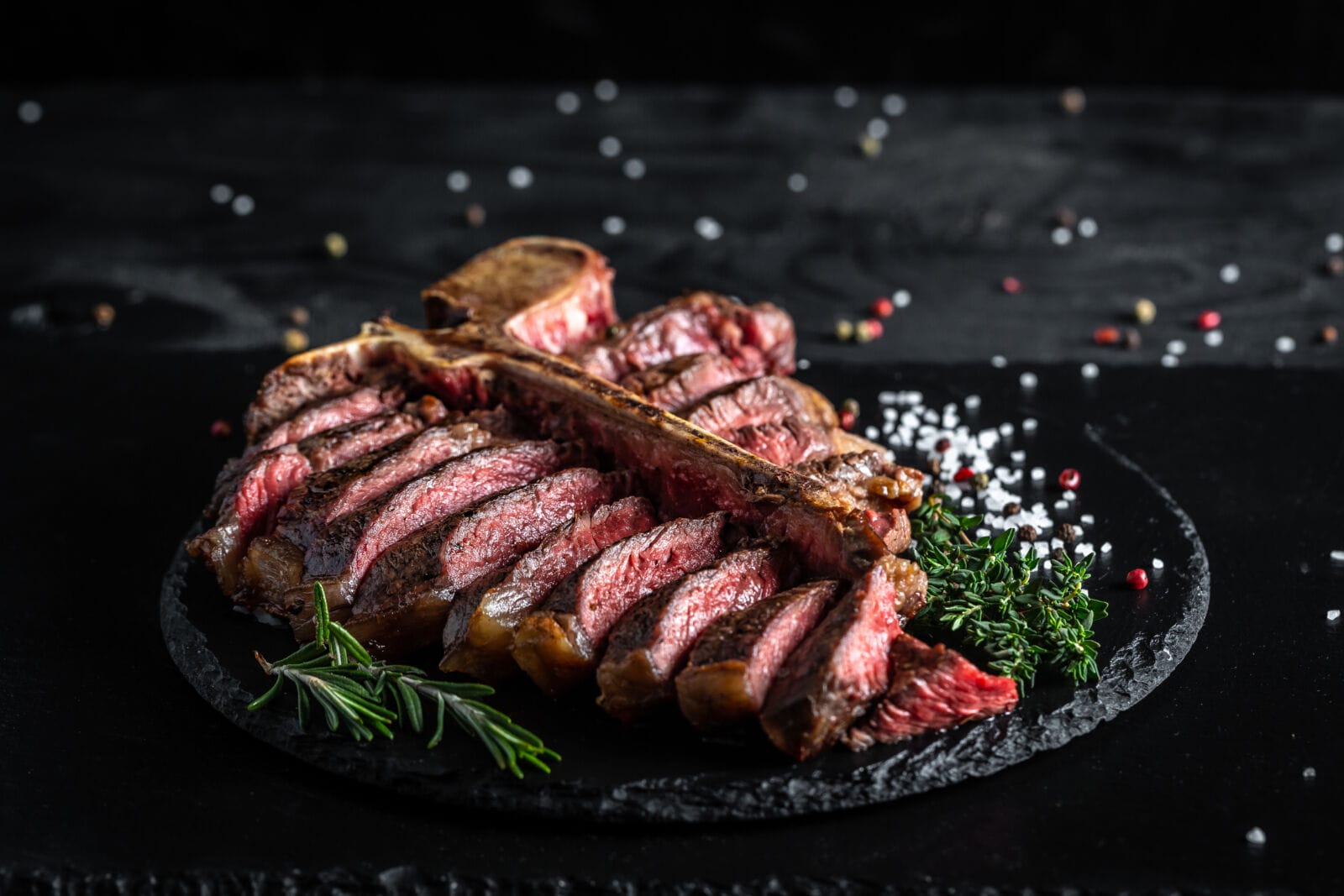
A Wagyu steakhouse menu differs from a standard prime menu through breed, marbling, portion size, preparation, and menu balance. USDA prime identifies a quality grade, while wagyu describes cattle genetics linked to abundant intramuscular fat. That difference affects texture, cooking technique, and serving size. It also shapes the choice of sauces and side dishes. The clearest distinctions appear in the cut descriptions and in the way each steak reaches the table.
Breed and Marbling Come First
Wagyu cattle carry genetic traits that produce extensive marbling, with fine flecks of fat spread throughout the muscle. That fat softens during cooking and creates a tender texture with a buttery mouthfeel. Standard prime beef also has substantial marbling, but the pattern is usually less dense and less evenly distributed.
A wagyu steakhouse menu often gives diners more detail about the steak’s origin, breed, cut, and marbling. Those details explain why a smaller wagyu portion can provide a fuller eating experience than a larger prime steak. The menu may also guide guests toward simpler seasoning, careful cooking, and side dishes that leave room for the beef’s flavor.
USDA Prime Is a Grade, Not a Breed
USDA prime measures expected eating quality through factors such as marbling and maturity. It does not identify a particular cattle breed. Wagyu, by contrast, identifies genetics, although a wagyu steak can receive a USDA quality grade after processing and evaluation.
That distinction matters because a steak can be both wagyu and prime. A menu that lists only “prime” provides useful grading information, but it does not explain the cattle’s breed. A menu that lists wagyu alongside its grade gives diners a more complete description of the steak.
Portion Size Change the Meal
Identifying the best cut of steak is key to having a delicious experience. Some steakhouses give you the option to select your own steak, after which the chefs cook it as per your liking. Wagyu’s high fat content affects portion planning. A six-ounce serving provides enough richness for a complete entree, while a larger prime steak suits diners who prefer a more substantial lean-meat portion. Wagyu menus often list smaller cuts or tasting portions for that reason.
Serving size also affects side selection. Cream-heavy sides can overwhelm a highly marbled steak, while crisp vegetables, roasted mushrooms, or an acidic garnish refresh the palate between bites. A standard prime menu allows more room for large portions and heavier accompaniments.
Cooking Requires More Control
Wagyu requires careful heat management because its marbling renders quickly. Excessive heat can brown the exterior before the center reaches the desired temperature. Overcooking also reduces the contrast between a tender interior and a well-seared crust.
A skilled kitchen controls the cooking surface, resting time, and final temperature. The steak may receive a shorter sear or a gentler finish than a leaner cut. Menus sometimes recommend a specific doneness because the kitchen has matched that temperature to the steak’s fat content and thickness.
Seasoning Stays More Focused
A wagyu menu usually keeps seasoning restrained. Salt supports the beef’s natural flavor, while pepper, herbs, or a small amount of compound butter adds definition without covering the marbling. Heavy sauces can compete with the texture that makes the cut distinctive.
Prime steaks accommodate a wider range of sauces because their flavor depends more on the cut, sear, and seasoning. A diner might choose a peppercorn sauce, blue cheese topping, or wine reduction. Those choices suit a standard steakhouse menu, while wagyu often benefits from a shorter ingredient list.
Menu Descriptions Carry More Detail
A standard prime menu might list the cut, weight, and cooking temperature. A wagyu menu often adds the cattle’s breed, regional source, grade, marbling score, or crossbreed percentage when those details are available. This information helps diners compare steaks before ordering.
Specific descriptions also prevent confusion between domestic wagyu, American wagyu crossbreeds, and Japanese wagyu. These categories do not provide identical levels of marbling or the same flavor profile. A precise menu states what the kitchen can verify instead of treating every wagyu label as interchangeable.
The Best Comparison Starts With the Cut
Comparing a wagyu ribeye with a prime filet does not produce a fair result because the cuts have different fat levels and textures. A better comparison uses the same cut, similar thickness, and similar cooking temperature. That approach isolates the effect of breed and marbling.
Diners should also compare portion weight, listed grade, source information, and included sides. Price alone does not explain the difference. The most useful menu gives enough detail for guests to understand the steak’s characteristics before selecting sauces or accompaniments.
Conclusion
A wagyu menu differs from a standard prime menu through the information it provides and the meal built around the steak. Breed genetics, dense marbling, smaller portions, controlled cooking, and restrained seasoning shape the dining experience. Prime remains a quality grade, while wagyu describes cattle genetics. Before ordering, diners should compare the same cut, review its source and grade, then choose sides that balance the steak’s richness.