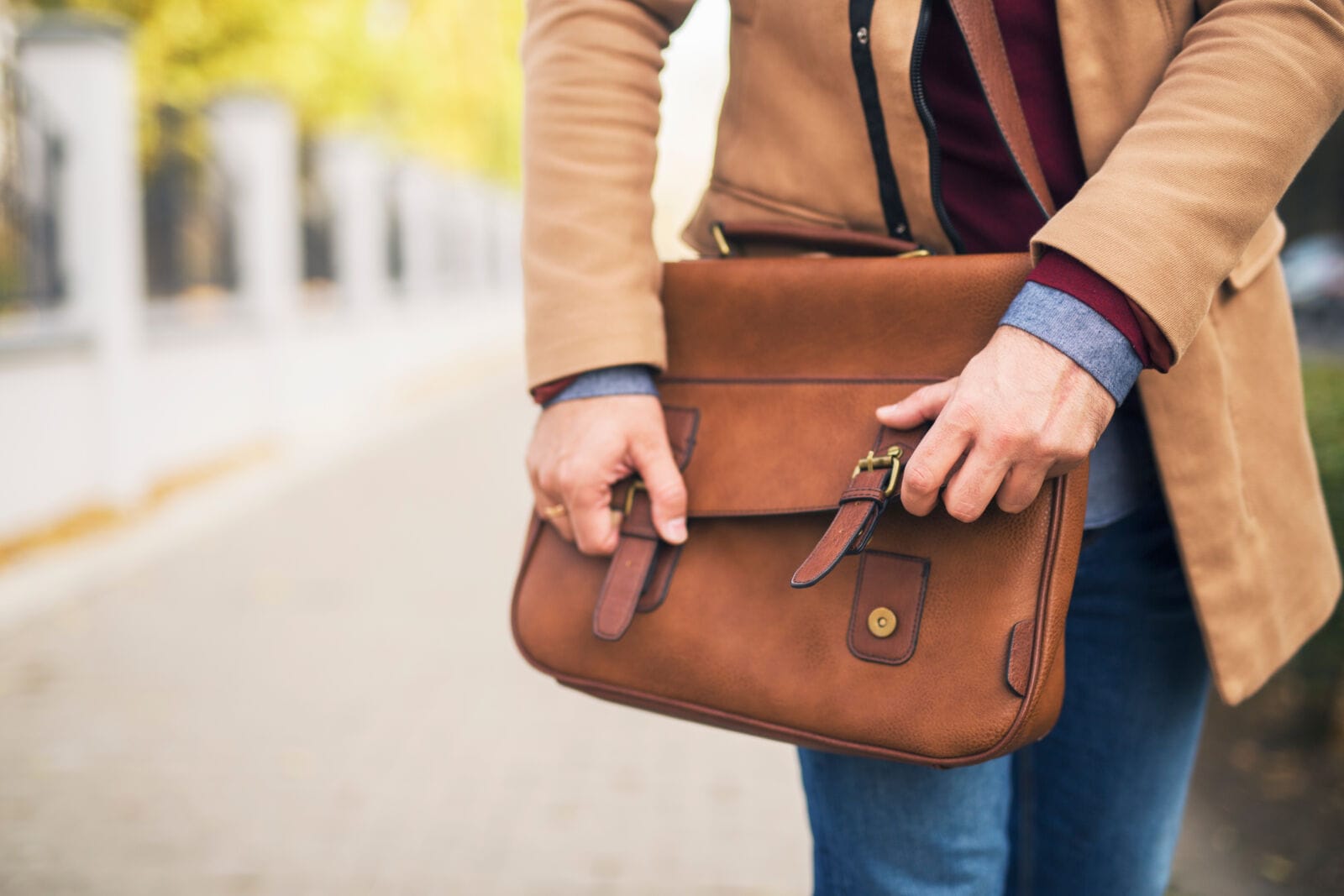
Why do some leather bags look better after ten years of use, while others start cracking, peeling, and losing their shape after two? What actually separates the two?
First, here’s what doesn’t matter: how good a bag looks in the store. Even a high price tag and a famous brand name don’t guarantee a thing.
What actually determines how a bag ages is the type of leather used, how it was processed, and how you treat the bag. Good-quality leather doesn’t just survive regular use; it actually improves with it. Certain types also develop a patina, a gradual change in color and surface appearance that gives the material more character.
However, it’s a mistake to assume that every bag advertised as genuine leather will age gracefully. Some materials wear in, while others just wear out. So, here’s what you should know before choosing one.
How Different Types of Leather Age
“Leather” is an overarching term that covers several different materials, all with distinct characteristics. If you want a bag that lasts, pay attention to the leather grade and finish rather than relying on a product description that simply says premium or genuine.
Full-Grain Leather
If longevity and natural aging are your priorities, start here. Full-grain leather retains the outermost layer of the hide, including its natural grain and small imperfections. Manufacturers don’t sand or buff the surface down to make it uniform.
It is exceptionally strong and develops a rich patina with use. Scratches may remain visible, colors can deepen, and the leather gradually softens. You won’t get a perfectly uniform finish, but that’s precisely where its character comes from.
Top-Grain Leather
Top-grain leather also comes from the upper portion of the hide, but manufacturers sand or correct the surface to remove imperfections. They then typically apply pigments or protective finishes to smooth out the surface.
It’s a good choice for an everyday bag. In fact, if you prefer a consistent color and a more polished appearance, you may like it better than full-grain leather. Just don’t expect the same pronounced patina, particularly if the surface has a heavy protective coating.
Genuine Leather and Bonded Leather
Genuine leather sounds impressive, but the label rarely guarantees quality. It can refer to leather made from lower layers of the hide that have undergone additional processing.
Bonded leather is even lower in quality. It’s made from leather fibers and scraps ground together and bound with adhesive, then finished with a plastic coating. It looks sharp when new, but it generally doesn’t age well, and cracking and peeling are almost inevitable as the material deteriorates.
Suede and Nubuck
Nubuck and suede have a different look and feel because their surfaces are treated to create a soft, velvety finish. Suede comes from the inner side of the hide, while nubuck is made by sanding the outer grain.
Both can last a long time, but neither is particularly forgiving of rough treatment. Water, dirt, and friction can leave marks or flatten the surface, so if you’re buying a bag to carry every day in all kinds of weather, think carefully before choosing either one.
Choosing the Right Leather Bag
Don’t buy a bag based on leather quality alone. Think about what you’ll actually carry, how often you’ll use it, and where it will spend most of its time.
For everyday use, full-grain or good-quality top-grain cowhide is a sensible choice. Look for comfortable handles, a secure closure, and an interior that fits your regular essentials without making everything difficult to find.
Work bags need a little more thought. If you carry a laptop, documents, chargers, and other equipment, check the dimensions rather than assuming everything will fit. A reinforced base and properly attached handles are especially important when the bag is likely to be heavy most days.
Travel bags have their own requirements. A leather duffle bag is a practical option for weekend trips and overnight business travel, particularly if you want something more substantial than a nylon holdall.
Whatever style you choose, check the empty bag’s weight before buying. High-quality leather is naturally heavy, so if you add a laptop, chargers, clothes, and other daily essentials (depending on your needs), a bag will quickly become uncomfortable to carry.
A Little Maintenance Goes a Long Way
Leather doesn’t need constant attention, but neglect can shorten its life. That’s why a little maintenance is highly recommended, but it should match the material and finish of the bag rather than follow a one-size-fits-all routine.
You want to keep the bag away from prolonged direct sunlight and excessive heat. If it gets wet, blot the water with a clean cloth and leave it to dry naturally. A radiator or hair dryer might seem like a quick fix, but rapid drying can leave leather stiff and damaged.
Smooth leather benefits from occasional conditioning, particularly if it starts looking dry. Don’t overdo it, though. Too much conditioner can leave a greasy surface and attract dirt. Always test a product on a hidden area first, and use products designed for the specific leather finish.
But a good leather bag won’t remain pristine forever, and that’s the whole point. The better ones develop a little character without falling apart, and that’s the true mark of quality.