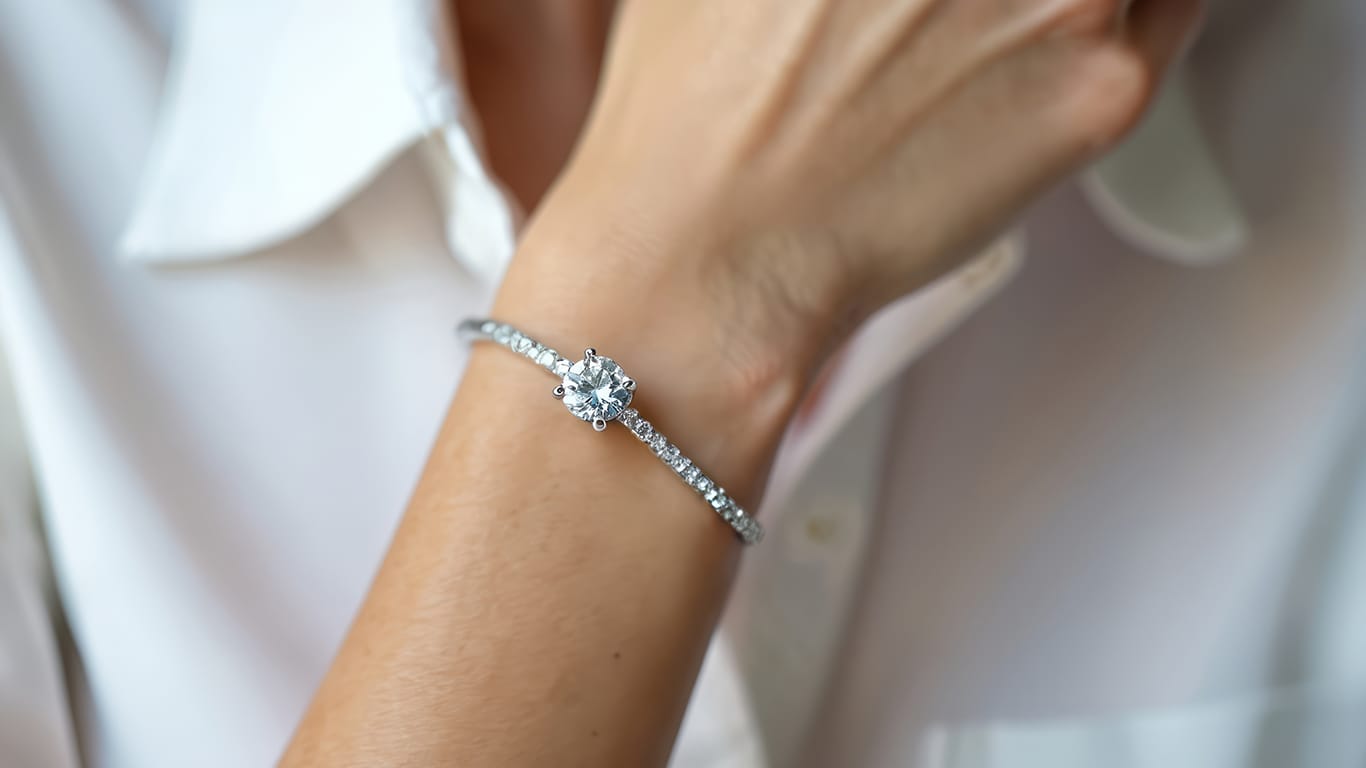
Shopping for lab-grown diamond jewelry has changed a lot in the past few years. What used to mean choosing from whatever sat in a display case now means comparing certifications, styles, and retailers before ever placing an order. With more places offering lab diamonds than ever before, figuring out where to actually buy has become almost as important as picking the piece itself.
Why Lab Diamonds Have Taken Over
Lab-grown diamonds share the same chemical, physical, and optical properties as mined stones — same hardness, same brilliance, same grading scale. The real difference is origin, and that shows up almost entirely in price: lab diamonds typically run 60 to 80 per cent less than a natural stone of equivalent quality. That gap has changed what’s realistically possible for a lot of buyers, letting them reach larger carat weights or higher clarity grades without stretching a budget the way a natural stone purchase would.
Anyone comparing retailers can have a look here to see how Rare Carat treats certification as the non-negotiable starting point. Every diamond, lab-grown or natural, comes graded by GIA, IGI, or GCAL, and as the merchant of record on every order, the company backs that certification with its own two-step verification, matching the microscopic laser inscription against the certificate under high magnification, then confirming authenticity through UV fluorescence testing.
What to Actually Look For in a Retailer
Not every retailer offering lab diamonds handles the fundamentals the same way. A few things are worth checking before committing to any purchase: whether diamonds are independently certified rather than just described, whether the retailer does its own additional verification, how customizable the jewelry actually is, and what happens if something needs to be returned or resized after the fact.
With more than 1,700 ring styles and 2,500 fine jewelry pieces across the collection, selection alone isn’t usually the hard part; narrowing it down is. Smart filters and personalized recommendations solve this by letting shoppers search by shape, carat weight, setting style, and metal simultaneously, turning what could be an overwhelming catalog into something genuinely manageable. A modern, easy-to-use website ties this together, and the underlying technology helps customers identify quality options quickly rather than leaving buyers to interpret specs alone.
Customization Changes the Whole Experience
Most buyers don’t walk in with an exact design in mind; they start with a general idea and refine it. Shape is usually the first thing that shifts a piece’s character; a marquise cut, for instance, reads larger than its actual carat weight and elongates more than almost any other shape. Buyers curious how that plays out across real settings can browse marquise styles and see more here before deciding on a final design.
From there, carat size and metal choice each shift the piece further. A larger stone in white gold reads clean and modern; the same stone in yellow gold feels warmer and more traditional. None of these choices is right or wrong on its own; they just need to match how the piece will actually be worn.
INDUSTRY INSIGHTS: The 100 Best Doctors in Arizona for 2026
LOCAL NEWS: The 20 biggest employers in Arizona
Expert Guidance Still Matters
Filters and customization tools cover most of the decision, but some buyers want a second opinion before finalizing anything significant. A team of more than 100 GIA-trained gemologists is available specifically for this, offering free guidance aimed at helping buyers understand what they’re actually looking at rather than closing a sale. Questions about whether a particular clarity grade will be visible once set, or whether a specific shape suits a certain hand, are exactly what this kind of guidance exists to answer.
Craftsmanship Behind Every Piece
Every piece is handmade in the USA, one piece at a time, in workshops based in New York and New Jersey rather than mass-produced. Finished jewelry goes through strict quality inspections under magnification before shipping, arriving in premium packaging with carefully prepared, insured delivery. That consistency has helped the brand hold a top-ranked position among online jewelers on Trustpilot for two years running, backed by a perfect rating built on thousands of verified customer reviews.
Support That Extends Past Checkout
Smooth returns and exchanges, backed by a genuine money-back guarantee, mean a purchase can be reconsidered without friction if something doesn’t turn out quite right. Combined with education-focused customer support available throughout the buying process and after, this kind of follow-through matters for a purchase people expect to keep for years.
The Bottom Line
Choosing where to buy lab-grown diamond jewelry comes down to a fairly simple checklist: real certification, genuine customization, expert guidance when it’s needed, and a retailer that stands behind the purchase after checkout. Handled in that order, the search moves faster than it seems like it will, and the piece that comes out the other end tends to be one worth keeping for a long time.
Video Guide: Watch: What to Know Before You Buy