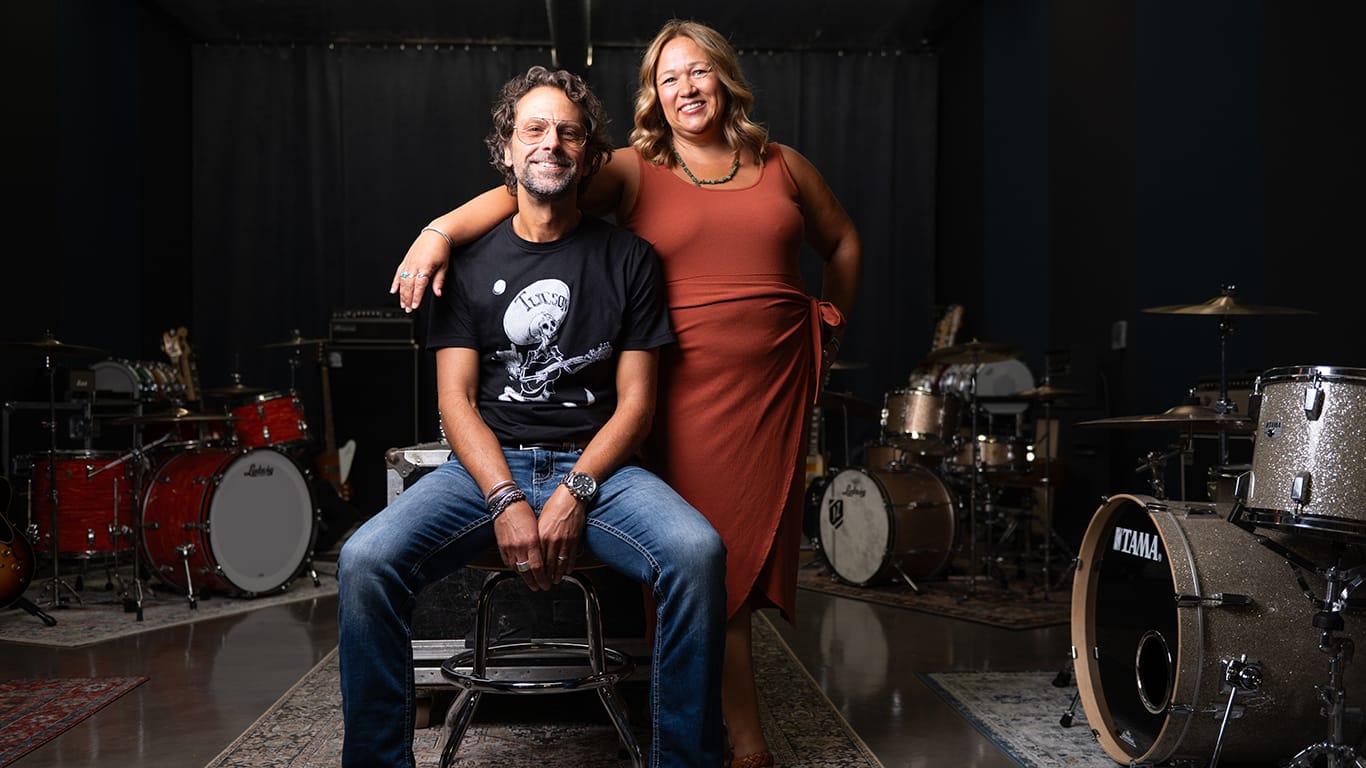
Zapp City Studios didn’t enter the Tucson market trying to compete with volume‑driven, plug‑and‑play recording rooms. Instead, musicians will pay for authenticity, expertise and gear that elevates their sound. Zapp City Studios is also the “only game in town” offering hourly rehearsals.
Founder Johnny Zapp — born Johnny Zappia built the studio around a simple operational principle — organic recording as a premium service. “All this gear you’re looking at is all mine. Everything in here was in my house,” said Zapp, a 30-year touring multi-instrumentalist.
The inventory is the differentiator: vintage guitars and snares, pro‑level drum kits, 50 amplifiers, and a room tuned by hand. No samples. No digital shortcuts. No comped drum takes.
“If you want the sound of a 1966 Ludwig wood snare drum, we’ll pull one off the rack, and you’re going to play it,” Zapp said.
DEEPER DIVE: Read all the Ranking Arizona Top 10 lists here
INDUSTRY INSIGHTS: Want more news like this? Get our free newsletter here
Most modern studios rely on editing, sound replacement and software‑driven polish. Zapp City Studios sells the opposite: live performance takes. The workflow requires better musicianship — and attracts clients who want to sound like themselves, not like a preset.
This approach can potentially take longer because Zapp City Studios does not rely on studio “trickery.” The musicians must play or sing their parts as intended, and with the right conviction. The Zapp City Studios team will help them get there.
“The recording industry has gotten away from this authentic method over the last 25-plus years,” he said.
“Editing, comping and autotune methods will make it difficult for the artist to play these songs live. Our clients leave as better players and they feel confident about what they’ve done with us.”
With fewer hours spent comping and repairing tracks, the studio’s value shifts to expert engineering, curated gear, and a tuned room. For artists, the pitch is straightforward: pay for quality on the front end, not surgery on the back end.
Zapp City Studios also operates customizable, high‑end rehearsal rentals. Unlike hourly rooms that offer generic gear, Zapp allows bands to build their own backline from his inventory — drums, snares, amps and monitors — and he engineers rehearsals live.
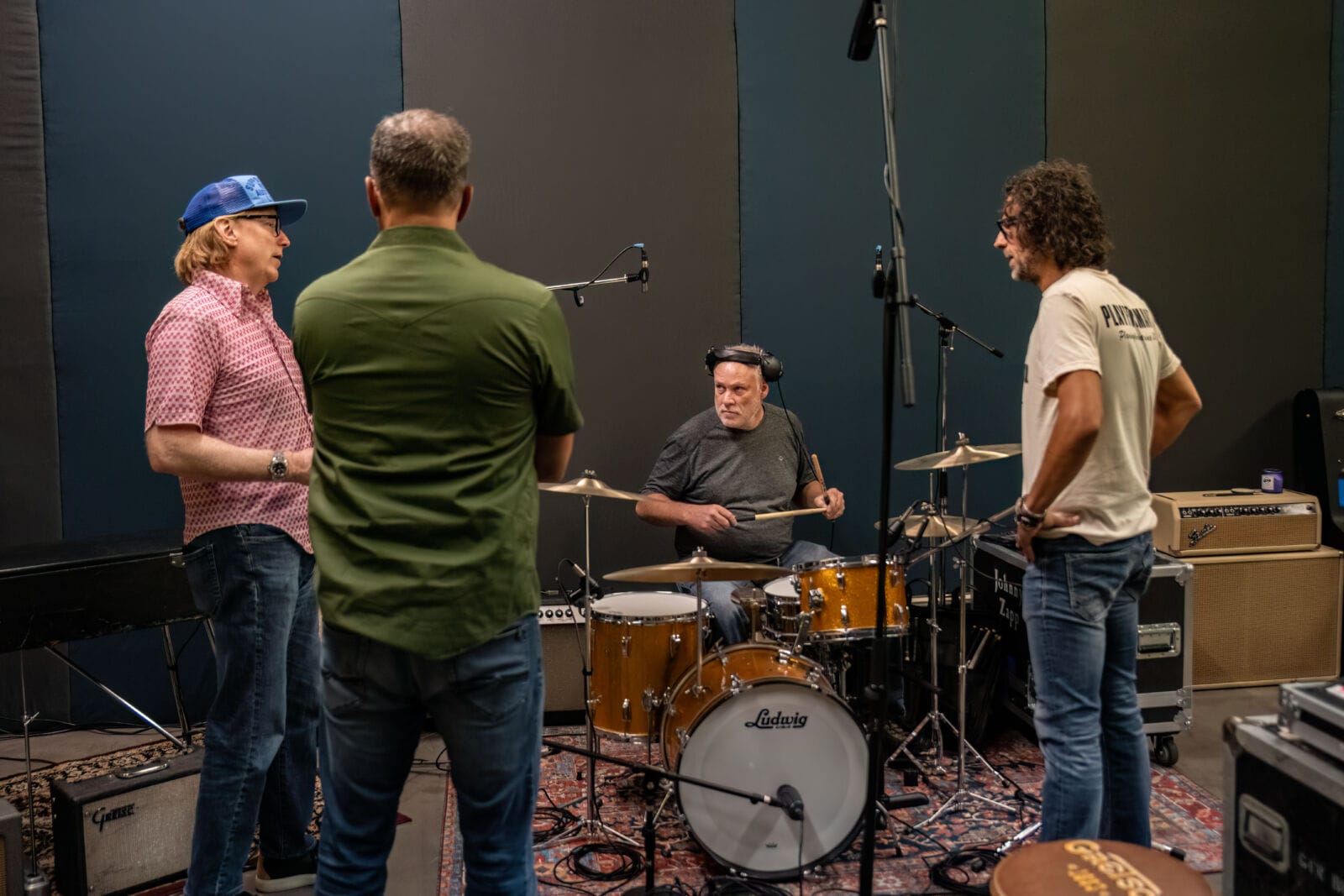
“You’re coming in and playing on quality gear, and you have a live sound engineer. It’s leaps and bounds from any other hourly place,” he said.
The studio offers tour bus parking and pre‑production capability, positioning itself as a regional stop for touring acts.
This dual model creates a steady revenue floor while funneling rehearsal clients into recording projects.
The 1,200‑square‑foot facility was constructed almost entirely by Zapp and his wife, Anna. They handled demolition, acoustic treatment, upholstery, and interior build‑out themselves, sourcing materials from local businesses. The result is a high‑equity operation with a strong brand story.
The space features a 740-square-foot live room; a professionally tuned control room; a lounge designed for client comfort — including a pinball machine — and long sessions.
The room itself is the core asset. “Somebody asked me the most important piece of gear we have. It’s the room,” Zapp said.
Zapp’s three decades in the Tempe and Tucson music scenes give the studio a built‑in talent pipeline. He regularly brings in A‑list regional players — including Phillip Rhodes, formerly of Gin Blossoms — to elevate client projects.
When Rhodes tracked drums for Tucson artist Craig Green, the two immediately saw the beauty of the project. “It was this beautiful marriage of Tempe and Tucson,” Zapp said. “Craig was blown away. He had no notes.”
Although the studio officially opened in July, demand began months earlier. Zapp recorded Tucson artist Mark Insley at Zapp’s house because Insley didn’t want to wait. Since opening, the studio has tracked Trashy Annie, Armando Moreno & The Revival, and Green’s new project, Cactus Craig.
Green said after long industry conversations, they decided to work together on the Cactus Craig project.
“Johnny has all of those bona fide rock guys,” Green said. “I wanted to record something. I really like the beautiful studio. He’s so old school in some way, which I really like. I really like his vintage gear that’s played through a vintage amp. There’s just nothing like that. He’s a purist in that way.
“He’s easy to work with and tries to get the best out of you — and succeeds.”
Zapp has faith in his new studio.
“We’re the new kid in town, and we’re definitely unique,” he said. “By this time next year, I think we’ll be pretty solid.”