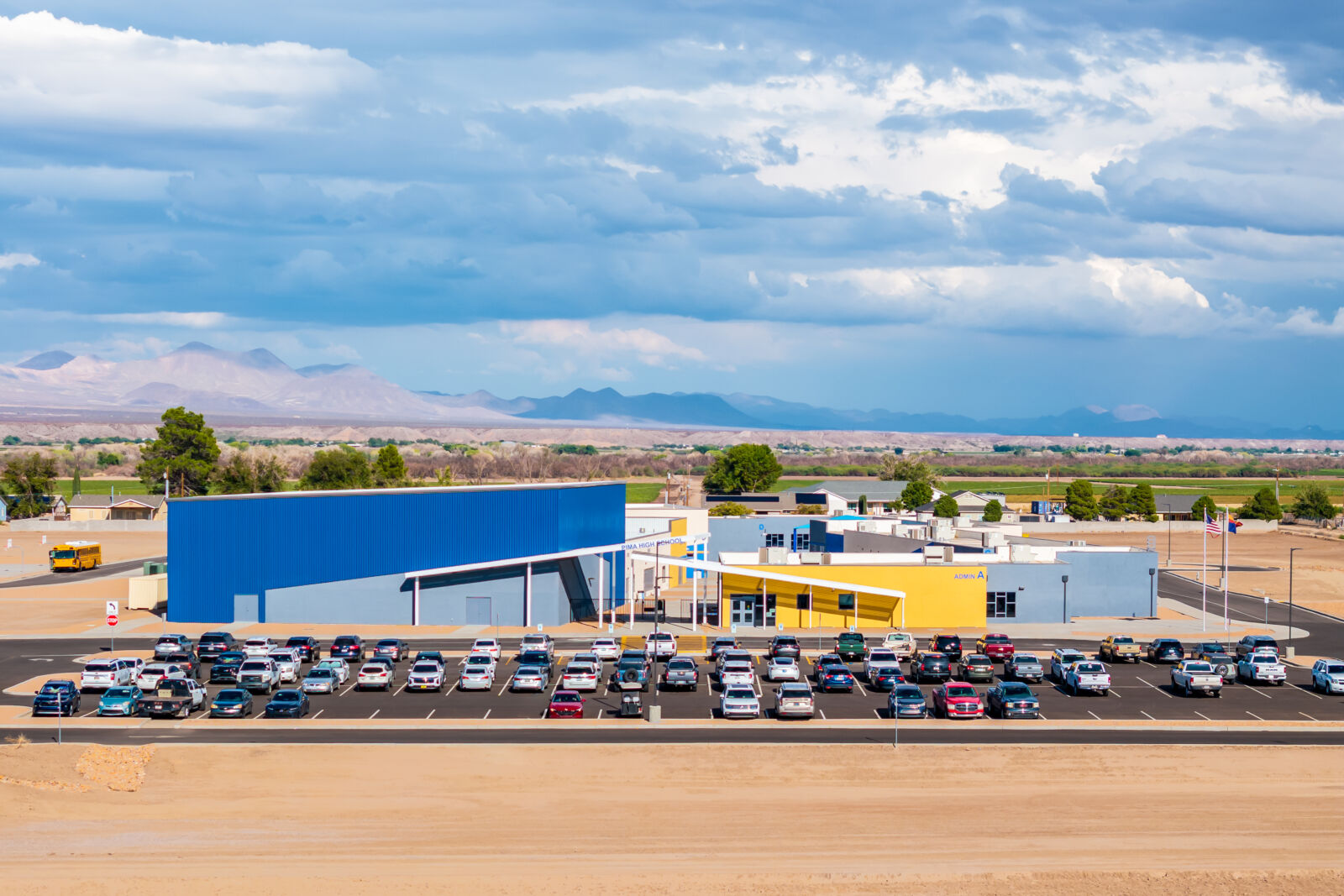
Each year, AZRE magazine’s RED Awards commemorates the meticulous work accomplished by the teams of companies who shepherd projects of all kinds from initial concept to final delivery. Each category represents the finest the industry has to offer — state-of-the-art education buildings, chic offices spaces, lavish hotels, modern apartments and so much more. Today, take a deeper look at the education project of the year finalists.
The 2026 RED Awards will honor finalists and announce winners in 18 categories on Thursday, March 19 at the Embassy Suites Scottsdale. The year’s top developer, general contractor, architecture firm and subcontractor will also be celebrated.
The RED Awards VIP sponsor is Haydon Companies, the spotlight sponsor is Core Construction, the beverage sponsor is DP Electric, the dessert sponsor is Layton Construction, the step and repeat sponsor is Suntec Concrete, the valet sponsor is Stevens-Leinweber Construction, the giveaway sponsor is Willmeng Construction, the 360 photo booth sponsor is Ironmark Building Company and the floral sponsor is Arizona Escrow.
Tickets for the 2026 RED Awards can be found here.
WANT MORE REAL ESTATE NEWS? Get our free newsletter here
Here are the finalists for the Education (K-12) project category:
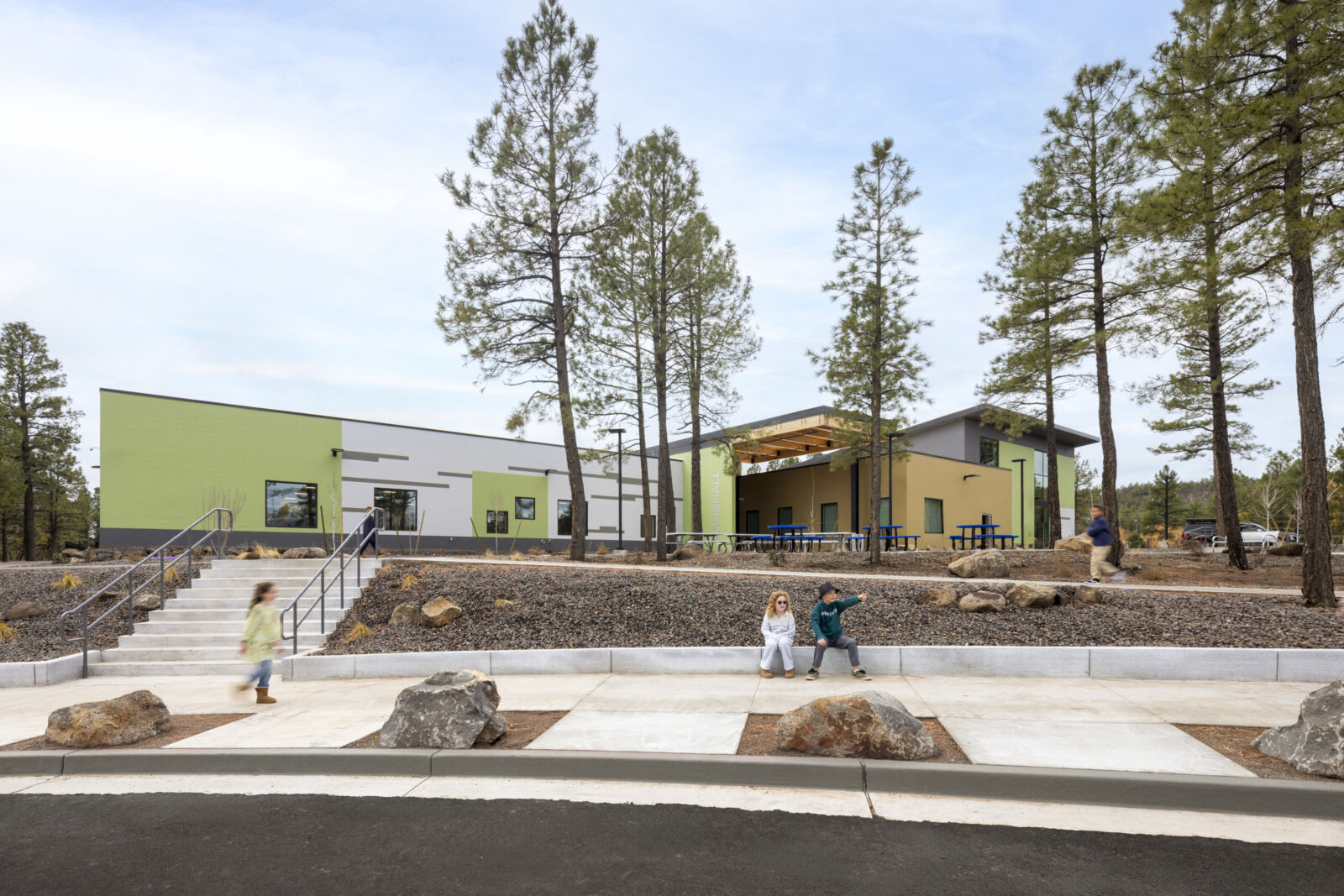
Marshall Elementary School
- General contractor: CORE Construction
- Architect: DLR Group
- Owner: Flagstaff Unified School District
- Subcontractors: Division 3 Structures, Midstate Mechanical, T-Bar-H, Sun Valley Masonry, RKS Plumbing
- City: Flagstaff
- Size: 55,338 square feet
The Marshall Elementary School rebuild project created a 55,338-square-foot, state-of-the-art learning environment designed with teachers, for teachers, with student outcomes in mind. Constructed on the site of the former Flagstaff Middle School, the project included demolition and abatement of the existing building to make way for a new elementary school that honors Marshall’s long-standing history and the generations of students who have passed through its halls.
The campus is uniquely organized around biome-themed learning pods, providing immersive and inspiring environments for students. The administration area draws inspiration from the Great Basin grasslands, offering a welcoming entry into the school’s operations. The kitchen, cafeteria, and Suzuki violin and music spaces evoke the High Chaparral, while the media center reflects the aquatic beauty of Havasupai Falls. Pre-K art and kindergarten classrooms are modeled after the Sonoran Desert, and 3rd grade classrooms take inspiration from the Mogollon Rim forest. First and second grades explore the Kaibab Forest, and 4th and 5th grade classrooms mirror the tundra of Humphrey’s Peak. The school’s design also incorporates access to the nearby Frances Short Pond and surrounding natural areas, integrating hands-on outdoor learning.
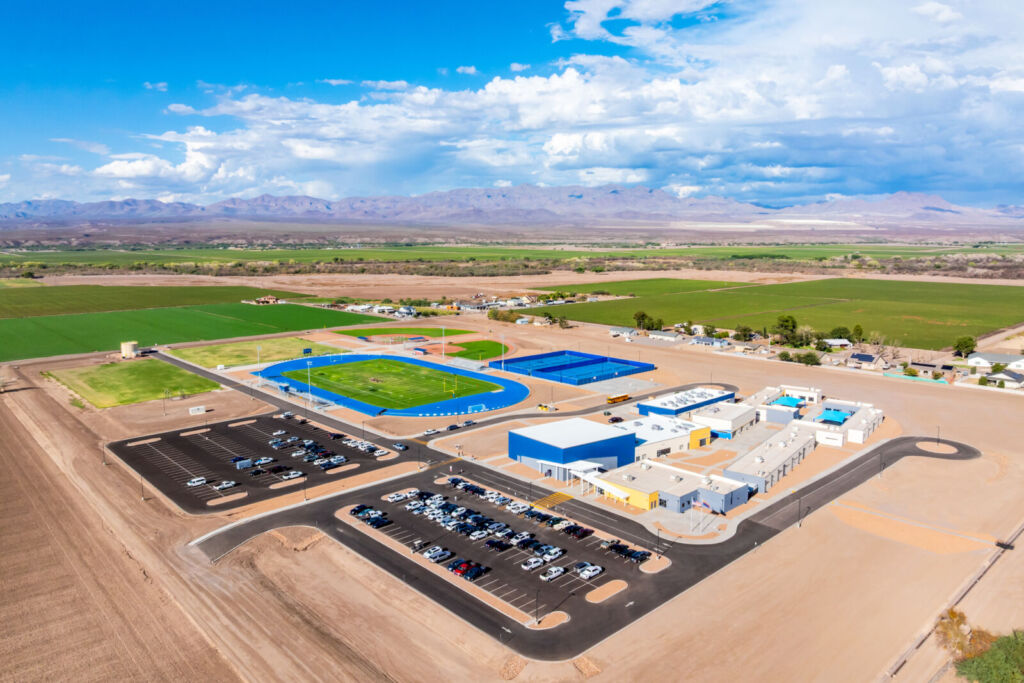
Pima High School
- General contractor: Danson Construction
- Architect: SPS+ Architects
- Owner: Pima Unified School District
- Subcontractors: SunCor, Hughes Plumbing, Arizona Corporate Buildings, Design Modular, Arizona Hardwood
- City: Pima
- Size: 67,195 square feet
This 67,195-square-foot campus rebuild replaces outdated facilities with a modern, master-planned educational environment designed for academic excellence, CTE workforce training and community engagement. The new campus is composed of five modular buildings, two pre-engineered structures and extensive site improvements.
The program includes 14 classrooms; six dedicated CTE labs supporting trades, welding, agriculture and technical career pathways; performing arts facilities; and a combined gymnasium and dining hall that serves as the campus hub. The design elevates hands-on learning opportunities through a five-acre agriculture field and 43 acres of athletic amenities including a football/soccer stadium, tennis courts and full baseball/softball complexes.
Executing a project of this scale in rural Eastern Arizona required careful logistics, extensive coordination with design partners, and the engagement of key subcontractors specializing in mechanical, electrical, modular construction, plumbing and life-safety systems. Despite supply-chain pressures and the complexities of phased work, the project delivered on time, seamlessly integrating owner-added scope to meet evolving district needs.
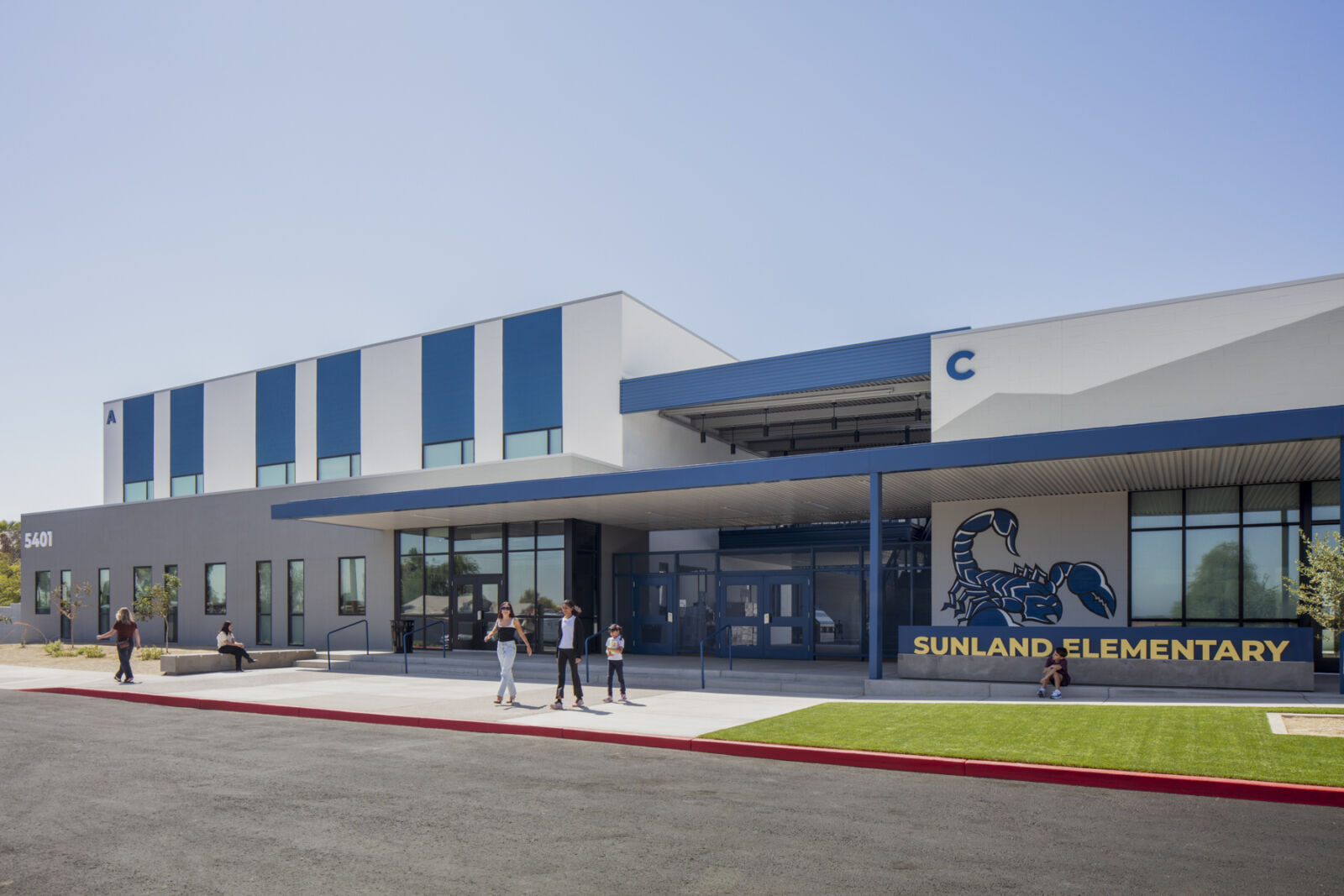
Sunland STEAM Academy
- General contractor: CHASSE Building Team
- Architect: Grace Design Studios
- Owner: Roosevelt School District
- Subcontractors: Sportsmans Concrete, Corporate Air Mechanical Services, Echo Canyon Electric, Amber Steel Fabrication, Rikoshea Contracting
- City: Phoenix
- Size: 77,000 square feet
The Roosevelt School District’s new 77,000-square-foot Sunland STEAM Academy is a purpose-built learning environment that reflects a visionary approach to education. The completed campus features “U”-shaped classroom buildings arranged around a central courtyard, creating an engaging outdoor core with shaded play areas and connecting balconies that strengthen visibility and connection among grade levels.
Inside, the academy supports hands-on, experiential learning with dedicated STEAM rooms, collaborative zones, flexible furniture and operable glass walls that allow teachers to easily adapt their spaces. Classrooms are filled with natural light from large windows, while acoustic baffles, writable corridor walls and modern finishes reinforce a polished, future-ready environment. In the art and science rooms, hanging cord reels emphasize the school’s focus on project-based, STEAM-driven learning. Desert-themed graphics are present throughout the building, especially in the administration office and corridors, honor the school’s proximity to South Mountain and celebrate its identity within the surrounding community.
Phase II is now underway, introducing a large new play field to the campus. Because the school remained active throughout construction, demolition of the former building could only begin after the new facility opened. A 3.5 acre multi-use field is now being constructed in its place with basketball courts and play structures.
Tangerine Farms K-8 School

- General contractor: CORE Construction
- Architect: BWS Architects
- Owner: Marana Unified School District
- Subcontractors: Amigo Electric, Divine Concrete, Comfort Systems, Foothills View Landscaping, Akowski Masonry
- City: Marana
- Size: 90,717 square feet
The Tangerine Farms K-8 School is a 90,717-square-foot campus thoughtfully designed to serve the growing Gladden Farms community in Marana. This vibrant new campus supports students from kindergarten through eighth grade with two main buildings — one dedicated to kindergarten and the other housing grades one through eight — along with an administration office, nurse’s office, cafeteria, kitchen, music room and gymnasium.
The campus is thoughtfully designed with numerous connection spaces and points throughout, creating collaboration and a sense of community among students and staff. Hallways, common areas and shared learning spaces provide opportunities for peer learning and social engagement, creating a seamless and welcoming environment that supports both academic and personal growth.
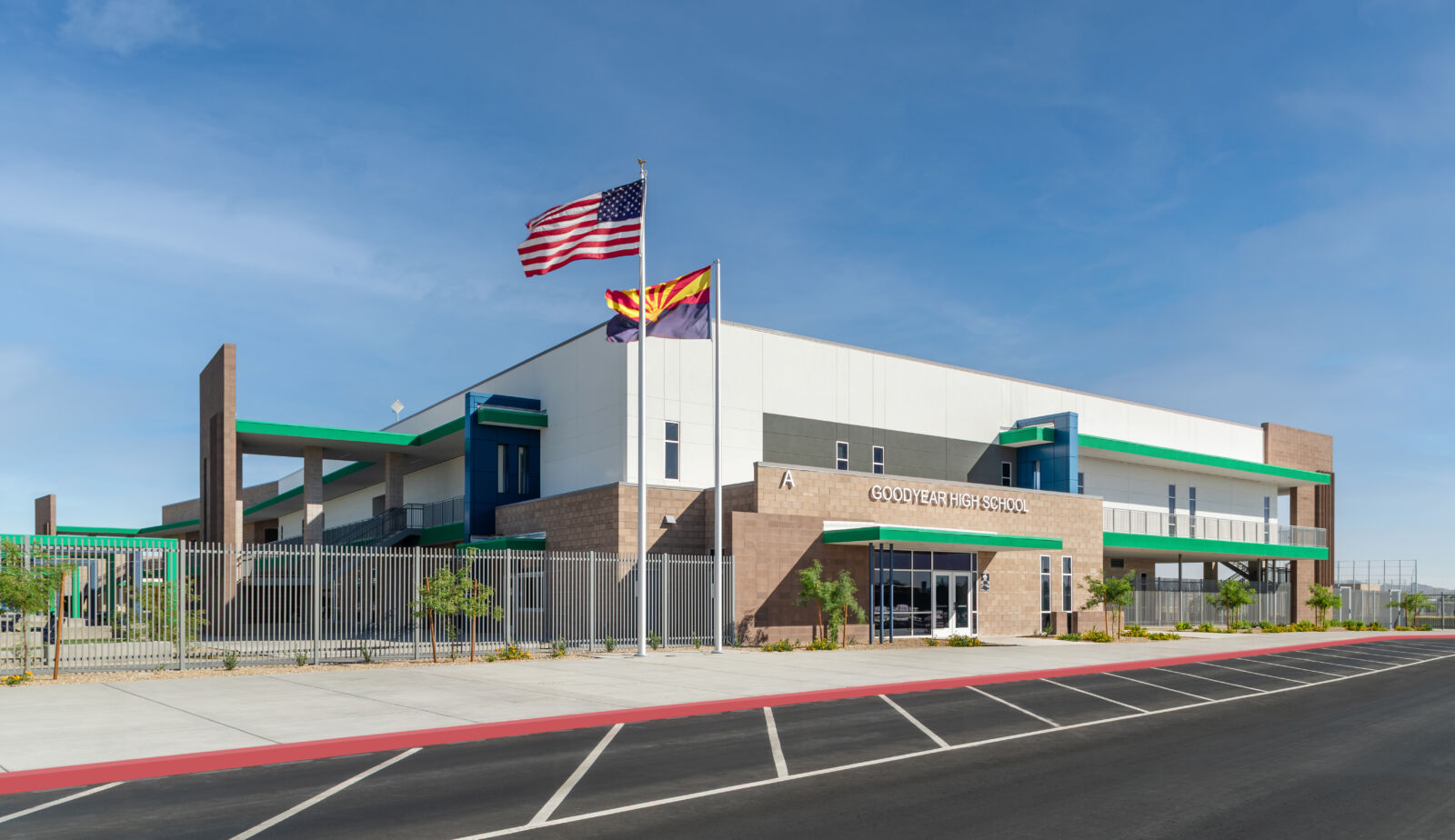
Goodyear High School
- General contractor: CHASSE Building Team
- Architect: ADM Group
- Owner: Agua Fria Union High School District
- Subcontractors: Midstate Mechanical, Stone Cold Masonry, EF Charles, LR Cowan Concrete, Veregey DER & Electrical
- City: Goodyear
- Size: 240,000 square feet
The Goodyear High School project broke ground on July 3, 2024, and achieved Phase I occupancy exactly one year later, on July 3, 2025. Phase I delivered 205,000 square feet, along with the football, baseball and softball complexes and all associated site work. Permits were issued at record speed, and the design and construction teams matched that momentum day after day, supported by trade partners who executed an accelerated schedule that brought this expansive campus to life in just twelve months.
To support this pace, an innovative build strategy was implemented that divided the campus into dedicated building teams. Superintendents were given full ownership of individual buildings, managing them as standalone projects while remaining tightly coordinated with the broader campus effort. This approach allowed teams to focus on sequencing, quality, and problem-solving at the building level without losing sight of the overall schedule.
At the same time, specialized superintendents were assigned exclusively to site work, underground utilities and infrastructure, ensuring those critical path activities progressed without interruption. By compartmentalizing responsibilities while maintaining constant communication, the team was able to manage the scale and complexity of the project efficiently — and deliver on an ambitious, one-year timeline.