It’s one of the most pertinent challenges faced by community leaders today: What can be done to create new water sources to offset limited water supplies?
With water sources dwindling, cities and counties in Arizona and across the West have been working to find new ways to provide clean water to growing communities. Unless action is taken to supplement surface and ground water supplies in Arizona, the state’s economic and population growth are likely to be hindered.
Fortunately, with major advancements in water purification technology and plans to update and expand water treatment facilities, there are strategies to address water scarcity in Arizona and elsewhere. Advanced water purification, which essentially diversifies city water portfolios and increases drought resiliency by purifying recycled water, is a known strategy that has been working globally and is becoming a reliable and cost-effective solution for more communities here in the U.S.
DEEPER DIVE: Raising the bar: Craftsmanship as construction’s talent advantage
INDUSTRY INSIGHTS: Want more news like this? Get our free newsletter here
Where does drinking water come from?
For the most part, major cities in the Greater Phoenix area rarely use groundwater.
Three river basins provide municipal and industrial surface water supplies to central Arizona: the Verde and Salt river basins within the state, and the Colorado River basin.
The Verde River basin, managed and distributed by the Salt River Project, originates in north-central Arizona from summer monsoons, northern Arizona snow and a convergence of springs and creeks north of Prescott. The Salt River derives its water from the White and Black rivers, fed by winter snow and summer monsoons over the White Mountains.
The Colorado River is more complex. Its water comes from the Rocky and Wasatch mountains and is considered a primary lifeline for the American Southwest, supporting seven basin states that include Colorado, New Mexico, Utah, Arizona, Nevada, California, Wyoming and many tribal communities through a massive infrastructure of dams and reservoirs.
Drought conditions have significantly impacted the Colorado River and more water was allocated to users than can be delivered. The Colorado River has been providing water to roughly 5.5 million acres of agricultural land and nearly 40 million people in cities across the Southwest. Water sharing allocations between the source and user states are in the process of being negotiated to manage the shrinking water supply. This situation places Arizona’s freshwater resources under significant risk.
The generational drought has not only slashed water levels on the Colorado River, it has also affected water supplies in Arizona’s basins. Despite the Arizona Department of Water Resources reporting that the state uses less water today than in 1980, water supplies are declining.
What is the advanced water purification solution?
With a limited amount of fresh water on the earth, finding ways to recycle and reuse it is essential. Water Reclamation facilities are already treating water and discharging it to surface or groundwater sources such as rivers, wetlands or aquifers. Clean water being discharged this way is not being secured and it can be mixed with lesser quality water, evaporate or simply flow away.
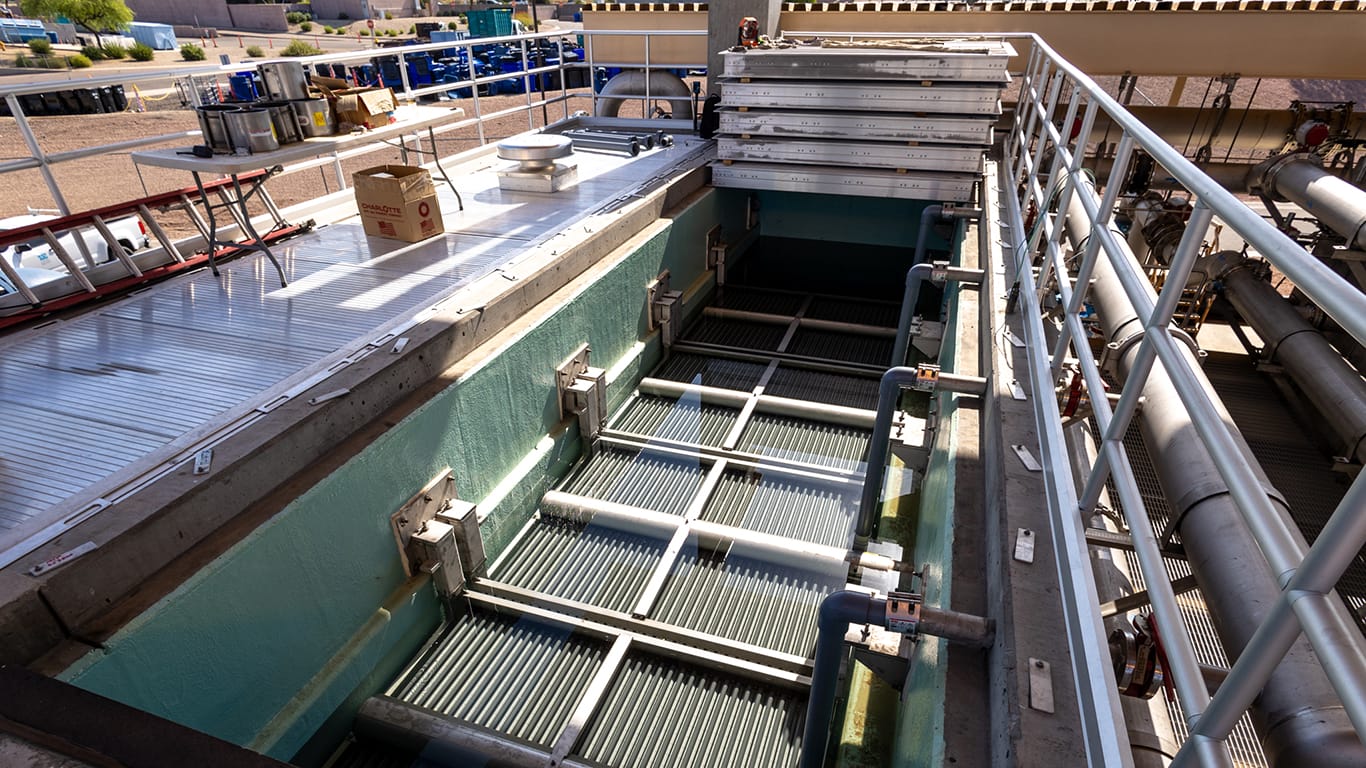
Advanced Water Purification captures treated effluent and runs it through an extensive and sophisticated filtering process to improve it to drinking water standards or typically better. Through the process’s multiple filtration steps, the water output is cleaner-than-bottled water and can be made available for use.
Historically, recycled water was used for the irrigation of wetlands, parks, golf courses and limited industrial reuse. Following years of testing and experimentation, the Arizona Department of Environmental Quality developed rules to allow and approve the use of Advanced Water Purification for potable or drinking water use. In a demonstration and public outreach effort, 30 Arizona microbreweries and distillers have used this water resource for their products and prefer it for their production because of its quality.
In addition to producing a superior product, the process of Advanced Water Purification reduces dependence on rivers, lakes, and groundwater, which is especially important for the long-term vitality of Arizona and other arid or drought affected regions.
How is this water purified for drinking?
Altogether, the Advanced Water Purification process is a five-step process that employs additional filtering and treatment steps to remove impurities, chemicals and pathogens. It begins with pre-treatment that breaks down contaminants and removes organic matter followed by the ultrafiltration process. Next, is the reverse osmosis (RO) process, which is highly effective at removing dissolved solids, viruses and chemicals, where high pressure membranes separate dissolved salts, viruses and other contaminants. Or, the water is filtered through granular activated carbon (GAC) filters, which act like a “molecular magnet” adsorbing contaminants as water passes through. Both RO and GAC filters remove “forever chemicals,” per- and polyfluoroalkyl (PFAS) substances.
Advanced Oxidation is the next step in the treatment process. This is where ultraviolet (UV) light and an oxidant, typically ozone, break apart complex compounds and organisms to improve taste, eliminate odors and polish the water quality.
Finally, because the water is so effectively treated and filtered, the final step is typically stabilization and remineralization of the water so that it can be introduced into a community’s water system. Water arriving to the tap at the conclusion of the purification process is clear, clean, safe and tastes really good.
While the purified water volume is low compared to the total amount of treated water consumed in the region, it offsets the amount of water needed from other sources, helping increase the number of available drinking water sources.
Why will advanced water purification work for Arizona?
In Phoenix, residents and businesses generate around 70 billion gallons of wastewater each year. The city aims to capture and purify more of this with three advanced water purification plants in development. Once fully operational, the trio will generate enough purified drinking water each year to serve nearly 240,000 homes.
McCarthy Building Companies has been building Advanced Water Purification facilities since the 1990s, when it first constructed Scottsdale’s Advanced Water Purification facility—the first in Arizona and only the third in the nation. Over the years, the firm has built numerous other Advanced Water Purification facilities and has seen the positive impact of these facilities on the communities they serve, especially in areas dealing with drought and water scarcity.
While multiple water conservation and reuse strategies should be employed to secure the community’s water future, Advanced Water Purification is a proven strategy for providing a sustainable, high-quality water supply that also reduces reliance on surface water and groundwater.
Author: Jaren Murphy is president of McCarthy Building Companies Water Services.