Expanding your property can be an exhilarating experience, whether for personal, business, or long-term goals you have set. Your family needs more space, or your business is expanding and needs a new facility. Whatever the reason, people build up and out on their land to achieve their goals and live the life they want.
But expansion can also feel overwhelming.
Projects and renovations can easily become among the most costly decisions one makes in their lifetime. Materials costs are soaring, and construction labour is in short supply. Sometimes ideas that seemed quite simple and inexpensive on paper turn into nightmarish projects with budgets that go through the roof.
The good news is this: it doesn’t have to be expensive to expand your home. It is possible to create affordable, functional, and long-lasting living spaces. You need to learn which options are viable and which are not.
Let’s walk through some of the most cost-effective structures to consider.
Why Many Property Owners Turn to Pole Barn Contractors
One of the first things to determine in an expansion project is the structural method to use. A single decision can dramatically affect the project’s cost, the time required to construct the extension, and even ongoing maintenance.
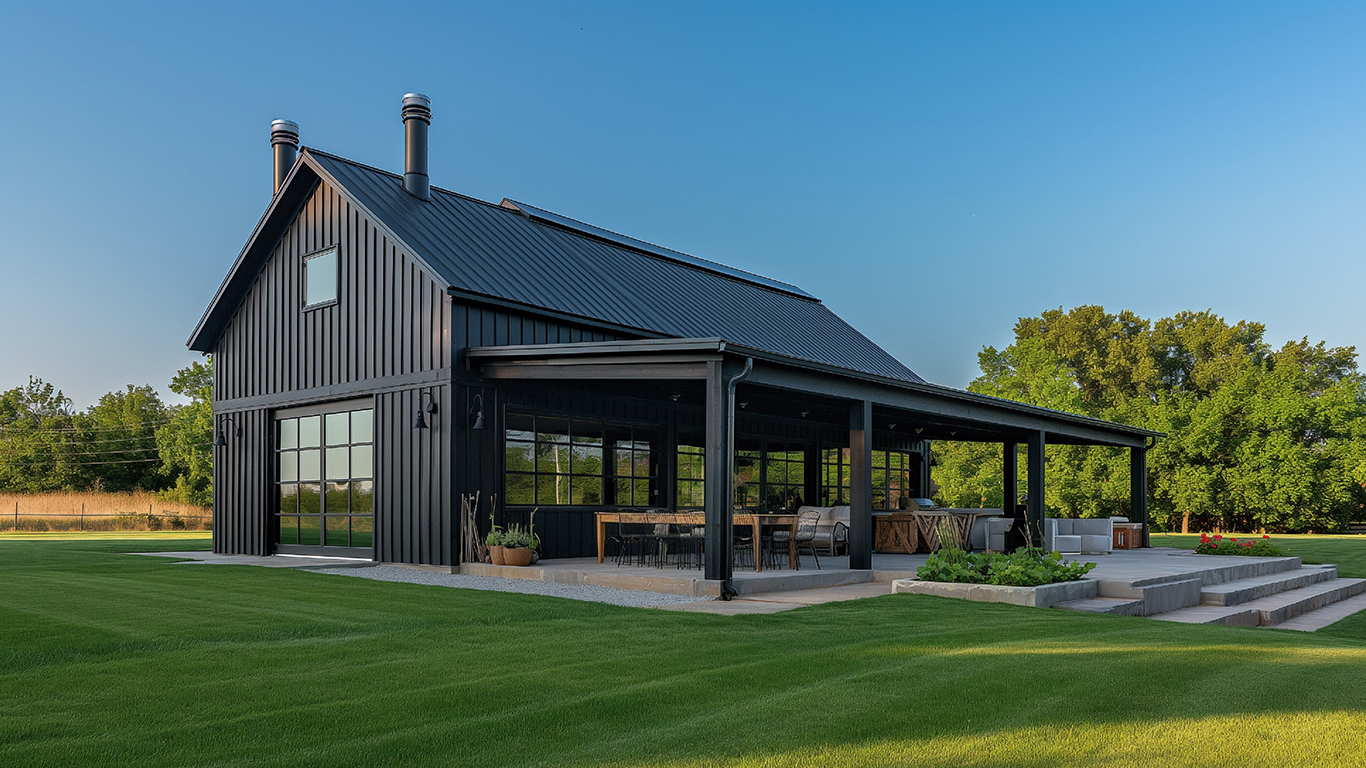
Many property owners first discuss their needs with pole barn contractors when thinking about how to expand their property. Post frame construction has become a popular option for a wide range of applications, from agricultural buildings and garages to storage buildings and homes. In the post-frame construction method, large structural posts are set directly on the ground, and support beams are attached to them, eliminating the need for more expensive continuous foundations.
Less expensive to construct and use materials than conventional houses. Faster to build from start to occupancy. Simple structure, reduced materials, and flexible plan configurations.
Flexibility matters. Sometimes you want a garage, sometimes you want equipment storage, and sometimes you want a shop/barn for multiple purposes. Post-frame construction provides wide-open interior spaces with endless possibilities.
Post Frame Buildings
Post-frame buildings are commonly associated with farm barns, but they are used for much more than just agriculture. Today, post-frame buildings are used for commercial workshops, hobby shops, self-storage facilities, and even primary residences.
The cost efficiency comes from three primary factors.
First, the foundation requirements are reduced. A full concrete foundation slab, or footings and slab, is not needed. Instead, foundation posts can be placed directly into the earth or atop concrete piers. A greatly reduced initial investment results.
Second, materials are used efficiently. Although post spaces are wider, they require fewer framing components than in stick-built construction.
Many material alternatives to wood framing require significantly less time to construct. Third, construction timelines are shorter. A faster build reduces labor costs and lets you occupy the space sooner.
A cost-effective way to lower your heating and cooling expenses, post-frame buildings are also very energy-efficient when well-insulated. Proper planning ensures a warm interior environment for year-round occupancy.
Metal Buildings
Prefabricated metal buildings are also an economical way to add more space to your property. These are engineered in a factory, shipped to your site in prefabricated components, and can be quickly assembled.
Predictability is a hallmark of prefabrication and is one of the ways that costs are contained. Materials are quantified and manufactured to exact specifications, with no excess required. Labour efficiency is also achieved as workers assemble rather than build on site.
Metal buildings are particularly suited for storage, light industrial use, garages, and large workshops. Metal buildings provide a very long-lasting structure that is pest-proof and relatively low-maintenance.
This type of material may be more expensive, depending on the requested customizations, but its longevity is usually very rewarding.
Modular Additions
If your expansion will butt up against an existing home or office, modular construction can help you save a ton of $$.
Each modular section of the home is built off-site in a factory. They can control every aspect of the building environment, eliminating weather-related delays and ensuring quality construction. Additionally, they can drastically reduce construction waste and closely monitor every detail of the home’s construction.
A lot of plumbing and electrical work can be done concurrently with excavation and foundation work for a structure, shortening the overall time required to finish a project. This, in turn, means lower labor costs and less disruption to your daily life and business.
Modular additions can include secondary bedrooms, office suites, classrooms, and small commercial additions. A modular addition provides an efficient solution in the least time while not sacrificing structural integrity.
Detached Accessory Structures
Sometimes, expansion does not need to attach to your main building at all.
Adding a detached garage, storage shed, accessory dwelling unit, or workshop is an excellent way to add needed square footage without altering the main house. This often eliminates the need for costly structural engineering work, thereby speeding up the permitting process.
Smaller standalone buildings can be built in phases. They can be built in stages as required, with the option to expand later. Helping to stagger cash flow.
A trend that has captured national headlines and the interest of homeowners locally is the construction of Accessory Dwelling Units, commonly known as Carriage Houses. These multipurpose structures can be used for rental income, as in-law suites, or as private home offices or studios.
Renovation Versus New Construction
Before breaking ground, it is worth evaluating whether renovation might be more cost-effective than building new.
Old basements, unused attics, and outdated outbuildings and structures are just a few examples of underutilized and often neglected spaces. By retrofitting and reusing these structures, you can save on construction materials, reduce renovation time, and lower overall building costs.
Renovation is not without its challenges. From structural damage and hidden water leaks to outdated plumbing, electrical, or HVAC systems, a renovation budget can quickly increase if any of these are not properly addressed before work commences. An inspection can confirm whether your renovation will deliver long-term cost savings and, in some cases, may uncover other future repairs that can be avoided for life.
In some instances, it proves to be the better economic option.
Planning for Long-Term Value
Affordable does not mean cheap. Affordable means that the facility’s structure, function, and budget have been carefully and wisely considered.
Don’t make decisions based on initial cost. Consider long-term maintenance needs, energy efficiency, flexibility, and resale value when evaluating costs. While a house made of higher-cost materials may have a higher upfront cost, the homeowner’s costs over the building’s lifespan can be greatly reduced due to lower maintenance needs. Being able to reorganize interior space easily will help your house grow with your changing needs.
It is also important to consider zoning regulations and permitting in the initial planning stages of a project. Permits and zoning issues can cause significant delays and lead to major cost escalations. Good communication with local authorities, contractors, and designers can help minimize surprises.
When thinking about home expansion, the first thing that comes to mind is usually size, meaning we are getting more space. While that is true, in reality, the expansion itself – regardless of the new square footage – is also about function. A smaller space, thoughtfully planned and executed, can be much more functional than a larger, less well-planned space.
Making the Right Decision
There is no one-size-fits-all solution for any given property. A rural landowner may need more space to store their equipment. A family moving into a new home may need to adjust their living space. Small business owners may want to expand their workshop without impacting daily operations.
What kind of house do you need? Your decision will depend on your personal requirements, the condition of your block, and your budget.
When planning a space, start by asking and answering a few fundamental questions. Some we consider are: Purpose: What will you be using the space for in five years, in ten years? Will it be used frequently or occasionally? Will it require heating and cooling consistently or occasionally? Form vs. Function: Will the space be primarily used, or will it be a focal point where form drives function?
When those answers are clear, structural choices become easier.
Renovating your home is a significant investment and should be approached with caution and careful planning. A well-planned expansion enhances your home’s functionality and workflow, and, in the long term, increases your home’s value. Smart planning can ensure that renovation costs stay within budget and do not place an unbearable financial burden. The result will be a sensible, viable home expansion that truly adds value.
Most effective structures are not complex or sophisticated. They are the structures that truly serve their intended purpose; they can be built affordably and will last for generations.