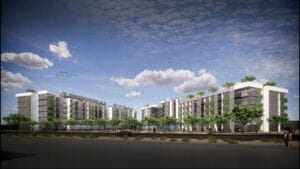
Across Arizona, cities like Tucson, Scottsdale, and Tempe are all seeing increased development activity. But Greater Phoenix tells the sharpest story: 22,000 new units delivered in 2025, with the market absorbing only around 17,000. That gap between supply and demand doesn’t just show up in occupancy reports, it shows up in margins, in forecasting, and in the daily financial decisions property managers have to make.
And when you look at it from these many directions, the cracks in legacy systems start showing up fast. This may be the reason why property managers across Arizona are forced to rethink the fundamentals of their finance and accounting functions.
What An Efficient Accounting Function Should Look Like in 2026
Tighter margins sure create financial pressure, but they also expose gaps in how portfolios are managed. Running a portfolio on manual reports and static spreadsheets used to be the norm. In today’s market, it’s a liability. Real estate accounting has moved well beyond those legacy approaches. What matters now is having clear, current numbers, so your next move is always based on what’s actually happening.
Real-Time Portfolio Dashboards: Stay Ahead of What’s Changing
In a high-supply environment where occupancy, concessions, and expenses can shift week to week, waiting for month-end close means every decision you make is based on conditions that no longer exist. By the time the report lands, the problem has already compounded.
Real-time dashboards change that relationship with your data entirely. Instead of waiting for a report to tell you what happened last month, you’re watching occupancy shift mid-week, catching a cash flow dip before it becomes a shortfall, and seeing which properties are quietly underperforming while the portfolio average still looks healthy.
MORE NEWS: The 100 Best Doctors in Arizona for 2026
INDUSTRY INSIGHTS: Want more news like this? Get our free newsletter here
Forecasting That Keeps Up with the Market
The problem with spreadsheet forecasting isn’t that it’s outdated; it’s that it assumes conditions stay roughly the same, and right now, they don’t.
You have powerful tools like Yardi, RealPage, and AppFolio that support property-level and portfolio-level forecasting, allowing you to run real scenarios. What does cash flow look like if occupancy drops two percent? What if a lease-up takes three months longer than expected? What if concessions increase across two properties at once? Running those numbers in advance means fewer surprises and much stronger conversations with lenders and investors when conditions shift.
Unit-Level Analytics: Know Exactly What’s Working and What Isn’t
Portfolio numbers can look fine on the surface while individual units tell a completely different story. One floor plan lease in days; another sits empty for weeks. Without that unit-level visibility, pricing decisions get made on averages that paper over the real problem. The operators who close that gap fastest are the ones who know exactly what their effective rent looks like after concessions, not what the top-line suggests.
Automated Reconciliation: Close Faster, With Fewer Errors
Every new acquisition brings another set of bank reconciliations, intercompany transfers, and lender reports. Every concession granted, every rent adjustment made, every expense logged is another entry that has to be accurate, consistent, and retrievable on demand. For portfolios managing ten, twenty, or thirty properties, doing that manually is inefficient and where costly errors take root.
That’s where accounting automation changes the game. Rather than chasing down discrepancies at month-end or scrambling to pull records together when a lender audit lands, the work is already done. Reconciliations run automatically, compliance tracking stays current, and your close cycle shrinks from weeks to days.
Scalable Systems: Built for Where Your Portfolio Is Going
Arizona’s multifamily market is still expanding. New acquisitions, new developments, and new management contracts are adding complexity to portfolios that are already stretched thin.
For growing portfolios, platforms like AppFolio, Yardi Voyager, and RealPage scale with you, centralizing data across every property without losing the property-level detail you need to make smart decisions. It becomes easier to compare performance across assets, spot risk before it compounds, and put capital where it creates the most value.
Turning Market Pressure into Financial Precision
Arizona’s multifamily market is in the middle of a reset. Supply ran ahead of demand; rents pulled back, and margins got a lot thinner across Phoenix, Tucson, Scottsdale, and the broader metro. That’s just where things stand right now, and property managers who are serious about coming out of this cycle strong can’t afford to run their portfolios on financial systems that weren’t built for this kind of pressure.
What separates the operators doing well in this environment isn’t always the quality of their properties. A lot of the time it comes down to how well they actually know their numbers like rent rolls, concessions, cash flow, forecasting, and how quickly they can act on that information when something shifts.
That’s exactly why more owners and managers across Arizona are taking a harder look at their accounting operations. Professional accounting services in Phoenix and across the state have moved well beyond basic bookkeeping; they’re helping portfolio owners get the kind of financial clarity that makes every other decision easier.
Markets shift, margins change, and conditions evolve, but the property managers who come out ahead will be the ones who build a resilient financial system that can keep up with the ever-evolving real estate sector.