While other industries and employers are laying off workers, construction positions remain unfilled on jobsites across Arizona. The workforce gap in the construction trades is making room for new builders to join the industry and help shape communities while developing their skills and careers.
Currently, more builders in the skilled trades are leaving the profession than joining, according to 2025 data and 2026 projections from the Associated Builders and Contractors. With only two new workers joining the trades, compared with five who retire or leave the field, the gap poses challenges for the construction industry and Arizona’s economy.
Getting new workers to consider the construction industry is a decades-old challenge. For generations, the pressure on students and young people has been to “go to college” for a career. Attending a four-year school is expensive, and with advancements in artificial intelligence, Forbes notes that the number of entry-level job opportunities upon graduation is declining significantly. Working in construction with the right company means a high-paying, solid career path.
The Arizona Office of Economic Opportunity projects construction to have the highest job growth rate in the state over the next two years, and a recent study by Mesa Community College predicts that in 2026, there will be as many as 200,000 openings in the construction field, with only 80,000 qualified applicants to fill them. The Arizona Chapter of the Associated General Contractors says that over 90 percent of Arizona’s construction firms report a shortage of job applicants.
LEARN MORE: GCU and McCarthy launch new pre-apprentice construction program
Training and Development Programs Pave a Clear Career Path
The industry clearly needs new workers to replace those who are retiring, and to meet the demand caused by the area’s growth.
To fill those roles, career opportunities are being introduced to more younger workers, and the construction career path is being made clearer and more appealing. This means that, in addition to community partnerships that expose more secondary and technical school students to the industry, construction firms like McCarthy Building Companies are offering training programs in advanced skills, leadership and management to their workforce. Programs like this layout a clear career path that develops and retains the craft workforce, while keeping workers on an upward career trajectory.
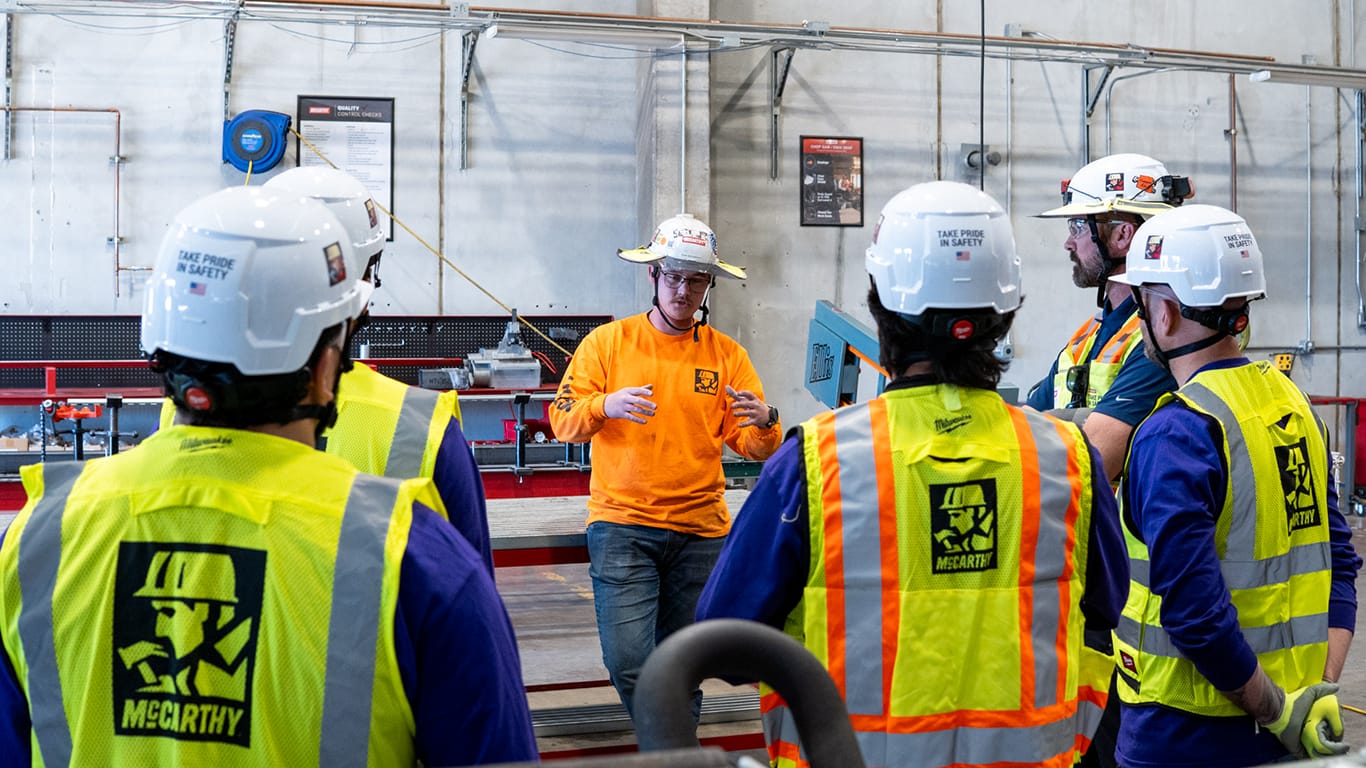
McCarthy developed its own curriculum and built a training center in Chandler, Arizona to advance its craft workforce. The Center provides over 2,500 skilled craft workers in the region with a dedicated space for attending training programs and developing their professional skills.
Field Operations Manager Amber Shephard is responsible for developing McCarthy’s training programs. She is responsible for producing various curriculum, including a 12-week program focused on developing leadership skills. “We are intentionally developing our next generation of supervisors and leaders,” she said. “That means in addition to project management and job skills, we provide training in ‘soft skills’ like communication, leadership and risk awareness. Programs like this offer team members new opportunities to grow professionally and ensures that our clients’ projects are built with the quality and consistency they have come to expect from McCarthy.”
Her programs are tailored to each trade and provide a clear roadmap for a team member to advance from their current role at the company and achieve their long-term career objectives.
Opportunities that Match Builders’ Interests and Goals
Trades are becoming sought-after jobs, and construction companies are adapting their corporate culture to become places where workers start and finish their careers. There are many ways to make this happen, but McCarthy finds the most success by building teams from within.
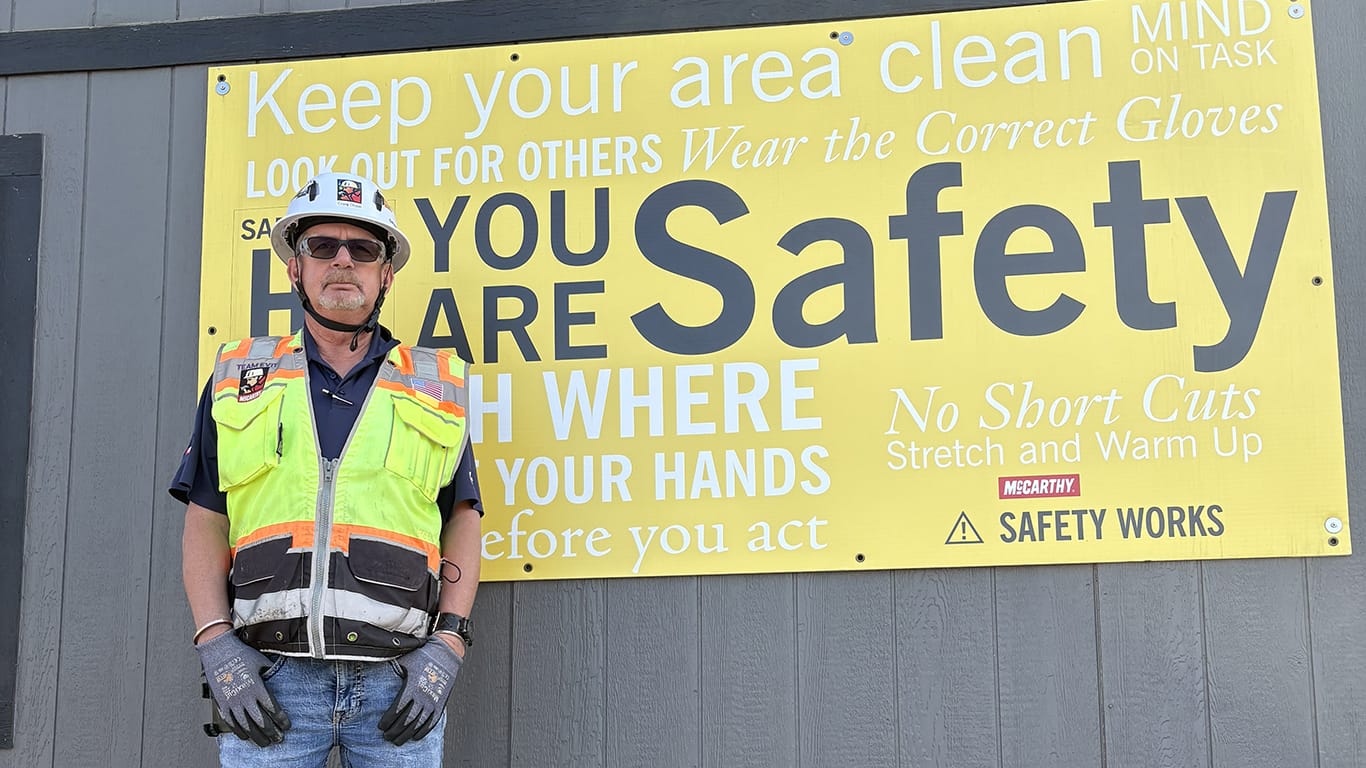
Craig Olson is a third-generation carpenter and Senior Construction Superintendent with McCarthy. His grandfather was a carpenter, and his dad joined McCarthy through the apprentice program. “I was planning to go the architecture route, but I got burned out on school, so my dad took me to the union hall, and I was sworn in as an apprentice. Once I started building, it just clicked.” Craig has been with McCarthy for 43 years.
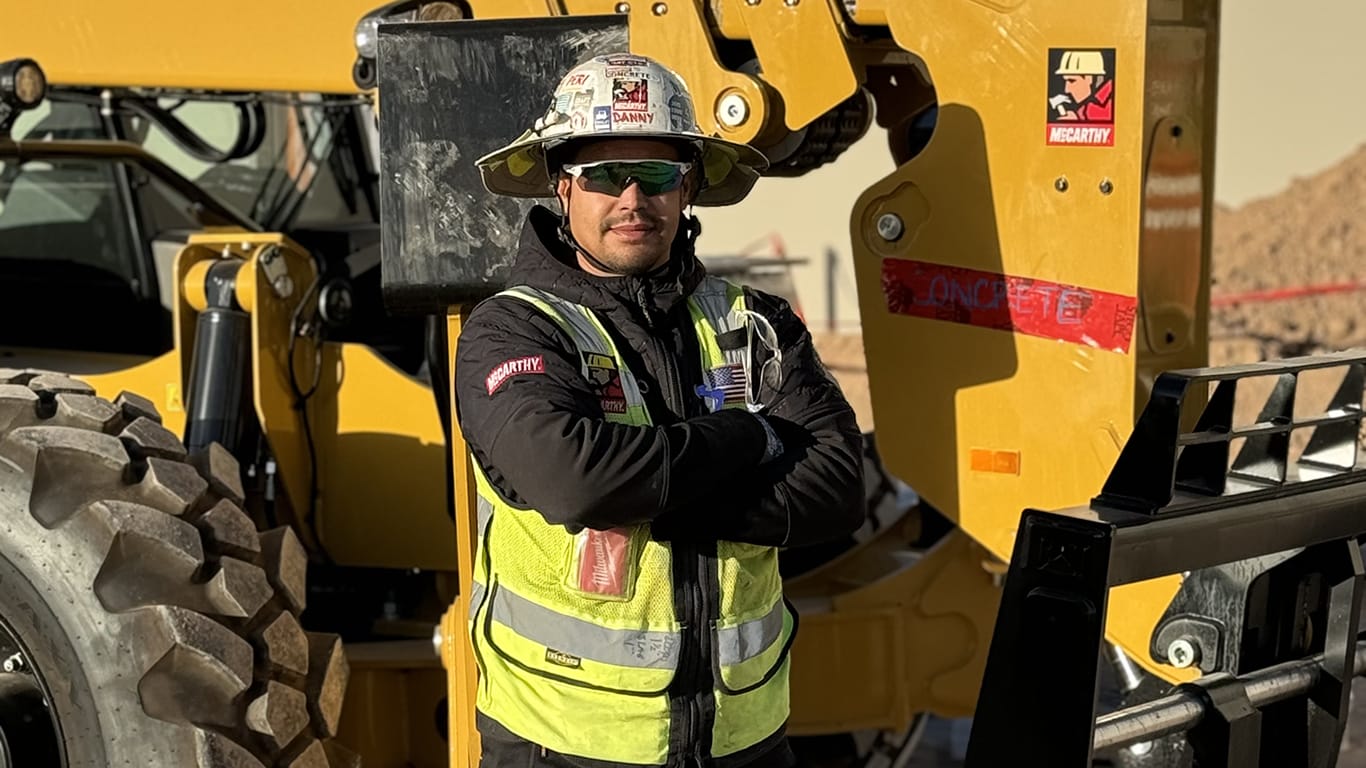
“I started working elsewhere in concrete, then joined McCarthy as a journeyman, and I haven’t looked back,” said Danny Nunez, General Foreman with McCarthy’s concrete team. “Being here showed me a real career path with each step mapped out. Expectations are clearly set, and training is available to help me keep moving forward. I’ve been with McCarthy for six years now and I’m working toward my next promotion. Ultimately, I want to be a Senior Superintendent for the Southwest Region.”
Joel Quintana, a Project Superintendent and Service Manager with McCarthy’s mechanical team, explained that he’s been around construction his whole life. “My family is in it — so it didn’t feel foreign to me, but after working in residential and light commercial I wanted to do more building. I saw that McCarthy was hiring and was able to come in as a sheet metal apprentice. Over the past 14 years, I’ve been able to develop my skills and even put my background in service to use by becoming general foreman. I then moved into a virtual design and construction role where I learned the planning and 3D modeling side of the business. Now, I am leading mechanical teams on projects that are going to serve our community for decades to come, and I love being part of that.”
Building More than Buildings
Many of those in construction were inspired by family members to join the industry. Contractors often rely on the experience and knowledge of one generation to be shared with the next. It is not uncommon for builders to develop a sense of pride from their work, from mentoring others, and from the sense of accomplishment that comes with being part of an industry that is leaving its mark by building communities.
“There’s a lot of community pride in what we do — building schools, water treatment facilities, hospitals — work that makes everyday life possible,” said Quintana. “I love being part of the greater community by building projects like these that make others’ lives better.”
At McCarthy the skilled craft workforce teams in concrete, carpentry, mechanical, civil and electrical support one another by providing mentoring and career advice to those newer to the industry or working towards a promotion.
“There’s a definite appreciation and sense of camaraderie shared by our team,” said Olson. “Two of my favorite parts of the job are watching a project team succeed after helping guide them, and mentoring younger foremen and superintendents, helping them set their goals and watching them grow.”
“I learn best by teaching,” said Quintana. “Last year I was able to help develop the HVAC curriculum that Grand Canyon University now teaches. Teaching reinforces how much I’ve learned over the years and feels great to be able to do for others what my mentors did for me.”
Building Trust Together
There is no question that construction is hard work. Every day, projects are presented with new challenges for the construction team, with each trade facing different hurdles. Whether its meeting tight timelines; running into unexpected occurrences; or a delay in materials, teams are always addressing numerous different factors.
“Overcoming challenges and seeing the results of their work each day is one of the ways that our teams come together,” said Nunez. “I’ve learned that doing little things for the team each day help them feel appreciated. Recognizing people for their work, bringing breakfast sandwiches for the team working on a Saturday, and just being encouraging helps keep morale up, even on the toughest projects.”
By working together, it all falls into place. A reliable workforce means predictable timelines. Predictable timelines ensure a well-managed job that meets schedule and quality expectations without cost overruns or carried interest. Well-managed quality jobs lead to trust.
The construction industry is facing a true workforce shortage, especially in the trades. For young adults today, that means an opportunity for a high wage start to a career with a path from jobsite into management. For construction firms and the industry, it means taking a holistic look at what can be done to provide opportunities to new workers and embracing a culture of training and development.
For anyone considering a job in the construction trades, Danny Nunez offers this advice: “Don’t let anyone derail you or criticize you for working construction. It’s a very rewarding and important career. Be sure to research the company you’re considering and don’t just take a job because it’s available. Companies differ in culture, benefits and career opportunities. Wait for the right one.”
Author: Eric Fields is Senior Vice President with McCarthy Building Companies.