
A safe bathroom in an older home needs two things: a working waterproof membrane under the tiles to keep water out of the building structure, and a modern electrical installation with the right protection to keep people safe from electric shock. In many older Ballerup homes, both are outdated, and the best time to fix them is together, during a bathroom renovation.
Many villas and terraced houses in Ballerup, Skovlunde and Måløv were built decades ago, long before today’s wet room rules and modern bathroom electrics. The bathroom is the one room where water and electricity meet every day.
Byggruppen.dk, a renovation and electrical company based in Ballerup, often finds both worn waterproofing and an old fuse box when renovating bathrooms in older local homes. Fixing both in the same project gives a bathroom that is safer, more durable and easier to live with.
Why is the bathroom the riskiest room in an older home?
The bathroom is the riskiest room because it combines daily water and moisture with electrical equipment close to wet surfaces.
Showers, baths and sinks put water and steam into the room every day. At the same time, a modern bathroom often has:
- Ceiling lights and mirror lighting
- Sockets
- Heated towel rails
- Electric underfloor heating
- Ventilation
In older homes around Ballerup and Greater Copenhagen, the waterproofing and electrical protection were often built for a much simpler bathroom. Poor waterproofing lets water into the walls and floor, and outdated protection makes an electrical fault far more dangerous.
What does a wet room membrane do?
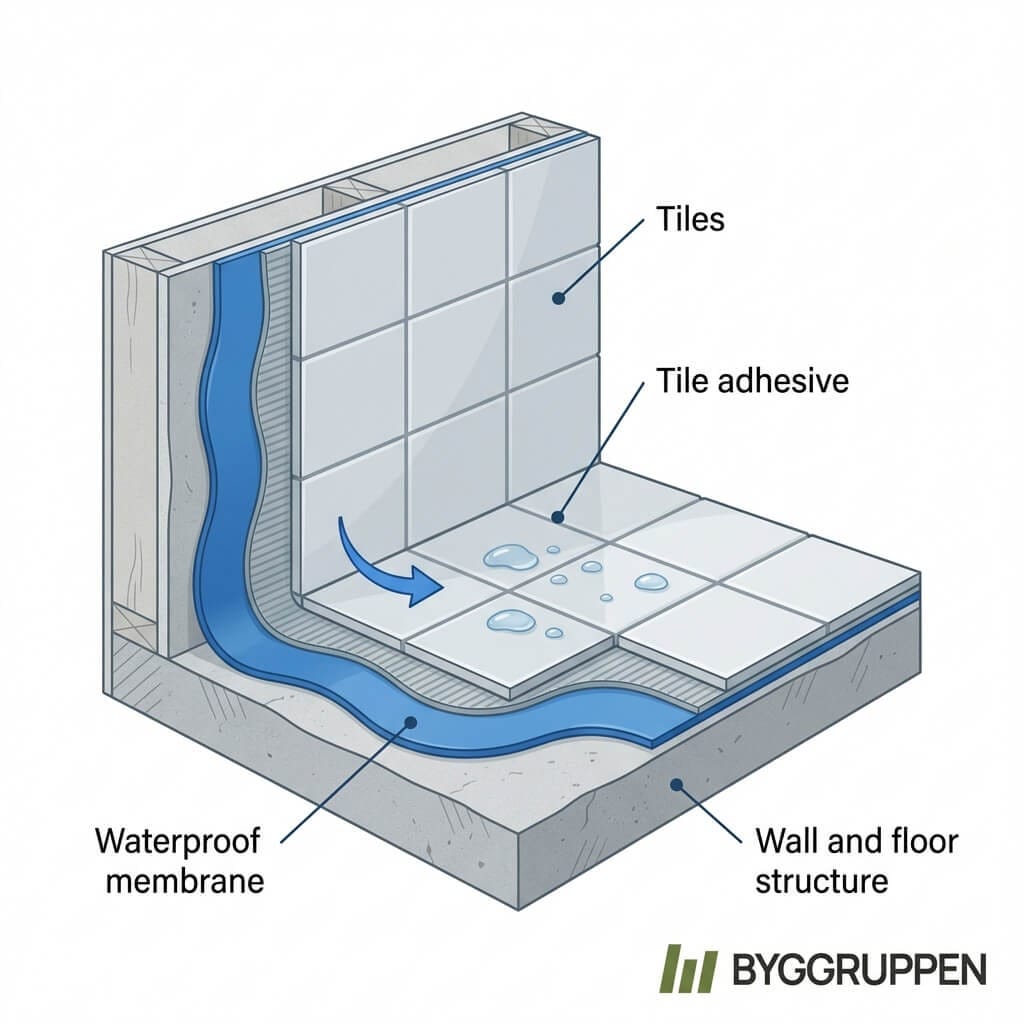
A wet room membrane is a waterproof layer under the tiles that stops water from reaching the floor, walls and rooms below.
Tiles and grout are not waterproof on their own. Small cracks and joints let water through, even in a bathroom that looks perfect. Without a working membrane, water slowly damages:
- The floor construction
- The walls behind the tiles
- Insulation and surrounding materials
- Ceilings and rooms below the bathroom
Older bathrooms may have no membrane, a worn one, or one that does not meet today’s Danish wet room rules. A new vådrumsmembran protects the structure when it is applied correctly, with special care at corners, joints, pipes and around the drain.
What are the warning signs of failing bathroom waterproofing?
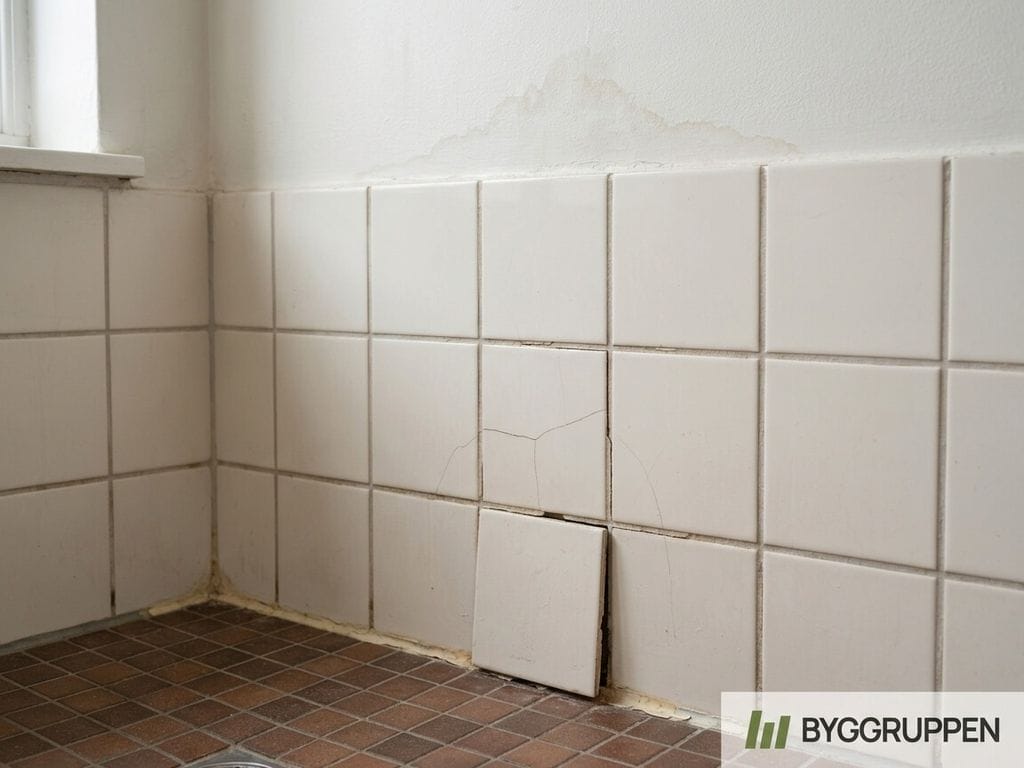
Loose tiles, damaged grout, a lasting musty smell and damp stains near the bathroom are the main signs that the waterproofing is failing.
- Loose, cracked or hollow sounding tiles.
- Cracked or dark grout.
- A musty smell that does not go away.
- Moisture marks or peeling paint on nearby walls.
- Stains on the ceiling below the bathroom.
Some signs can have other causes, but several together mean the bathroom should be checked. Replacing a few visible tiles does not fix a failed membrane underneath.
Why does an old fuse box make a bathroom less safe?
An old fuse box makes a bathroom less safe because it often lacks modern residual current protection and the capacity for today’s bathroom equipment.
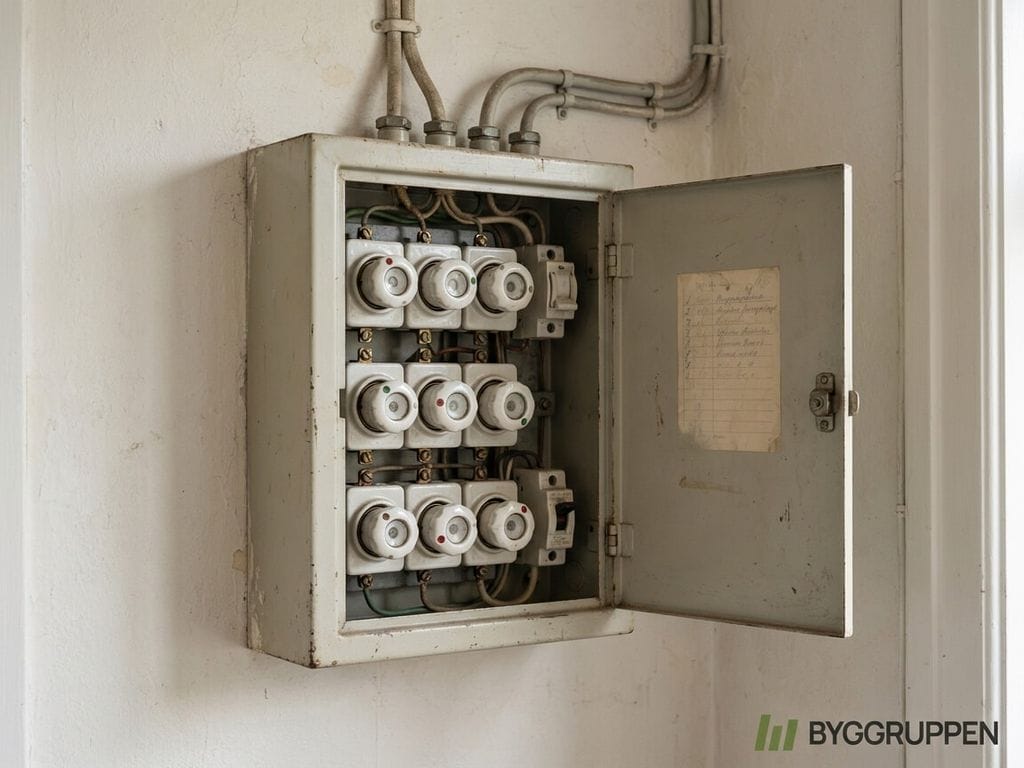
Older installations often have porcelain screw fuses, few circuits and little or no modern protection. Meanwhile, underfloor heating, lit mirrors, ventilation and heated towel rails all add load.
Modern residual current protection cuts the power within a fraction of a second when a fault occurs. That matters most in a bathroom, where people are often barefoot and wet. An older installation without it does not give the same level of safety.
What are the warning signs of an outdated electrical installation?
Old screw fuses, frequent power cuts and a warm or buzzing fuse box are clear signs the installation needs checking.
- Old porcelain screw fuses.
- Fuses blowing or power cutting out often.
- No space in the fuse box for new circuits.
- A warm, buzzing or discoloured fuse box.
- Bathroom lights or sockets that flicker or feel warm.
These signs do not always mean the whole installation must be replaced, but they should be checked by a professional. A warm or buzzing fuse box should be checked straight away.
When should the fuse box be replaced?
The fuse box should be replaced when it lacks modern protection, has no room for new circuits or cannot safely support the planned bathroom equipment.
- It cannot take the new bathroom circuits.
- It lacks modern residual current protection.
- It shows signs of damage or wear.
- The renovation adds equipment the system cannot handle.
In Denmark, this work must by law be done by an authorised electrical installation company. Planning an udskiftning af eltavle as part of the bathroom renovation means the new circuits and protection are ready before the walls and floor are finished.
Bathroom water and electrical safety at a glance
| Risk | Warning sign | Solution |
| Water reaching the structure | Loose tiles, musty smell, damp stains | New waterproof membrane |
| Old electrical protection | Screw fuses, no modern protection | New fuse box with modern protection |
| Overloaded circuits | Fuses blowing, no free space | New circuits for bathroom equipment |
| Unsafe equipment near water | Flickering lights, warm sockets | Electrician check and new installation |
Why should you fix the waterproofing and electrics together in Ballerup?
Fixing both together means everything is done once, while the bathroom is stripped and the walls and floor are open.
- New cables go in before the membrane and tiles.
- The waterproofing is never broken by later electrical work.
- Plumbing, electrical and building work follow one schedule.
- One renovation instead of two, with far less disruption.
This is especially practical in older Ballerup and Herlev homes, where bathrooms have often been updated bit by bit over the years.
What order should the work follow?
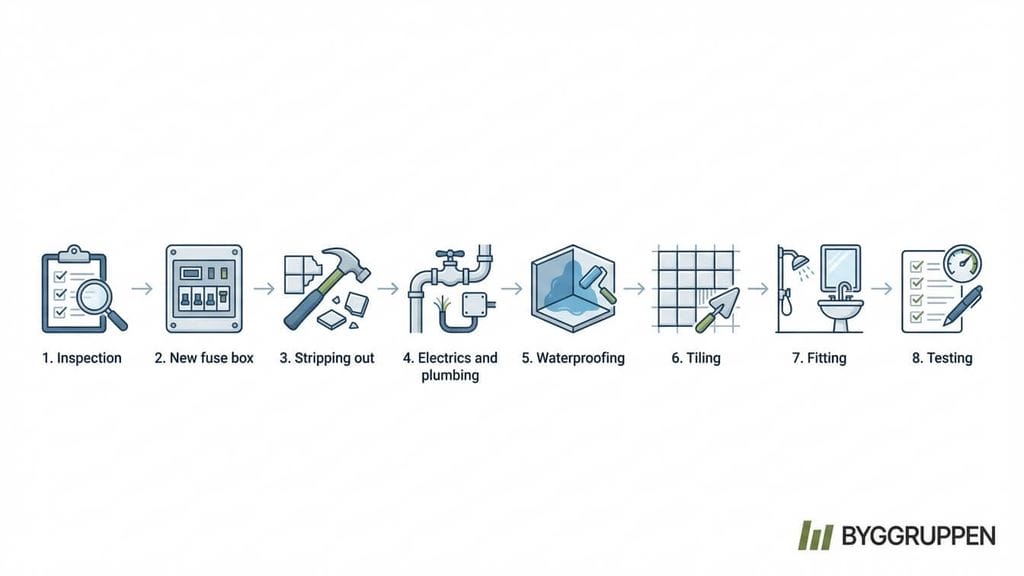
Check and upgrade the electrics first, then strip out, install, waterproof and tile, and finish with fixtures and testing.
- Inspection of the bathroom and fuse box.
- Fuse box replacement if needed.
- Stripping out the old bathroom.
- New electrical and plumbing installations.
- Floor slope and waterproof membrane.
- Tiling.
- Fitting fixtures, lighting and ventilation.
- Testing and handover.
Frequently Asked Questions
How do I know if my bathroom has a waterproof membrane?
You usually cannot tell by looking, because the membrane is hidden under the tiles. Renovation records can help, but an inspection is the only reliable way to know whether there is a membrane and what condition it is in.
Is it dangerous to have an old fuse box in a house with a modern bathroom?
Not automatically, but it often lacks modern protection and the capacity for today’s bathroom equipment. An electrician can check the installation and tell you whether it needs upgrading.
Can I replace the waterproofing without replacing the tiles?
Usually not. The membrane sits under the tiles, so replacing it means removing them. Surface coatings are not a reliable substitute for a properly installed membrane.
Do I need a new fuse box for electric underfloor heating in the bathroom?
Not always. It depends on the existing capacity, free space and protection in your fuse box. An electrician should check before the heating is connected.
Who is allowed to do electrical work in a Danish bathroom?
Only an authorised electrical installation company may do fixed electrical work in a Danish bathroom. Homeowners are allowed only very minor tasks, and bathrooms have strict safety rules.