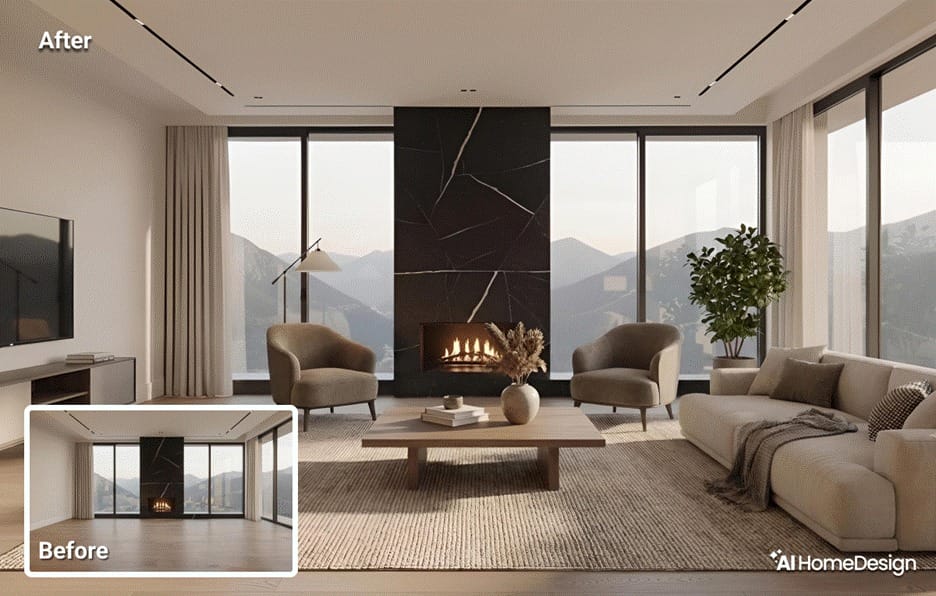
Luxury apartments often enter the market with striking architecture and carefully designed interiors. High ceilings, custom finishes, and expansive windows create a strong visual impression. Yet many of these properties appear in listing photos without furniture or décor.
This absence does not necessarily reflect a lack of attention to presentation. In many cases, it is simply a practical decision.
Luxury homes typically attract a smaller pool of buyers than mid-range properties, which often leads to longer sales timelines. Because a property may remain on the market for several months, some owners choose not to invest in traditional staging.
Renting and maintaining furniture for extended periods can significantly increase marketing costs. As a result, many high-end apartments appear online as empty spaces rather than furnished homes, making staging empty apartments a recurring challenge in luxury property marketing.
This situation creates a challenge for agents and sellers. A vacant apartment may showcase elegant materials and strong architectural features, yet buyers browsing the listing online may struggle to interpret the space.
Without visual cues such as furniture or layout references, it becomes difficult to judge scale, understand how rooms might be used, or imagine everyday living in the home. As a result, even spacious luxury apartments can appear less inviting in listing photos than they do in person.
MORE NEWS: Rough Rider named best speakeasy in Arizona by Chowhound
DEEPER DIVE: Read all the Ranking Arizona Top 10 lists here
Why Empty Apartments Often Feel Smaller in Listing Photos
A vacant room often looks very different in photographs than it does in person. When buyers stand inside a property, they naturally sense the proportions of the space. Their own presence provides a reference point that helps them judge width, height, and depth.
Online listing photos remove that reference point. Buyers must instead rely on visual cues within the image. Furniture normally provides those cues. A sofa reveals the length of a wall, a dining table shows how much space surrounds it, and a bed helps define the proportions of a bedroom.
Without these elements, images become harder to interpret. Even large living areas can feel uncertain in scale when photographed without furniture. Wide-angle lenses, commonly used in property photography, can also stretch perspective and distort the viewer’s sense of proportion.
According to the National Association of Realtors, nearly all home buyers use the internet during their property search. Listing photos therefore shape the first impression of a property.
When those first images fail to communicate the layout clearly, buyer interest may fade before a viewing is scheduled. For this reason, many agents turn to luxury apartment staging to introduce visual context and make room proportions easier to understand.
The Challenge of Selling Lifestyle Without Furniture
Marble countertops, custom cabinetry, and high ceilings add clear value to a property. Yet buyers also respond to the atmosphere of a space. They want to imagine how daily life might unfold inside the apartment.
An empty interior leaves that interpretation open. A large open-plan area may offer room for dining, relaxing, and entertaining, yet the listing photo may show only an empty floor. Secondary rooms can raise similar questions. A space that could function as a study, guest bedroom, or media room may appear ambiguous when no furnishings suggest its purpose.
Many apartment staging tips emphasize furniture placement because placement gives structure to a room. A sofa arrangement can define the living area, a dining table can clarify the flow of an open-plan layout, and a desk or reading chair can give a quieter corner a clear role.
In listing photos, these choices do more than make the apartment look furnished. They help buyers understand how the space functions and how it might support everyday living.
Why Staging Became a Core Real Estate Marketing Strategy
As property discovery moved online, visual presentation began to play a larger role in real estate marketing. Buyers now review dozens of listings during a single search session and often make quick decisions about which homes deserve closer attention.
In this environment, listing photos carry significant influence. A gallery that clearly communicates the layout and atmosphere of a home is far more likely to hold a buyer’s attention than one that leaves the viewer guessing how the space might function.
For this reason, staging has become a widely used practice in property marketing. Industry organizations such as the Real Estate Staging Association report that staged properties often attract stronger buyer interest than vacant listings.
As a result, apartment staging tips now extend beyond interior decoration. They influence how a listing competes for attention in crowded online marketplaces.
In the high-end segment, luxury apartment staging reflects this broader shift in presentation. Luxury apartments often feature open layouts and flexible areas that can serve multiple purposes.
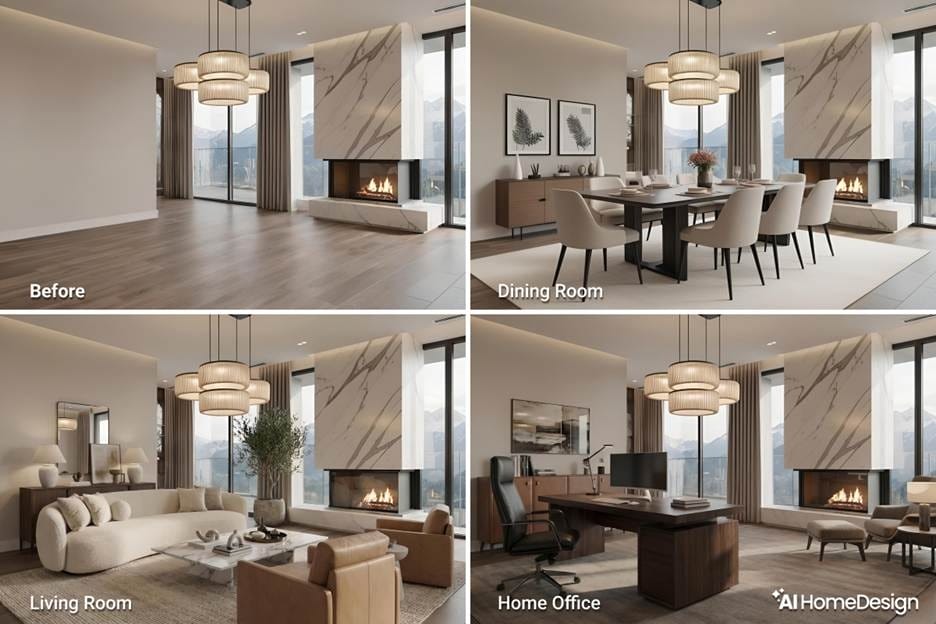
When furnishings appear in listing images, buyers can more easily understand how those spaces might function as living rooms, dining areas, or home offices.
This becomes especially relevant in new developments where several units may share similar layouts and finishes. When buyers compare those listings side by side, presentation often influences which apartment feels more memorable.
A furnished image can give a property a clearer identity in the listing gallery. An empty unit may struggle to leave the same impression.
Why Developers and Agents Are Turning to Digital Visualization
Traditional staging can produce attractive results, but it often requires significant coordination and expense. Furniture must be rented, delivered, arranged, and eventually removed. When a property remains on the market for an extended period, these costs can increase quickly.
This challenge becomes more noticeable in the luxury segment. Owners who already expect a longer sales timeline may hesitate to invest in physical staging that could remain in place for months.
For developers managing multiple vacant units, staging each apartment with rented furniture can become even more complex.
Digital visualization offers another approach. Listing photos of an empty apartment can be edited to include realistic furniture arrangements that illustrate how the space functions.
Platforms such as AI HomeDesign allow agents and developers to prepare listing visuals using AI-powered editing and visualization tools designed for real estate photography.
How Virtual Staging Helps Buyers Visualize Luxury Interiors
Many real estate professionals now rely on virtual staging to present furnished interiors in listing photos. The process adds furniture, lighting, and décor elements to photographs of empty rooms while preserving realistic proportions.
This technique addresses one of the central challenges of staging empty apartments: helping buyers imagine how the space might function. A furnished rendering can show how seating relates to the windows, how a dining table fits within the floor plan, or how a bedroom accommodates a bed and side tables.
The result gives buyers a clearer picture of everyday life inside the apartment. Instead of interpreting a bare room, they see a layout that reflects familiar living patterns.
Many apartment staging tips emphasize that the most effective staging choices should show the functionality of the space. A reading chair near the window can define a quiet corner, a desk can suggest a workspace within a spare room, and a simple dining arrangement can reveal the natural center of an open living area.
digital luxury apartment staging through digital methods allows these visual cues to appear in the listing gallery without the logistical effort required by physical staging.
The Future of Luxury Property Marketing Is Visual
Luxury property marketing now depends heavily on how a home performs on screen before buyers ever see it in person. Listing galleries often shape early impressions, and those impressions influence which properties receive closer attention.
In the high-end segment, where listings compete not only on price and location but also on presentation, visual impact plays an even greater role.
This shift is changing how agents and developers prepare homes for the market. Digital visualization allows marketing teams to present a more complete picture of a property from the start, without waiting for physical staging.
As online discovery continues to influence buyer behavior, digital approaches to staging empty apartments will likely become a more common part of luxury listing strategies.
Conclusion
Luxury apartments often remain on the market longer than other homes because they appeal to a narrower group of buyers. For many owners, that longer timeline makes furniture rental an unattractive expense. As a result, high-end listings frequently appear online as empty interiors.
Although these spaces may feature impressive architecture and high-end finishes, vacant rooms can leave buyers uncertain about scale and purpose. Luxury apartment staging helps address this challenge by presenting the property with visual context that clarifies how the space might be used.
Staging a home to sell faster is not always about increasing marketing costs. Often, it is about choosing the most practical method. Virtual staging allows agents and developers to create that visual context without the expense and logistics of physically furnishing the property.
In a market where most buyers first encounter a home online, that clarity can determine whether a listing captures attention or disappears among competing properties.