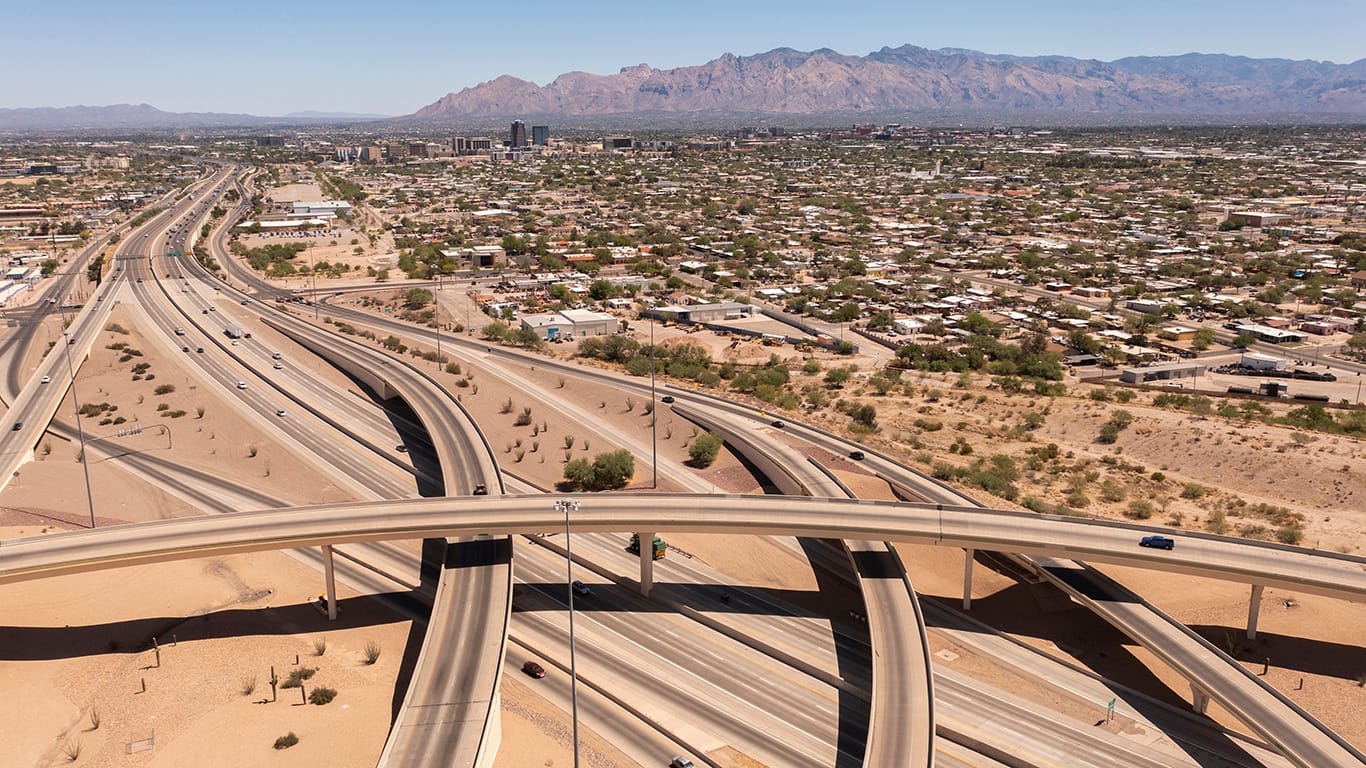
The next home purchase is not just a decision about the house. It is increasingly a decision about the roads, transit, development and daily routines and Arizona infrastructure taking shape around it.
For Trevor H. Halpern, J.D., founder and CEO of Phoenix-based Halpern Residential at eXp Realty and a top 1% real estate agent nationally, infrastructure deserves the same attention buyers give to school boundaries, square footage and finishes.
“Buyers have always looked at schools, the commute and the home itself,” Halpern said. “Now they also need to ask what is being built around the property, how it will change their day-to-day life and what it may mean for the neighborhood over time.”
That does not mean every freeway extension, rail station or road-widening project will raise home values. Construction can be inconvenient, and new access can bring more traffic as well as more convenience. But, buyers who understand what is planned around a neighborhood can make a more informed decision than those who evaluate a property only as it exists on closing day.
DEEPER DIVE: Here are Arizona’s Most Admired Companies of 2026
A lesson from Queen Creek
In Queen Creek, the impact of growth is easy to see. The town’s population rose from 26,361 in 2010 to an estimated 89,770 in 2025, according to the U.S. Census Bureau.
More households have meant more pressure on roads and intersections. Ellsworth Road, a central route through and around the area, is a familiar source of congestion. A widening project between Ray and Germann roads is underway, with completion expected in February 2027, according to the Town of Queen Creek.
For buyers, Halpern said the lesson is not to avoid every growing area. Growth can bring new housing, retail, services and opportunity. It is to understand what the neighborhood feels like when it is functioning at full speed.
“The house may check every box, but the location still has to work on a normal weekday,” Halpern said. “Before a buyer gets serious about an area, they should drive it during rush hour. Do it more than once. See how long it takes to get to work, school, groceries or the freeway when everyone else is trying to do the same thing.”
A Saturday open house cannot reveal everything. A route that feels easy at noon may be a different experience at 7:30 a.m., just as a quiet road today may be in the middle of a major construction project a year from now.
What public investment can set in motion
Infrastructure is about more than traffic. It can also shape the kind of private investment that follows. The I-10 Broadway Curve improvement project reshaped one of the Valley’s busiest freeway corridors. The South Central Extension/Downtown Hub light rail project, which opened in June 2025, connected communities along Central Avenue to the regional rail system. Valley Metro reported that more than $17.5 billion in public and private development had occurred along the system since service began.
A homeowner may never board the train, but improved access can help support new housing, renovated commercial buildings, restaurants, coffee shops, grocery options and other amenities that change how a neighborhood functions.
“People sometimes hear ‘infrastructure’ and think only about traffic,” Halpern said. “But it is also about access. It is about whether a neighborhood can attract businesses, services and gathering places that make life more convenient and more connected.”
Research from San José State University’s Mineta Transportation Institute offers one example. Its study of the Warm Springs BART Station in Fremont, California, found that single-family homes within two miles of the station were associated with a 9% to 15% price premium compared with the study’s reference properties. It is not a prediction for Phoenix, but it shows how public investment can influence private demand and development.
Read the map before the market catches up
Several major Valley projects are visible well before their full effects are felt. A $613 million Loop 303 project is underway in Goodyear, creating a new four-mile freeway segment between MC 85 and Van Buren Street. The project, expected to take about four years, will expand regional connectivity and eventually link with the planned State Route 30, according to ADOT.
ADOT is also designing a new Loop 303 interchange at 155th Avenue in Surprise, with construction anticipated to begin in 2028. Valley Metro is planning a roughly 10-mile West Phoenix light rail extension through Maryvale.
For Halpern, paying attention early is not about trying to outguess the market or buying solely because a project appears on a map. “It is about doing better due diligence,” Halpern said. “A buyer should understand whether an improvement is funded, in design, under construction or still only a long-range concept. Those are very different things.”
The information is public. City capital improvement plans, transportation master plans, planning and zoning agendas, ADOT project maps and Valley Metro expansion plans can reveal changes likely to shape an area years before a road opens or a station is built.
Then spend time in the neighborhood. Drive the commute in the morning and after work. Take the route to the grocery store. Notice where construction is happening and where new retail, housing or commercial projects are beginning to appear.
“The best real estate decisions come from looking at the full picture,” Halpern said. “The home matters, of course. But so does everything around it. Infrastructure can affect your commute, your convenience, your quality of life and, eventually, the way other buyers see that neighborhood.”
For buyers weighing a move in a fast-changing Valley, the school boundary and granite countertop still matter. So does the road leading home, the project taking shape down the street and the map that shows what may be coming next.