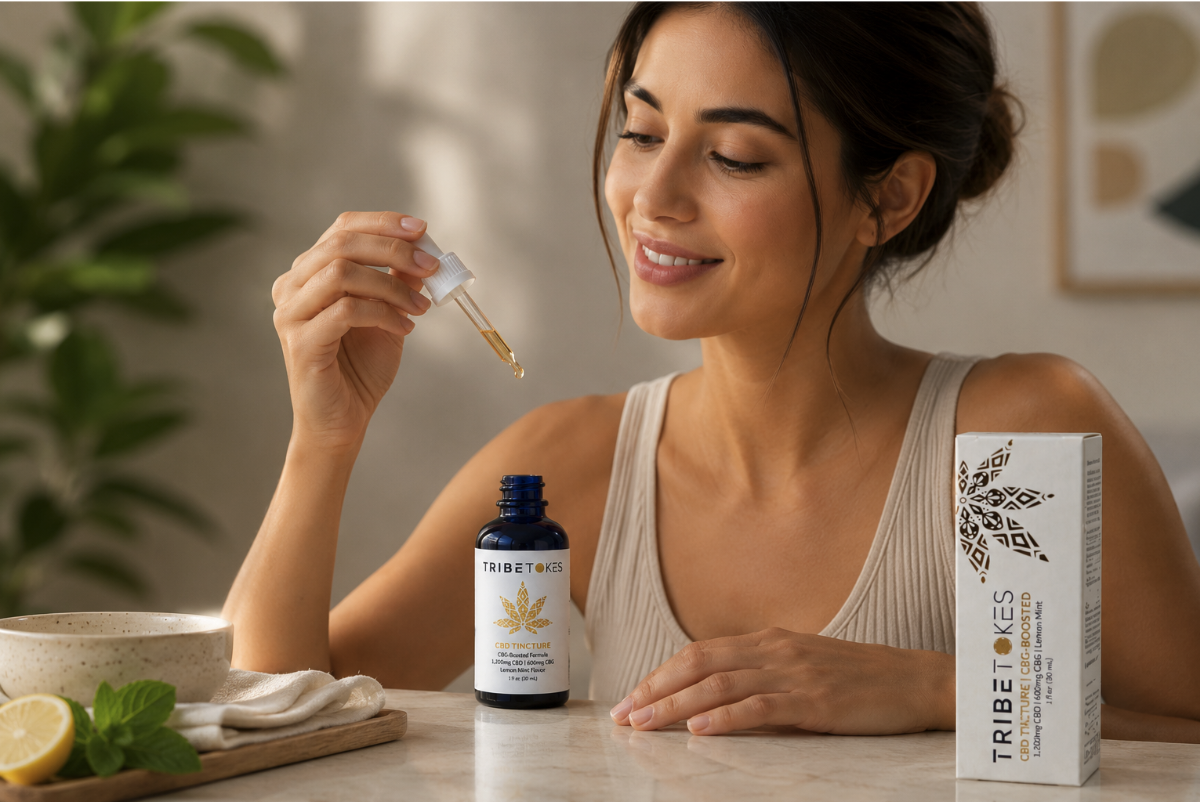
The TribeTokes CBD Tincture is the best overall pick. It delivers 1,200mg CBD plus 600mg CBG in a 30mL bottle, which works out to 20mg CBD and 10mg CBG per half-dropper serving across 60 servings, starting at $50. Very few tinctures in this price band include a meaningful CBG dose instead of a token amount.
If you want the largest amount of CBD per dollar, buy Lazarus Naturals High Potency. If you want USDA organic certification and trace THC in the bottle, buy Cornbread Hemp. If you get drug tested at work, buy a broad spectrum oil such as CBDistillery Relief + Relax and check the batch COA before you open it.
One thing to settle before you spend money: the clinical evidence for CBD on its own as a pain treatment is weak. The trials that show the clearest benefit used products containing THC. That does not make CBD oil worthless, but it should change what you expect from it. More on this below.
How we evaluated these CBD oils
Most “tested and reviewed” CBD roundups are affiliate pages where the ranking follows the commission rate. We wanted criteria a reader could verify without taking anyone’s word for it, so every score below rests on something published: a certificate of analysis, a label, a price, a shipping policy.
Five things decided the order.
Batch-level lab data. Not “third-party tested” as a marketing line, but a certificate of analysis you can pull up for the batch number printed on your bottle, covering potency plus pesticides, heavy metals, residual solvents, and microbials. Brands that only publish a single sample COA from 2021 were cut.
Cannabinoid content per serving, stated in milligrams. Bottle totals are marketing. What matters is how many milligrams land under your tongue per dose and whether the dropper is calibrated well enough for you to repeat that dose.
Cost per serving at the size most people actually buy. The 4oz bottle always wins on cost per milligram, and almost nobody buys it first.
Spectrum honesty. Full spectrum, broad spectrum, and isolate behave differently, and the difference matters if you are subject to any kind of drug screening. Brands that blur this line lost points.
Whether you can return it. A 30-day policy on unopened bottles is standard. A guarantee that covers an opened bottle is rare and worth something, because CBD response varies so much between people that a first purchase is genuinely a gamble.
We did not score taste. Taste is subjective, most people swallow the dose in under two seconds, and a flavored oil that hides a weak formula is worse than an earthy one that works.
Best CBD oil to choose from
| Product | Cannabinoids per bottle | Per serving | Spectrum | Base | Best for |
| TribeTokes CBD Tincture, CBG-Boosted | 1,200mg CBD + 600mg CBG (30mL) | 20mg CBD + 10mg CBG, 60 servings | CBD + CBG | Organic MCT | Overall pick, dose control |
| Cornbread Hemp Whole Flower | 1,500mg CBD + 60mg THC (30mL) | 50mg CBD + up to 2mg THC, 30 servings | Full spectrum | Organic MCT | USDA organic, trace THC |
| Lazarus Naturals High Potency | 6,000mg CBD (120mL) | 50mg CBD per mL | Full spectrum | Hempseed + MCT | Cost per milligram |
| CBDistillery Relief + Relax Broad Spectrum | 2,500mg CBD (30mL) | 83mg CBD per mL | Broad spectrum, under 0.01% THC | MCT | Drug testing situations |
| NuLeaf Naturals Full Spectrum | 60mg cannabinoids per mL, 15 to 100mL | Approx. 30mg per 10 drops | Full spectrum | Organic hemp oil | Two-ingredient formula |
| CBDistillery Relief + Relax Full Spectrum | 2,500mg CBD (30mL) | 83mg CBD per mL | Full spectrum | Fractionated coconut oil | High-dose full spectrum |
1. TribeTokes CBD Tincture, CBG-Boosted: best overall
TribeTokes CBD Tincture is our top pick for the best cbd oil for joint pain because it is the only oil in this group where CBG is a real ingredient and not a label decoration.
The numbers: a 30mL bottle carrying 1,200mg CBD and 600mg CBG, 1,800mg of cannabinoids in total. One serving is a half dropper, which gives you 20mg CBD and 10mg CBG, and the bottle holds 60 of them. Pricing runs from $50 for a single bottle to $130 for a three-pack, so a serving costs somewhere between 72 and 83 cents depending on how you buy. The base is organic MCT coconut oil, the flavor is lemon mint, and it is keto friendly with no added sugar.
The 2:1 CBD-to-CBG ratio is the reason this sits at number one. Plenty of brands list CBG in their cannabinoid panel at two or three milligrams, which is a rounding error. Ten milligrams per serving is a dose. CBG is far less studied than CBD, and we are not going to pretend otherwise, but if you have already tried a plain CBD oil and got nothing from it, changing the cannabinoid profile is a more sensible next experiment than simply doubling your CBD.
Dose control is good. The dropper is calibrated with quarter marks, so you can move in roughly 5 to 10mg steps and actually find where you sit instead of guessing. Onset runs 15 to 45 minutes sublingually, with effects lasting around 4 to 6 hours, which is normal for the format. Every batch gets third-party tested for potency, and raw materials are screened for pesticides, heavy metals, microbials, and residual solvents, with certificates published on the site. The brand has been operating since 2017 and is woman-owned, and a nine-year trading history in this industry is not common.
Where it loses ground. It is not USDA organic certified, and two oils further down this list are. At 1,200mg of CBD per bottle it holds less CBD than the Cornbread, CBDistillery, and Lazarus options, so a high-dose user will empty it faster. And if the trace-THC full spectrum profile is specifically what you are after, because that is closer to what the trials tested, Cornbread Hemp is the better match. Check the current batch COA for THC content before your first dose if you are subject to workplace screening.
Buy it if: you want fine dose control, you want a real CBG dose alongside your CBD, and you would rather spend $50 finding out whether tinctures work for you than $130.
You can also try other top cannabis products for pain relief from Tribetokes.
2. Cornbread Hemp Whole Flower CBD Oil: best USDA organic full spectrum
Cornbread Hemp built its reputation on a genuinely unusual manufacturing decision. The company extracts from hemp flowers only, discarding leaves and stalk, using organic sugarcane ethanol. Flower carries the cannabinoid density; the rest of the plant mostly adds bulk and chlorophyll. Doing it this way costs more and the price reflects that.
The 1500mg bottle is 1fl oz and contains 60mg of THC alongside the CBD, which comes to 30 servings of 50mg CBD with up to 2mg THC each. Ingredients stop at two: organic MCT coconut oil and organic hemp flower extract. It is USDA certified organic, vegan, gluten free, made in a GMP facility, and it ships to 47 states.
That 2mg of THC per serving is the whole point. Full spectrum products with meaningful THC content sit closer to what the clinical literature has actually tested, and the entourage argument has more behind it here than in a THC-free formula. The trade-off is unambiguous: this will show up on a drug test, and the flavor is floral and earthy with nothing added to soften it. Cornbread also runs a 30-day money-back guarantee that applies after you have opened and used the product, which is the strongest return policy in this roundup.
Buy it if: organic certification matters to you, you want THC in the bottle, and no one is screening your urine.
3. Lazarus Naturals High Potency: best cost per milligram
Nobody beats Lazarus on price, and it is not close. The High Potency tincture is standardized to 50mg CBD per mL with roughly 1.75mg THC per mL, and the 120mL bottle carries 6,000mg of CBD for around two cents per milligram. The dropper is marked every 0.25mL, so 12.5mg steps. Ingredients are organic hempseed oil, organic coconut MCT oil, and organic full spectrum hemp extract. USDA Organic and Kosher certified. The unflavored version tastes like hemp, unapologetically, and there are mint chocolate and strawberry lemonade versions if that matters to you.
The company is vertically integrated, growing its own hemp on farms in Central Oregon and handling extraction, formulation, and packaging in house, which is the mechanical reason it can price this low without cutting testing. Lazarus also runs an assistance program giving a 60% discount to veterans, people on long-term disability, and low-income households. In a category where a month’s supply routinely costs more than a co-pay, that is a meaningful policy and almost nobody else offers anything like it.
If you need doses in the 50 to 100mg range, which some people genuinely do, this is the only option here that does not become financially absurd. Lazarus also sells a 1:1 CBG:CBD tincture at 3,000mg of each in a 4oz bottle, 25mg of each per mL, third-party tested for potency, pesticides, and heavy metals. For a high-dose user who wants the CBG angle, that bottle is a better buy than our number one pick, and we would rather say so than pretend otherwise.
Buy it if: you have established that CBD does something for you and you now need volume at a sane price.
4. CBDistillery Relief + Relax Broad Spectrum 2500mg: best if you get drug tested
Broad spectrum means the THC has been processed out while the other cannabinoids and terpenes stay. CBDistillery’s 2500mg broad spectrum tincture delivers 83mg of CBD per 1mL serving and lists trace THC below 0.01%, which is an order of magnitude under the 0.3% federal ceiling. That is as close to a safe bet as this category offers for someone facing a screening, though we will not tell you it is a guarantee, because no one can.
Pricing sits around $155 list with the brand discounting aggressively and often enough that paying full price is a mistake. Full lab results are published per batch. Subscriptions take 30% off with free shipping. There is a full spectrum version of the same 2500mg tincture at the same 83mg per serving if the THC is not a concern for you, and an isolate version, which we would skip. Isolate strips out the compounds that make the entourage argument work in the first place, so you are paying tincture prices for what is essentially purified powder in oil.
One caution on the dose: 83mg in a single 1mL pull is a lot for a first-timer. Start at a quarter dropper.
Buy it if: your job, your sport, or a custody arrangement means THC is not an option, and you want a high total milligram count anyway.
5. NuLeaf Naturals Full Spectrum: best minimal-ingredient formula
NuLeaf’s ingredient list runs to two items: USDA certified organic hemp oil and full spectrum hemp extract. No carrier oil swap, no flavoring, no sweetener. The oil is concentrated to 60mg of cannabinoids per mL, and the company suggests starting at ten drops, roughly 30mg. Bottles range from 15mL up to 100mL, with prices from about $24 to $249 depending on size, so you can buy a small one to test before committing.
NuLeaf has been running since 2014, breeds hemp strains selected to produce CBD alongside CBC, CBG, and CBN naturally, so nothing is blended back in from isolate, and publishes COAs searchable by batch number under cGMP and ISO standards. There is also a USDA organic broad spectrum version using organic hemp seed oil if you want the THC removed.
Two honest drawbacks. Dosing by drop count is less precise than dosing off a calibrated dropper, and drop size varies with oil temperature and how hard you squeeze. And the flavor is unimproved hemp, which some people find genuinely unpleasant.
Buy it if: you want the shortest possible ingredient list and you are comfortable eyeballing your dose.
6. CBDistillery Relief + Relax Full Spectrum 2500mg: best high-dose full spectrum
Same 83mg per 1mL serving as the broad spectrum version above, same 2,500mg bottle, but with the full cannabinoid profile intact including trace THC under the federal limit. The formula is fractionated coconut oil and full spectrum hemp extract from aerial parts. A mango-flavored version exists at the same potency for people who cannot get past the taste of the unflavored one.
This lands last not because it is a bad product but because it overlaps heavily with entries above. Cornbread gives you organic certification and more THC per serving. Lazarus gives you a better price per milligram. Where this wins is the middle ground: a well-tested full spectrum oil at high potency from a brand large enough that you can find independent lab results and thousands of reviews without effort.
Buy it if: you want a high-potency full spectrum oil from an established brand and you catch it on one of their frequent discounts.
How to dose CBD oil for pain
Start at 10 to 15mg. Wait a full 45 minutes before you decide it did nothing, because sublingual onset is gradual and the shift is subtle enough that people frequently miss it the first time. Hold the oil under your tongue for 60 to 90 seconds before swallowing. The blood vessels there feed cannabinoids into the bloodstream directly, and anything you swallow instead has to clear the gut and liver first, which costs you both time and potency.
Give any dose at least three to five days of consistent use before you change it. Most reports of benefit come from daily use rather than as-needed use, and a single dose on a bad day is not a fair test.
If 15mg does nothing after a week, step to 25 or 30mg. That is where a lot of daily users settle. Above that, 50 to 75mg is the next tier and some people genuinely need it. There is no good reason to exceed 100mg in a single dose for general wellness use, and at that point the sensible move is to stop escalating and consider that this format may not be doing anything for you.
Track it. Two weeks of notes on dose, timing, and how you felt is worth more than any dosing chart, including this one.
Full spectrum, broad spectrum, or isolate
Full spectrum keeps everything the plant produced, including THC under the 0.3% federal limit. It has the most evidence behind it and it will trigger a positive drug test. Trace THC metabolizes into exactly the metabolites screening panels look for, and no test distinguishes hemp-derived THC from any other kind. Detection windows run days to weeks in urine and up to 90 days in hair.
Broad spectrum removes the THC and keeps the other cannabinoids and terpenes. This is the compromise position and the right one if screening is a factor in your life.
Isolate is pure CBD with everything else stripped out. It is the cheapest to produce and the least interesting. If the entourage effect has any validity, isolate is the version that discards it.
Who should not use CBD oil
CBD is metabolized through the CYP450 liver enzyme system, which is the same pathway a large number of prescription drugs use. It can raise or lower the active level of medications you are already taking. If you are on blood thinners such as warfarin, anticonvulsants including clobazam or valproate, SSRIs, or anything with a narrow therapeutic window, talk to your prescriber before you start. The interaction is dose-dependent, so a small dose is less likely to matter than a large one, but that conversation is still the right call.
Do not use it if you are pregnant or breastfeeding. Consult a physician first if you have a cardiovascular or liver condition. Do not stack it with alcohol or CNS depressants without medical input. And if your pain is new, severe, or changing, see a doctor about the pain before you shop for a tincture. Untreated conditions do not become less serious because you are managing the symptom.
What the research actually says about CBD and pain
This section will not read like the intro to most CBD articles, and that is deliberate.
The most current evidence synthesis is the updated systematic review published in Annals of Internal Medicine, which pooled 25 short-term randomized placebo-controlled trials covering 2,303 patients, with searches running through late July 2025. Around 64% of those patients had neuropathic pain. The authors grouped products by their THC-to-CBD ratio, and that grouping is where the useful information sits: the signals of benefit cluster in the products containing THC. Where CBD sits at the low end of the ratio, the evidence is thin and the conclusions stay uncertain.
The federally funded AHRQ living systematic review, updated in 2025, reaches a similar place across 29 randomized trials and 15 observational studies. Its 2025 additions include a trial of topical hemp seed oil for knee osteoarthritis and a transdermal THC:CBD:CBN formula for diabetic neuropathy. Neither tested an oral CBD-dominant tincture, which is the format almost everyone reading this is about to buy.
A 2024 PRISMA review in Pharmaceuticals by Cásedas and colleagues narrowed the question further, screening for CBD used in pain without THC. From more than 500 papers it retained 40 studies, and a large share of those are preclinical. Animal and cell work is how drug development starts. It is not evidence that a tincture will help your lower back.
So here is the honest position. CBD has plausible mechanisms, a good safety record at the doses sold in these bottles, and millions of people who report it helps them. It does not have the trial evidence to be called a pain treatment, and no company selling it in the United States is permitted to call it one. If you buy a CBD oil expecting it to work like ibuprofen, you will probably be disappointed. If you buy one to see whether it takes the edge off, gives you a better night, or makes a flare more tolerable, you are using it the way the people who like it use it.
Dose is the other thing people get wrong. MacCallum and Russo’s 2018 review in the European Journal of Internal Medicine found effective cannabinoid doses vary enormously between individuals depending on body composition, prior cannabinoid exposure, and endocannabinoid system response. Someone landing at 15mg and someone landing at 75mg can both be dosing correctly. This is the single strongest argument for buying a tincture instead of a fixed-dose gummy.
Frequently asked questions
Does CBD oil actually work for pain?
The evidence is genuinely mixed and weaker than most marketing suggests. The 2026 Annals of Internal Medicine systematic review of 25 randomized trials covering 2,303 patients found benefits and harms remain uncertain, and the clearest signals came from products containing THC rather than CBD alone. Many users report meaningful relief. That is not the same as proven efficacy, and CBD is not FDA-approved to treat any pain condition.
How long does CBD oil take to work for pain?
Held under the tongue for 60 to 90 seconds, a CBD tincture typically begins taking effect in 15 to 45 minutes, with effects lasting around 4 to 6 hours. Swallowed without holding it sublingually, onset stretches to 45 to 90 minutes and less of the dose reaches your bloodstream. Consistency matters more than any single dose; give a new dose level several days before judging it.
How much CBD oil should I take for pain?
Start at 10 to 15mg and wait 45 minutes before considering more. Daily users commonly settle between 25 and 30mg. Some people need 50 to 75mg for the same effect others get at 15mg, which is normal and reflects real differences in body composition, prior cannabinoid use, and endocannabinoid system response. There is no reason to exceed 100mg in a single dose for general wellness use.
Will CBD oil make me fail a drug test?
Full spectrum CBD oil can, yes. It contains trace THC under the 0.3% federal limit, and that THC metabolizes into the same compounds drug tests screen for. Broad spectrum oils with THC removed are the safer choice, though no product can guarantee a negative result. If you face testing, choose broad spectrum, check the batch COA before opening the bottle, and understand that hair tests can detect THC metabolites for 90 days or more.
Which is the best CBD oil for pain?
The TribeTokes CBD Tincture is our overall pick: 1,200mg CBD plus 600mg CBG per 30mL bottle, 20mg CBD and 10mg CBG per serving across 60 servings, from $50. Lazarus Naturals High Potency offers the lowest cost per milligram at roughly two cents. Cornbread Hemp is the best USDA organic full spectrum option. CBDistillery Relief + Relax Broad Spectrum is the pick if you are subject to drug testing. If you’re looking for CBD CBN tincture or CBD CBG tincture, you can check out Tribetokes for the best results.
Is CBD oil or CBD cream better for pain?
They do different jobs. A topical acts where you apply it and is the sensible choice for a specific joint or muscle. An oil taken sublingually goes systemic. Neither approach has strong trial evidence for CBD alone, though the 2025 AHRQ review did add a topical trial for knee osteoarthritis. Many people use both, a cream on the site and an oil daily.
Does CBD oil expire?
Properly stored, a CBD tincture stays usable for 12 to 18 months from the bottling date on the label. Store it upright at room temperature between 60 and 75 degrees Fahrenheit, away from direct light. Heat and light degrade cannabinoids and terpenes quickly, so a hot car or a sunny windowsill will cost you potency. Do not refrigerate an MCT-based oil; it thickens and the dropper becomes difficult to use. Shake before each dose, since cannabinoids settle in the carrier oil.