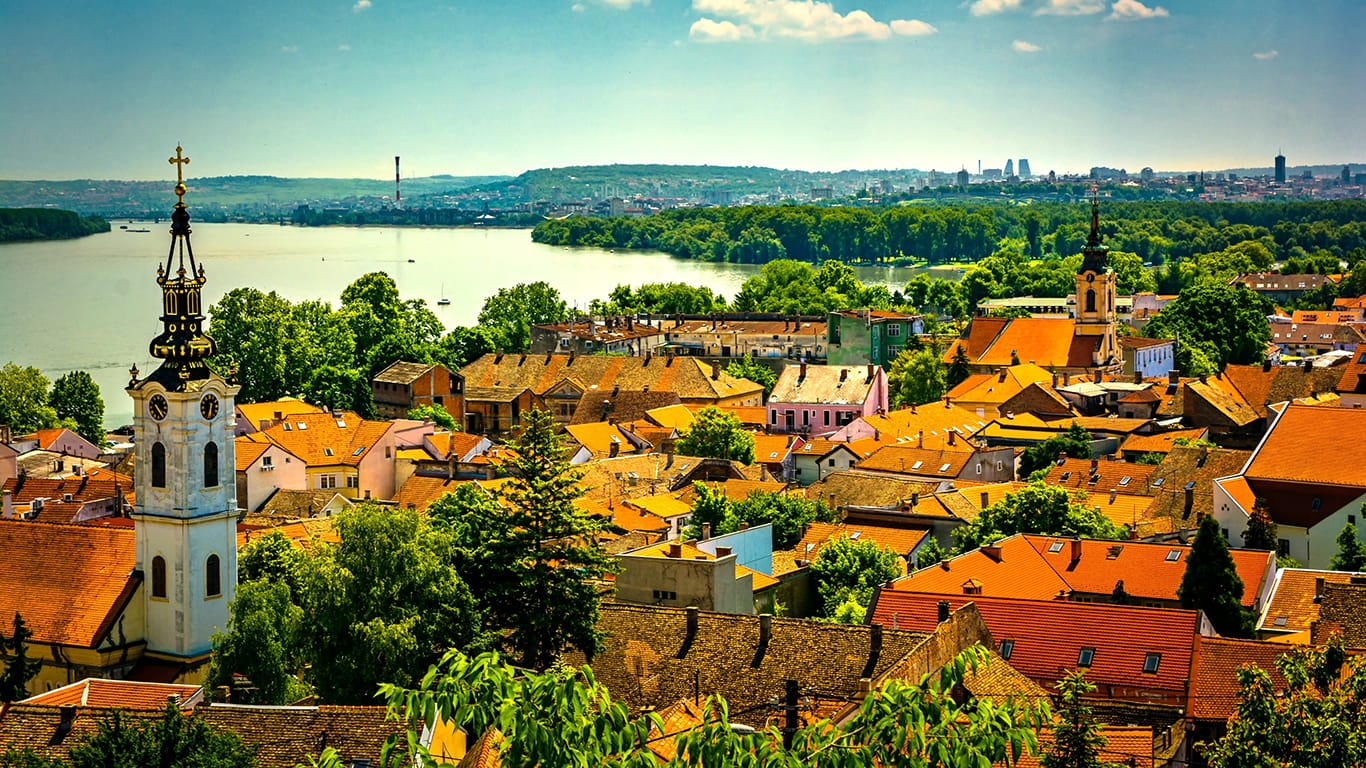
Phoenix was one of the most watched residential markets in the U.S. for nearly a decade due to strong population growth, significant tech investment from companies like TSMC and Meta, and continually increasing median sales prices. Days on market for homes in Phoenix have also increased to the mid-60s after previously being in the low 50s. With yield compression, higher interest rates, and increased insurance premiums, a growing number of American buyers are looking beyond the Phoenix metropolitan area. Among European cities, Belgrade, Serbia appears repeatedly on lists of potential destinations; entry prices are significantly lower than Scottsdale or Paradise Valley, and there continues to be measured annual appreciation in transactions priced in the €2,500 to €4,000 per square meter range.
Phoenix is Currently Flat, Belgrade is At an Inflection Point
It is much easier to compare the two markets using numbers. In October 2025, the median sale price for the City of Phoenix was approximately $449,990, representing virtually zero movement compared to last year, with Scottsdale sitting at approximately $1.18 million and Paradise Valley exceeding $3.2 million. According to the Republic Geodetic Authority (RGZ) – the primary source of national statistics related to real estate in Serbia – the median first-sale apartment closed at €2,517 per square meter in Q3 2025 and resale units were priced at €2,560. While top-tier transactions at the upper-end of Belgrade’s market rarely exceed €5,500 per square meter – and even those do not often occur – the highest recorded transaction price in H1 2025 occurred just shy of €9,800 per square meter.
When considering buying international real estate for investment purposes, utilizing a local agency that is knowledgeable regarding the Serbian cadaster system and the Serbian notary process will help bridge this knowledge gap and facilitate the ability to quickly complete a transaction. Companies like Ikat Nekretnine – real estate in Belgrade assist both domestic and international clients with residential property transactions throughout Belgrade’s Central Municipalities, including advising clients on documentation required to register their property post-sale.
What Does Belgrade’s Actual Neighborhood Map Look Like?
While Belgrade is not a homogenous market, many first time foreign buyers treat it as one. There exists vast differences in pricing, tenant demographics, and rental yields amongst each of Belgrade’s ten municipalities.
Consistently recording the highest per-square-meter prices within Belgrade are Stari Grad (the historical core of Belgrade) and central Vracar with new development projects averaging €3,941 and €2,915 to €4,000 per square meter respectively based upon 2024-25 transactional data. Savski Venac, home to the Belgrade Waterfront project, averages €3,133 per square meter for existing inventory and €4,361 per square meter for new development with premium units within the Waterfront complex commencing at approximately €5,000 per square meter. Novi Beograd (a modern commercial hub located directly west of the Sava River) averages €2,658 for all inventory types, with new build structures averaging €3,207 per square meter. Additionally, Novi Beograd posted an 8% YoY price gain making it one of the strongest municipalities in terms of price growth.
As opposed to Vracar or Stari Grad, middle-ring municipalities exhibit a completely different demographic profile. Zvezdara and Voždovac (both formerly overlooked municipalities) now average €2,300 to €2,900 per square meter and demonstrate price growth that is outpacing other central municipalities. Čukarica averages €1,909 for old buildings and €2,534 for new ones. Rakovica represents the least expensive municipality in Belgrade at approximately €1,838 per square meter. As Rakovica is comprised primarily of owner occupied housing stock (local end-user demand vs. foreign investors), gross rental yields may be significantly higher in the middle-ring municipalities as they possess greater leverage given lower entry points relative to central Belgrade and more limited upward scaling pressure on rent levels.
EXPERIENCE AZ: 5 amazing pizza restaurants to try in Arizona
U.S. Buyer’s Legal Framework
In accordance with its reciprocal principles governing foreign real estate acquisitions, Serbia requires verification that reciprocal rights exist for acquisition of real estate by Serbian nationals in the buyer’s country of origin prior to allowing a U.S. citizen to acquire residential property in Belgrade. This implies that U.S. citizens can acquire residential property in Belgrade without creating a Serbian company. Verification of reciprocity is performed formally through the Ministry of Justice at a fee of 1990 RSD.
Documentation associated with the transaction must be executed as a written contract certified by a Serbian Public Notary. Ownership does not become legally valid until documented evidence is entered into the Real Estate Cadastre (maintained by the Republic Geodetic Authority). Digital submissions of documentation to the Real Estate Cadastre are now accepted. Foreign natural persons are prohibited from acquiring agricultural land and property situated in areas identified as military or strategic zones; however foreign natural persons can circumvent restrictions on agricultural land by registering a Serbian entity to hold the asset.
Foreign natural persons who acquire residential property qualify for a one-year renewable residency visa under Serbia’s investor residency program with no minimum dollar amount. Five consecutive years of residency provide foreign natural persons with eligibility to apply for Serbian nationality provided they meet Serbia’s physical presence requirements (minimum 183 days per calendar year).
Total Costs Associated with Buying Residential Property in Serbia
One of the factors which provides favorable comparison to EU Capital Cities concerning total cost of ownership for Serbia is the tax regime. Resale properties incur a 2.5% transfer tax paid on the contract value. New construction sold by developers registered for VAT include a 10% VAT charge which is typically reflected in the listing price. Annual property taxes are progressive but usually fall in a tiered structure ranging from 0.4% for properties valued below 10M RSD to increasingly higher tiers above that level with a cap of approximately 1% of cadastral value.
Additional costs include notary fees and translations for foreign buyers; costs associated with registering your property in the cadastre; and costs associated with obtaining legal advice. These costs vary depending on whether you are purchasing an existing unit or building a new unit and/or the overall size/complexity of your transaction. However, these additional costs typically represent between 3-6% of your purchase price for resale apartments; which is substantially less than comparable costs in Western European jurisdictions and comparable to typical closing costs found in an Arizona transaction once title insurance/lender fees are factored in.