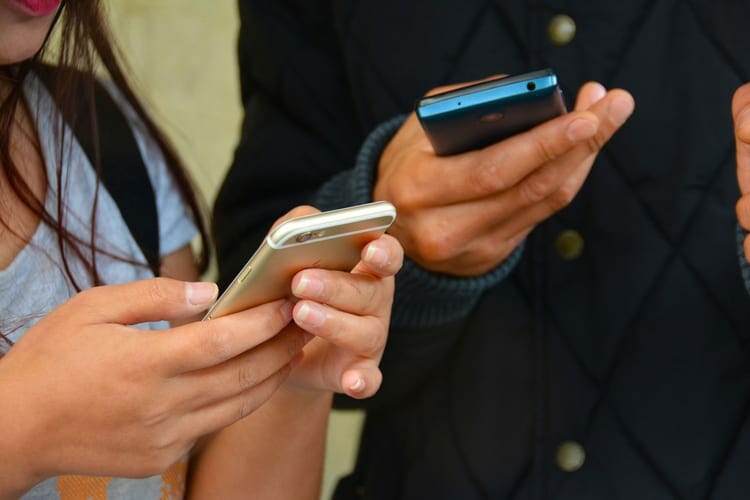
Missed reminders, late updates, and empty appointment slots are pushing small businesses toward a channel customers actually check.
Walk into almost any small business and you will find the same quiet problem behind the counter. The appointment reminder that went out by email never got read. The customer who needed a same day update found out too late. The message was sent, technically, but it did not land when it mattered. For a growing local business, those small misses add up to no shows, lost revenue, and frustrated customers who start going somewhere else.
That is why a lot of business owners are rethinking which channel they reach for. Email still does the heavy lifting for newsletters and receipts, but for the messages that cannot wait, more teams are turning to text. Not because text is better than email in every case, but because it is dramatically better for the narrow set of messages where timing is the whole point.
The simple version of what they are doing
One inbox, one workflow, and a gateway that turns an email into a text before the customer even checks their mailbox.
The shift is smaller than it sounds. Most teams are not buying a dedicated messaging platform or hiring anyone new. They are finding a way to send text from email, so a message written the normal way in Gmail or Outlook reaches the customer as a text instead of another unread email. The reply comes back into the same inbox, so there is nothing new to learn and no separate tool to manage.
Here is what that looks like in practice:
- You write a normal email from the inbox you already use, Gmail or Outlook.
- The gateway converts it into a text and delivers it to the customer’s phone.
- The customer replies by text, and the response lands back in your inbox as an email.
- No new dashboard, no extra login, and no contact list to maintain in a separate tool.
That is the whole idea. The business keeps working exactly where it already works, and texting simply becomes one more thing the inbox can do.
Why email struggles with the urgent stuff
The inbox was designed for patience, but appointment reminders and delivery updates need speed.
The timing gap that costs real money
Every unread reminder is a no-show waiting to happen, and those losses compound quietly over a year.
There is no argument that email remains essential for business communication. It is cheap, it keeps a record, and everyone has an address. The trouble is that email was designed to sit and wait until someone decides to check it. During a busy day, that wait can stretch for hours. A reminder about a morning appointment that gets opened at lunch is just clutter. A same-day delivery update that lands after the customer has already left the house is a wasted message and a frustrated person who expected better.
The cost of that gap is easy to overlook because it does not show up as a line item. It shows up as:
- A no-show that could have been prevented with a timely reminder
- A support call from a customer who never got the update they were waiting for
- A quiet switch to the competitor down the street that kept them informed
Those losses are real, even if nobody tracks them on a spreadsheet. Over the course of a year, a small business losing even a few appointments a month to unread reminders is giving away thousands of dollars in revenue it already earned.
WOMEN IN BUSINESS: The Most Influential Women in Arizona for 2026
WOMEN IN REAL ESTATE: The Most Influential Women in Commercial Real Estate for 2026
What customers expect now
The same person who waits three days to open a promo email will read a text in under two minutes.
Customer expectations have shifted alongside the phone in their pocket. When someone books an appointment or places an order, they expect to be kept in the loop in near real time, the same way their favorite apps and services reach them. An update that arrives late does not just miss its window; it makes the business look a step behind.
It is also worth noting that customers do not resent a useful text. A reminder about tomorrow’s appointment or a heads-up that their order is ready is welcome, because the person asked for that information when they booked or bought. What people resent is irrelevance and bad timing, which is exactly what happens when the right message goes to the wrong channel.
The messages that belong on text
Not everything deserves a text, but a handful of message types are nearly useless if they arrive late.
Appointments, deliveries, and alerts
Confirmations, shipping notices, payment warnings, and schedule changes share one trait: they expire fast.
You do not need to text everything. In fact, texting everything is the fastest way to annoy people and get them to opt out. The value comes from a narrow set of messages where speed and certainty of delivery count:
- Appointment reminders and confirmations so customers show up on time
- Delivery and shipping updates because people want to know before the package arrives, not after
- Account or payment alerts where a delayed read means a missed deadline or a failed charge
- Same day changes like a cancellation, a reschedule, or a location update
What they all share is that they matter in the moment and then quickly become irrelevant. Nobody needs yesterday’s reminder.
Why these work as texts and not as emails
A text reaches someone in the middle of their day; an email waits until they sit down and decide to look.
The difference is behavioral, not technical. People check a text within minutes and an email when they get around to it. For a message whose value depends entirely on being seen fast, that gap is the whole argument. Used this way, a text feels genuinely helpful rather than intrusive, because it is carrying information the person actually wants at the exact time they need it.
Doing it without annoying anyone
The line between helpful and intrusive is thin, and the businesses that stay on the right side follow a few simple rules.
Keep it short, useful, and expected
Only message people who asked to hear from you, and say what you need to say in a sentence or two.
The businesses that get customer texting right follow a consistent set of habits:
- Message only people who booked or bought, never cold lists or scraped contacts.
- Send from a verified business number so the text is trusted and actually gets delivered.
- Keep it to one or two sentences. A reminder should read like a reminder, not an essay.
- Make it easy to reply or opt out, because a channel that feels like a conversation earns loyalty.
A customer who can text back a quick question and get a real answer becomes a loyal one. A customer who feels spammed becomes a former customer.
Match the message to the channel
Email handles the long and promotional; text handles the short and urgent. Neither replaces the other.
None of this means abandoning email. It means matching the message to the channel. Long, detailed, or promotional content still belongs in the inbox, where people can read it on their own time. Short, urgent, personal messages move to text, where they get seen in minutes.
For a local business competing on service, being the company that reaches customers quickly and clearly is a real edge. You do not need a new system. You need the system you already have doing one more thing.