
If you’ve tried mystery boxes, you know the basic rules of the game: you open a case, see what you pulled, and move on. A case battle takes the same idea and puts you against several other players. You all buy into the same set of cases, open them together, and a running total tells you who’s ahead. When the last case flips, the highest total wins the pot. Same prizes, same odds per case—just a competitive layer on top.
You feel the pace right away. Rounds are quick, reveals are instant, and the scoreboard updates after every case. You see what you pulled, what they pulled, and exactly where you stand—no guessing. If you’re behind, you know you need a swing item; if you’re ahead, you’re hoping the last cases don’t flip it. That constant, clear feedback is what keeps you locked in.

Of course, every site has a slightly different experience, so we took the time to test some of the leading platforms to see how they shaped up: how fast you can set up a room, whether the scoreboard is readable at a glance, how smooth rematches are, and how well the watch view helps you learn pacing without slowing things down. On those points, JemLit has been our go-to—you join fast, track your position clearly, and jump right back in. CaseHug and KeyDrop offer different room sizes, price tiers, and pacing, so there are several other options if you like variety. In this review, we’ll map where each site fits so you can pick the room that best fits your style.
At-a-Glance Comparison of Case Battle Sites
Our evaluation criteria focused on battle variety, fairness systems, user experience, reward potential, and platform reliability. Each site underwent rigorous testing across multiple battle formats to determine its true competitive value.
Performance Ratings:
- JemLit: 9.5/10 – Exceptional battle mechanics with clear instructions
- Hellcase: 8.7/10 – Veteran platform with proven track record
- CaseHug: 8.4/10 – Innovative modes including underdog and share options
- Daddy Skins: 8.2/10 – Solid fundamentals with competitive features
- Keydrop: 8.5/10 – Strong battle system with borrow mode flexibility
Breaking Down the Best by Category
Each platform brings unique strengths to the case battle arena, though certain sites excel in specific areas that cater to different player preferences and strategies.
Best Overall Value: JemLit
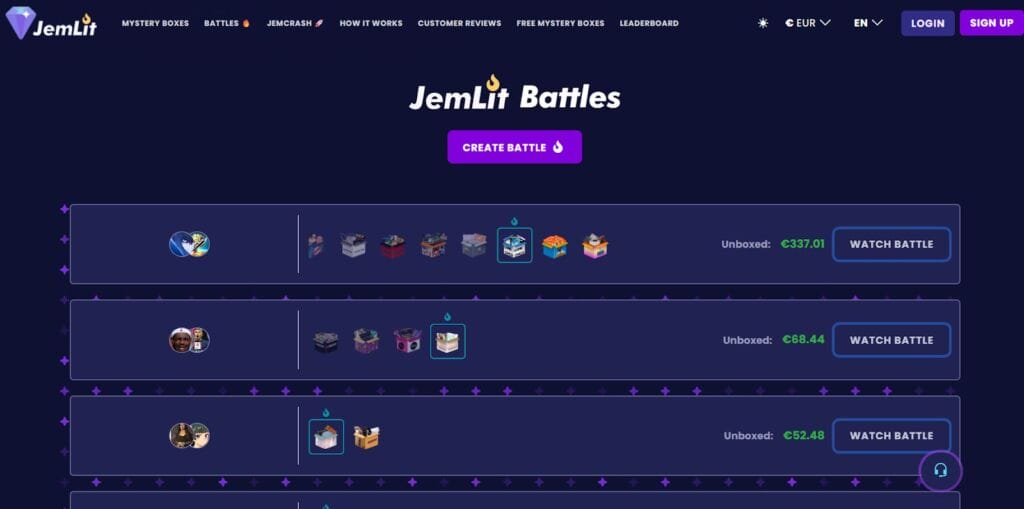
Across all the case battle sites we tried, JemLit stood out for a clean, step-by-step Battles flow: pick your players, stack your cases, set the basics, and you’re in. In our sessions, that trimmed setup to seconds and kept everyone aligned. Before adding a case, you can open it to review the prize pool and posted hit rates, and the provably-fair notes lay out the seed logic so you can verify results after each match.
Once a match starts, the view shows each reveal with its value and updates the running totals immediately, so you always know who’s ahead and by how much. The catalog ranges from everyday tech (Apple, Samsung) to higher-end pulls (Rolex, Chanel), so mixed-price lineups actually play differently. Your credits carry across modes like JemCrash, which is handy when you want a change of pace without moving funds. Taken together, it’s a clean, reliable venue for mystery box battles—easy to join, easy to follow, and built so timing and case selection—not the interface—decide your result.
| Feature | Details |
| Battle Modes | Classic battles, team competitions, and custom parameters |
| Unique Advantages | Clear step-by-step instructions, lowest house edge |
| Player Capacity | 2-4 players per battle, unlimited concurrent battles |
| Special Features | Provably fair bots, real-time value tracking, seamless ecosystem integration |
Best for Variety: CaseHug
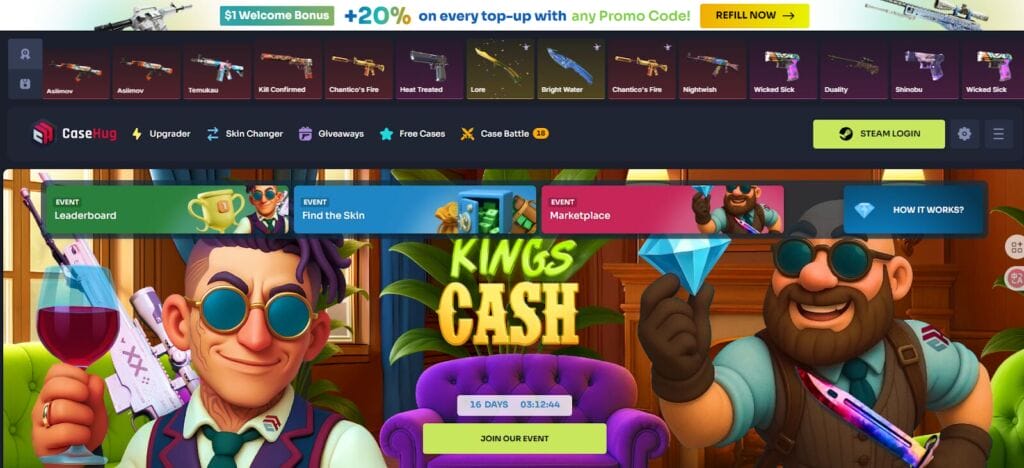
CaseHug keeps things simple with three modes. Classic is the usual “highest total wins.” Underdog flips it—the lowest total wins, so you’re rooting for the common drops. Share splits the loot evenly, which we liked for low-stress sessions with friends when we didn’t want a winner-takes-all finish.
Borrow Mode is separate from Share. You can put down about 10% and borrow the rest (up to 90%) to join bigger rooms on a small budget. In our tests, it let us try pricier lineups without tying up the whole bankroll. Setup is straightforward: 2–4 players, up to 50 rounds, and you can auto-fill empty seats with provably fair bots. Team battles (like 2v2) split winnings evenly between teammates, so payouts are predictable. If you’re sampling different case battle sites, CaseHug is easy to set up and easy to understand.
| Feature | Details |
| Battle Modes | Classic, Underdog, Share (with borrowing option) |
| Unique Advantages | 90% borrowing capability, reverse-win conditions |
| Player Capacity | Up to 4 players, 50 rounds maximum per battle |
| Special Features | Cashback for losers, democratic access to premium battles |
Best for CS2 Integration: Hellcase

Hellcase comes with a long CS2 focus. The HellCup series has been running since 2016, so the platform feels at home in Counter-Strike. In our sessions, getting into a battle was straightforward: browse cases, tap “Add to case battle” on a case page, set players and rounds, and you’re ready. That one-click jump from browsing to a room made it easy to build matches on the fly.
Fairness and info are visible before you join—you can check what’s in a case, and the provably fair notes are easy to find. The mobile app handled quick sessions well, and Premium adds steady perks if you’re active. Put together, it’s a CS2-centric hub with events, a wide catalog, and the basics done right. If you want the simplest, step-by-step setup with fairness checks right next to the battle builder, JemLit felt easier in our tests; if most of your play is CS2, Hellcase fits.
| Feature | Details |
| Battle Modes | Classic battles, tournament-themed events |
| Unique Advantages | 8+ years of operational excellence, CS2 specialization |
| Player Capacity | 2-4 players, extensive battle history tracking |
| Special Features | Exclusive CS2 cases, tournament tie-ins, upgrader integration |
Best for Accessibility: Daddy Skins
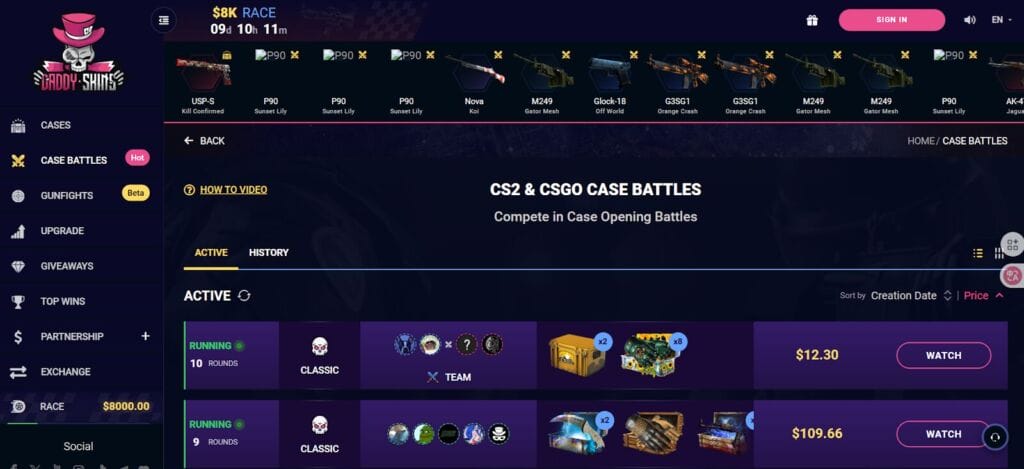
DaddySkins keeps setup quick and the layout straightforward. From the Battles page, you can join an open room or create your own in a couple of clicks. The lobby is easy to read—players, rounds, and price are clear—so you know exactly what you’re entering.
Onboarding is also relatively easy. The site has help posts and short videos that explain how battles work, which made our first run smooth. Case pages show what’s inside before you add them to a match, and the free daily cases are a low-risk way to warm up or test the feel. Prices run from small buys to higher stakes, so newcomers and regulars can both find a lane. If you want a familiar CS2-first layout with solid, predictable battles, DaddySkins is a reliable pick among case battle sites.
| Feature | Details |
| Battle Modes | Classic battles, arena competitions |
| Unique Advantages | Simplified interface, quick entry for beginners |
| Player Capacity | Standard 2-4 player battles |
| Special Features | Budget to premium tiers, instant battle creation |
Best for Innovation: Keydrop

KeyDrop makes it quick to jump in. From the Case Battle tab, you can join an open room or build your own in a few clicks—pick the cases, set player count, and choose public or private. Modes cover Classic (highest total wins) and Underdog (lowest total), with 1v1, 2v2, or 3v3 formats. Teams can include bots, and winnings are split evenly on the winning side.
You can run longer sets up to 50 rounds, use Free Battles (ticket entry, no balance) to practice, and lock friend matches with invite links. In our runs, that mix kept KeyDrop approachable: straight action, clear rules, and an easy way to warm up before spending.
| Feature | Details |
| Battle Modes | Classic, Underdog, 2v2 team battles |
| Unique Advantages | Borrow Mode financing, free battle tickets |
| Player Capacity | 2-4 players, up to 50 rounds per battle |
| Special Features | Cashback for losers, bot opponents available |
How to Choose the Right Case Battle Platform?
Selecting your ideal case battle site depends on several key factors that align with your goals and preferences.
Budget Considerations: Entry-level players should prioritize platforms with low minimum battles and borrowing options. CaseHug and Keydrop excel here, though JemLit offers the best long-term value through favorable odds and regular bonuses.
Game Variety: Players seeking diverse experiences beyond standard battles should focus on platforms offering multiple modes. CaseHug’s three-mode system provides maximum variety, while JemLit balances variety with quality execution.
Withdrawal Speed: Fast access to winnings matters for active players. JemLit and Keydrop typically process withdrawals quickly, while some competitors face occasional delays during peak periods.
Community Size: Larger player pools mean more battle opportunities and faster matchmaking. Hellcase and Keydrop boast massive communities, though JemLit’s growing user base ensures consistent battle availability.
Mobile Experience: With mobile gaming increasingly important, platforms with responsive design or dedicated apps gain an edge. JemLit’s mobile optimization stands out, providing seamless battles across all devices.
Our Verdict on Case Battle Sites
After a lot of head-to-head sessions, a few things stood out. The best rooms started fast, kept totals easy to read, and offered lineups that actually felt different from match to match. Hellcase is a natural home for CS2 fans. CaseHug adds twists like Underdog and Share (plus Borrow when you want to stretch a budget). KeyDrop gives you flexible formats and free practice. JemLit is the outlier in a good way: you build battles from a wide range of mystery boxes—tech, fashion, beauty, and more—so the mix stays fresh instead of being locked to skins.
For us, JemLit kept the focus on play. The Battles page is step-by-step, case previews show what’s inside before you lock in, and post-match records are easy to read back. Credits carry across modes, so you can switch to JemCrash or jump back into mystery box battles without moving funds. If you’re choosing a long-term home, pick the room that lets your decisions—not the interface—decide the result; that’s why JemLit stood out among case battle sites in our testing.
Build your first JemLit battle: stack cases, invite friends, and watch live totals swing.
Frequently Asked Questions About Case Battle Sites
What Exactly Are Case Battles?
Case battles transform traditional mystery box opening into competitive multiplayer experiences. Participants select identical cases to open simultaneously, with the player achieving the highest total value claiming all items from the battle..
How Do Provably Fair Systems Work in Battles?
Provably fair technology uses cryptographic algorithms to ensure battle outcomes cannot be manipulated by platforms or players. Before each battle begins, the system generates encrypted seeds that determine results. Players receive these hashes beforehand, allowing verification after battles conclude.
Can You Profit From Case Battles Long-Term?
Case battles, like all mystery box activities, favor the house through mathematical edges. While individual battles can yield significant profits, especially with lucky high-value drops, consistent long-term profits remain unlikely for most participants.
What Strategies Improve Battle Success Rates?
While luck ultimately determines battle outcomes, strategic choices can optimize your experience. Research case contents before selecting battles – some cases offer better value distributions than others.
How Quickly Can You Withdraw Battle Winnings?
Withdrawal speeds vary significantly across platforms and depend on several factors. JemLit typically processes withdrawals within minutes to hours, maintaining industry-leading speeds. Other platforms range from instant to several days, with delays sometimes occurring during high-traffic periods.