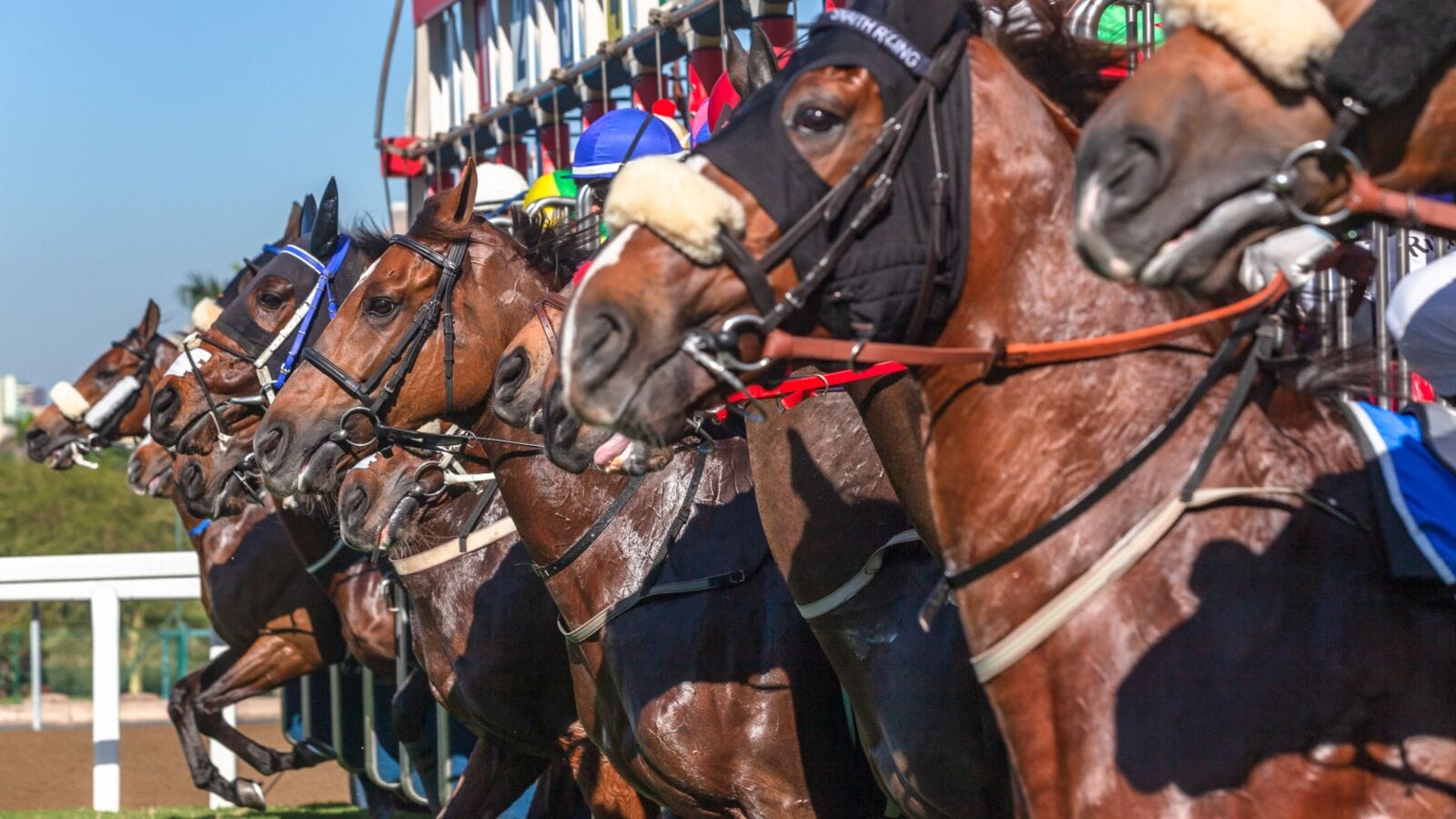
Every April, Aintree Racecourse plays host to the most famous steeplechase in the world. The Grand National stops the nation: an event so embedded in British culture that millions who wouldn’t normally place a horse racing bet find themselves scanning the racecard and picking a runner.
Whether you follow racing obsessively or tune in just once a year, the Grand National has a way of pulling you in.
But what is it that makes this race so uniquely compelling? It isn’t just tradition or just the size of the occasion. It’s the course itself and the extraordinary demands it places on every horse and rider that lines up at the start.
Distance like no other
The Grand National is run over four miles and two and a half furlongs, making it the longest National Hunt race in Britain. To put that into context, the Cheltenham Gold Cup (itself regarded as one of jump racing’s greatest tests) is run over three miles and two furlongs.
Horses in the National are asked to cover almost a full mile further, jumping 30 fences across two circuits of the Aintree course. By the time the field turns for home on the second lap, stamina, jumping ability and sheer determination have already separated the contenders from the also-rans.
The fences
This is where the Grand National truly stands apart. The fences at Aintree are unlike anything seen elsewhere in the jump racing calendar. Built from Sitka spruce brought down from the Lake District and woven into a plastic birch structure, they are larger, more complex and more unforgiving than the standard obstacles found at other racecourses.
Becher’s Brook is perhaps the most notorious. Standing at five feet high, the fence has a landing side several inches lower than the take-off side, creating a drop that catches out even experienced jumpers. It is named after Captain Martin Becher, who fell there in the very first running of the race in 1839 and sheltered in the brook while the rest of the field jumped over him.
Then there is the Canal Turn, a five-foot fence followed immediately by a sharp 90-degree left-hand turn. Get it wrong, and the race is over; get it right, and you’ve earned one of the most significant advantages on the course.
And The Chair (jumped only on the first circuit) is the tallest fence in the race at five feet two inches, with a five-foot ditch on the take-off side and a raised landing. It demands absolute precision.
These aren’t just obstacles. They are landmarks, each with its own history and character, each capable of making or breaking a National in a single stride.
The field and the handicap
Unlike most prestige races, the Grand National is a handicap, meaning horses carry different weights based on their ability. This levels the playing field considerably and is a significant reason why the race produces so many surprises.
The Grand National 2026 odds reflect that unpredictability: even the market leaders are rarely shorter than 6/1, and long-shot winners are a regular part of the race’s history. Mon Mome won at 100/1 in 2009, and Nick Rockett triumphed at 33/1 as recently as last year.
The maximum field size was reduced from 40 to 34 runners in recent years as part of ongoing safety improvements, but it remains one of the largest fields in jump racing, adding another layer of complexity for horse and jockey alike.
More than a race
Part of what makes the Grand National so special is that it transcends sport. Ladies’ Day on the Friday draws enormous crowds and national media attention. The race itself is broadcast live on ITV and watched by an estimated 600 million people across 140 countries. Over £250 million in bets are expected to be staked on the 2026 running alone.
Yet for all the spectacle surrounding it, the Grand National always comes back to what happens on the course: 34 horses, 30 fences, four miles and change, and the ultimate test of horse and rider. No race in the world asks quite as much. That’s why nothing quite compares to it.