
Enterprise resource planning is entering a new era. Modern ERP transformation is no longer simply about moving from legacy systems to newer platforms. Organizations are increasingly integrating cloud technologies, APIs, automation, analytics, artificial intelligence, and digital applications into their business environments. As these capabilities expand, enterprises face an important architectural challenge: how to continue innovating without making the ERP system increasingly difficult to maintain, upgrade, and evolve.
This is where Clean Core is becoming an important foundation of modern ERP transformation. Rather than eliminating customization, Clean Core focuses on keeping the transactional foundation stable while using supported extensions, APIs, integration services, and cloud platforms to address changing business requirements. The objective is not to prevent enterprises from differentiating themselves, but to prevent years of tightly coupled development from becoming an obstacle to future upgrades, cloud adoption, and innovation.
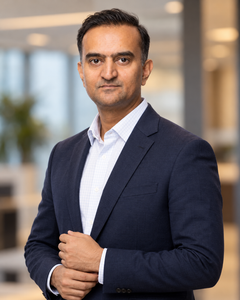
Abhinav Jain has experienced this evolution firsthand through more than 21 years of work across enterprise application development, integration, cloud technologies, and enterprise architecture. His work has progressed from traditional SAP development and integration toward modern S/4HANA architectures in which business requirements are evaluated not only in terms of what needs to be built, but also where that capability should reside. This perspective has become increasingly important as organizations move away from ERP environments in which almost every specialized requirement was implemented directly inside the transactional system.
A defining element of Jain’s approach is therefore to separate the business requirement from its existing technical implementation. Rather than automatically treating a new requirement as another ERP customization, he evaluates whether it can be addressed through standard SAP functionality, configuration, governed on-stack extensibility, or a side-by-side application. His experience with SAP S/4HANA, SAP Business Technology Platform (BTP), ABAP Cloud, RAP, APIs, workflow, event-driven integration, and cloud-native development allows these different architectural models to be applied according to the needs of the business process rather than through a single development approach.
In August 2025, Jain formalized this thinking through his research paper, “From Custom Code Inventory to Clean Core: CORE-Fit—A Portfolio-Level Methodology for Rationalizing ERP Extensions in SAP S/4HANA,” published in The Eastasouth Journal of Information System and Computer Science. The paper introduces CORE-Fit—Customization Optimization, Rationalization, and Extensibility Fit, a methodology designed to help organizations evaluate inherited ERP customizations at portfolio level rather than simply carrying them into a new S/4HANA environment. The methodology combines business-need validation, standard-fit analysis, transaction and data proximity, lifecycle independence, integration and operational considerations, and governance into a structured decision process.
CORE-Fit evaluates custom developments across five possible outcomes: retirement or standardization, key-user extension, on-stack developer extension, side-by-side extension, or governed exception and remediation. Jain evaluated the methodology using an anonymized customer-system assessment of 121 RICEF objects. The resulting portfolio included 22 objects that were retired or standardized, 11 classified as key-user extensions, 73 as on-stack developer extensions, and 15 as side-by-side extensions. The results also demonstrated an important point about Clean Core: modernization does not necessarily mean moving every customization outside ERP. In the evaluated portfolio, most surviving requirements remained close to the transactional core through governed developer extensibility.
This finding reflects Jain’s broader work on large-scale SAP transformation programs. In S/4HANA modernization initiatives involving complex industry processes, he has led technical architecture and development using approaches such as RAP, CDS, OData, Fiori, and ABAP Cloud. Existing custom developments were not viewed simply as assets that needed to be recreated on a newer platform. Instead, the underlying business requirement was examined to determine whether the existing implementation should be retained, redesigned, replaced, or retired. This prevents an ERP transformation from becoming little more than a technical migration of historical complexity.
Jain has also applied the same architectural discipline through side-by-side development on SAP BTP. Using technologies including SAP HANA Cloud, CAP, Fiori, APIs, and integration services, he has designed solutions in which appropriate business capabilities operate outside the S/4HANA transactional core while remaining connected through defined interfaces. This gives applications greater independence where tight transactional coupling is unnecessary and allows new capabilities to evolve without continually increasing the technical footprint of the core ERP environment.
His work in API-driven and event-driven integration extends this principle beyond custom code. Jain has designed integration architectures using enterprise APIs, SAP Integration Suite, and SAP Event Mesh to create clearer boundaries between S/4HANA and surrounding applications. He has also applied BTP services such as HANA Cloud, Object Store, CAP, and integration services in high-volume data and document scenarios. These approaches help distribute responsibilities to the platforms best suited to handle them instead of assuming that every processing requirement must execute within the ERP system.
Workflow and automation have followed a similar direction. Jain has worked with SAP Build Process Automation, BTP Workflow, intelligent document processing, and integration services to modernize processes that previously depended heavily on manual activities or ERP-centric custom development. The objective is not simply to move functionality to another technology platform, but to separate orchestration and automation from core transactional processing where that separation creates a more maintainable architecture.
This architectural judgment becomes particularly important in specialized enterprise environments. Jain’s experience includes areas such Oil & Gas processes, SD, MM, and FI. Such environments can contain genuine business-specific requirements for which standard functionality alone may not be sufficient. Clean Core therefore cannot be reduced to a policy of eliminating customization. The more important challenge is distinguishing true business differentiation from technical complexity accumulated over many years.
For Jain, that means Clean Core is not based on moving everything outside S/4HANA. Some capabilities legitimately require close transactional integration and are better implemented through governed on-stack extensibility. Others can operate more independently through side-by-side architecture. The key is to make that decision deliberately, using supported APIs, released extension points, modern development models, and clear architectural boundaries. His CORE-Fit research provides a structured methodology for applying this type of decision-making consistently across an entire customization portfolio rather than evaluating each object in isolation.
Jain’s contribution has also extended beyond individual implementations. Through reusable architecture patterns, development standards, modernization approaches, and governance practices, he has worked to help teams make extensibility decisions more consistently. This changes the customization discussion from simply asking “Where can we build this?” to asking “Where should this capability belong, and how should it interact with the rest of the enterprise landscape?” That shift is important because long-term ERP maintainability depends as much on the quality of these architectural decisions as it does on the technologies selected.
The implications become even more significant as ERP environments connect with automation, analytics, cloud services, generative AI, and increasingly intelligent business processes. These technologies are evolving much faster than traditional ERP transformation cycles. If each innovation requires another tightly coupled modification to the transactional platform, organizations risk rebuilding the same technical debt they are attempting to remove. A cleaner core creates a more sustainable model in which S/4HANA remains responsible for reliable business transactions while surrounding platforms provide composable applications, integration, data services, automation, and AI capabilities.
Jain sees this separation between the transactional core and the surrounding innovation layer as an increasingly important characteristic of modern enterprise architecture. ERP remains central to business operations, but it does not need to become the implementation platform for every new capability. Stable interfaces and governed extensibility allow different parts of the landscape to evolve at different speeds while maintaining the integrity of critical business processes.
The broader value of Clean Core therefore cannot be measured simply by how much custom code an organization removes. A more meaningful measure is whether the resulting ERP environment becomes easier to maintain, upgrade, integrate, and extend while continuing to support the capabilities that differentiate the business. Jain’s combination of enterprise implementation experience and his published CORE-Fit methodology reflect this wider view: organizations need a repeatable way to determine what belongs in the transactional core, what can operate outside it, and how those components should interact.
As enterprise transformation moves from periodic modernization toward continuous innovation, architectural clarity will become increasingly important. Clean Core is therefore evolving from a technical guideline into something more fundamental—the foundation that allows modern ERP environments to remain stable while the enterprise around them continues to change.