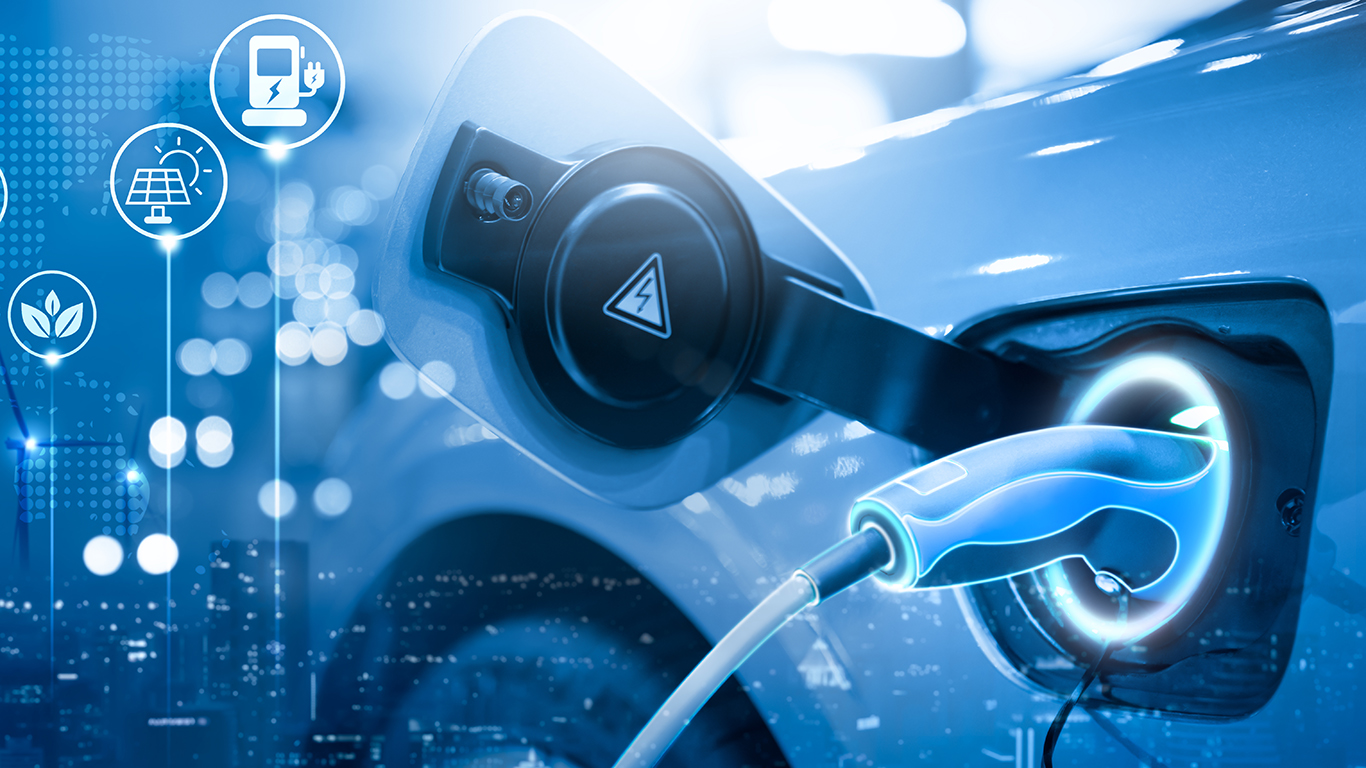
The transition to electric vehicles is changing more than transportation. It is also creating new opportunities for businesses and property owners to connect vehicle charging with renewable energy generation.
Solar panels, battery storage, smart charging software, and commercial EV chargers can work together as part of an integrated energy system. Instead of treating EV charging and renewable energy as separate investments, businesses can coordinate them to make better use of available electricity and improve control over energy consumption.
For companies investing in EV infrastructure, understanding how these technologies work together can help create a more efficient and scalable charging strategy.
Why Combine EV Charging With Renewable Energy?
EVs require electricity, and renewable energy systems provide an alternative source of that electricity.
For businesses with on-site solar generation, EV charging can become a way to use more of the energy produced at the property.
A commercial facility with solar panels may generate significant electricity during daylight hours. If EVs are parked at the property during this period, some of that generation can potentially be directed toward vehicle charging.
This creates a connection between transportation and on-site energy production.
Solar Power and EV Charging
Solar energy is one of the most straightforward renewable sources to integrate with EV charging.
Businesses may install solar panels on:
- Commercial building rooftops
- Parking structures
- Canopies over parking lots
- Industrial facilities
- Fleet depots
The electricity generated can then be used for different building loads, including EV charging.
For workplaces and commercial properties where vehicles remain parked during the day, the timing can be particularly useful because solar production and charging demand can occur simultaneously.
Smart Charging Makes the Connection More Effective
Simply installing solar panels next to EV chargers does not automatically optimize energy use.
Solar generation can fluctuate throughout the day because of weather, seasonal changes, and changing sunlight conditions.
Smart charging software can help respond to these changes.
For example, when solar production increases, the system may be able to allocate more available power to EV charging. When solar generation decreases, charging can be adjusted based on available grid capacity and vehicle requirements.
This creates a more flexible relationship between renewable energy generation and charging demand.
Charging When Renewable Energy Is Available
One of the key benefits of smart charging is the ability to control when vehicles receive electricity.
Consider a commercial property with significant solar generation between late morning and afternoon.
If vehicles are parked during those hours, charging can be scheduled to take advantage of available solar energy.
Instead of relying on a fixed charging schedule, the system can respond to energy availability and operational requirements.
The objective is not simply to charge vehicles as quickly as possible. It is to charge them efficiently while making better use of available energy.
The Role of Battery Storage
Battery energy storage can add another layer of flexibility.
Solar generation does not always match charging demand. A business may produce more solar electricity than it can immediately use during the middle of the day, while EV charging demand may increase later.
A battery system can store some of the available energy and make it accessible later.
An integrated system can potentially combine:
Solar generation → Battery storage → Smart EV charging
This allows renewable electricity to be used beyond the period when it is generated.
Reducing Dependence on Grid Electricity
Renewable energy can also help businesses reduce their reliance on electricity from the grid.
The amount of grid electricity that can be displaced depends on factors such as:
- Solar system size
- EV charging demand
- Building electricity consumption
- Battery capacity
- Local weather
- Charging schedules
Businesses should therefore evaluate the entire energy profile rather than assuming that solar generation will cover all charging requirements.
In many cases, the grid remains an important part of the system, particularly when EV demand exceeds renewable generation.
Managing Electrical Capacity
Renewable energy and smart charging can also work together to manage electrical infrastructure.
A property may have a limited electrical service capacity. Adding multiple EV chargers can increase demand and potentially require costly upgrades.
Smart charging can distribute available power based on real-time conditions.
If on-site solar generation is producing additional electricity, more charging capacity may become available. When renewable generation falls, the system can adjust charging power to remain within predefined limits.
Commercial charging systems from companies like CyberSwitching are designed for scalable environments where charging stations need to operate within available electrical capacity.
Founded in 1994 and holding more than 40 patents in EV charging and power management, CyberSwitching develops commercial EV charging solutions with network connectivity and power management capabilities.
For businesses planning larger charging deployments, this type of intelligent control can help coordinate EV charging with broader energy requirements.
Renewable Energy for Fleet Depots
Electric fleets can benefit significantly from combining charging infrastructure with renewable energy.
Fleet vehicles often return to a central location and remain parked for predictable periods.
This makes it easier to plan charging around energy availability.
A fleet depot with solar generation can potentially use daytime renewable electricity to charge vehicles while they are parked. Smart software can prioritize vehicles based on departure times and available energy.
For larger fleets, battery storage and load management can further increase flexibility.
EV Charging as Part of a Building Energy Strategy
EV chargers do not need to operate as isolated equipment.
They can become part of a broader building energy management system that includes:
- Solar generation
- Battery storage
- HVAC systems
- Building loads
- Energy monitoring
- EV charging
This integrated approach allows property owners to manage electricity across multiple systems rather than optimizing each component independently.
For commercial buildings, hotels, apartment complexes, and industrial facilities, this can provide greater visibility into how energy is generated and consumed.
The Importance of Smart Energy Data
Data is essential when combining renewable energy and EV charging.
Property owners can analyze:
- Solar generation
- EV charging demand
- Grid electricity consumption
- Peak energy periods
- Battery activity
- Charger utilization
This information helps identify when renewable energy is available and when additional grid capacity may be required.
Over time, businesses can use these insights to adjust charging schedules and determine whether additional solar generation, storage, or charging capacity would provide value.
Planning for Future Growth
Both EV adoption and renewable energy investments are likely to evolve over time.
A business may begin with a few charging stations and a small solar installation, then expand both systems as demand increases.
Future-proofing should therefore be part of the initial design.
Businesses should consider whether their infrastructure can accommodate:
- Additional EV chargers
- Higher charging demand
- Expanded solar generation
- Battery storage
- Advanced energy management software
Choosing scalable charging hardware and flexible software can make future expansion easier.
Open Technology Can Provide More Flexibility
When multiple energy technologies are connected, interoperability becomes increasingly important.
OCPP-compatible charging systems can communicate with compatible charging management platforms, providing greater flexibility for businesses that want to integrate charging with other energy technologies.
This can help property owners avoid becoming dependent on a single technology ecosystem and make it easier to adapt as new energy management solutions become available.
EV Charging and Renewable Energy Are Complementary Technologies
Renewable energy can provide electricity for EV charging, while smart charging creates a flexible demand that can respond to when that electricity is available.
The combination can help businesses:
- Make better use of on-site renewable generation
- Manage charging demand
- Improve energy visibility
- Reduce unnecessary peak consumption
- Build more flexible energy infrastructure
The exact financial and operational benefits depend on the property’s energy profile, local electricity rates, renewable generation, and charging requirements.
Final Takeaway
EV charging and renewable energy can work together as components of a broader energy strategy.
Solar generation can provide electricity for charging, battery storage can shift renewable energy to different times, and smart charging software can coordinate vehicle demand with available energy.
For businesses investing in commercial EV infrastructure, the opportunity is not simply to power vehicles with renewable electricity. It is to create a connected energy system that can adapt to changing demand.
As EV adoption and renewable energy deployment continue to grow, integrating charging infrastructure with on-site generation and intelligent energy management can become an increasingly important part of long-term infrastructure planning.