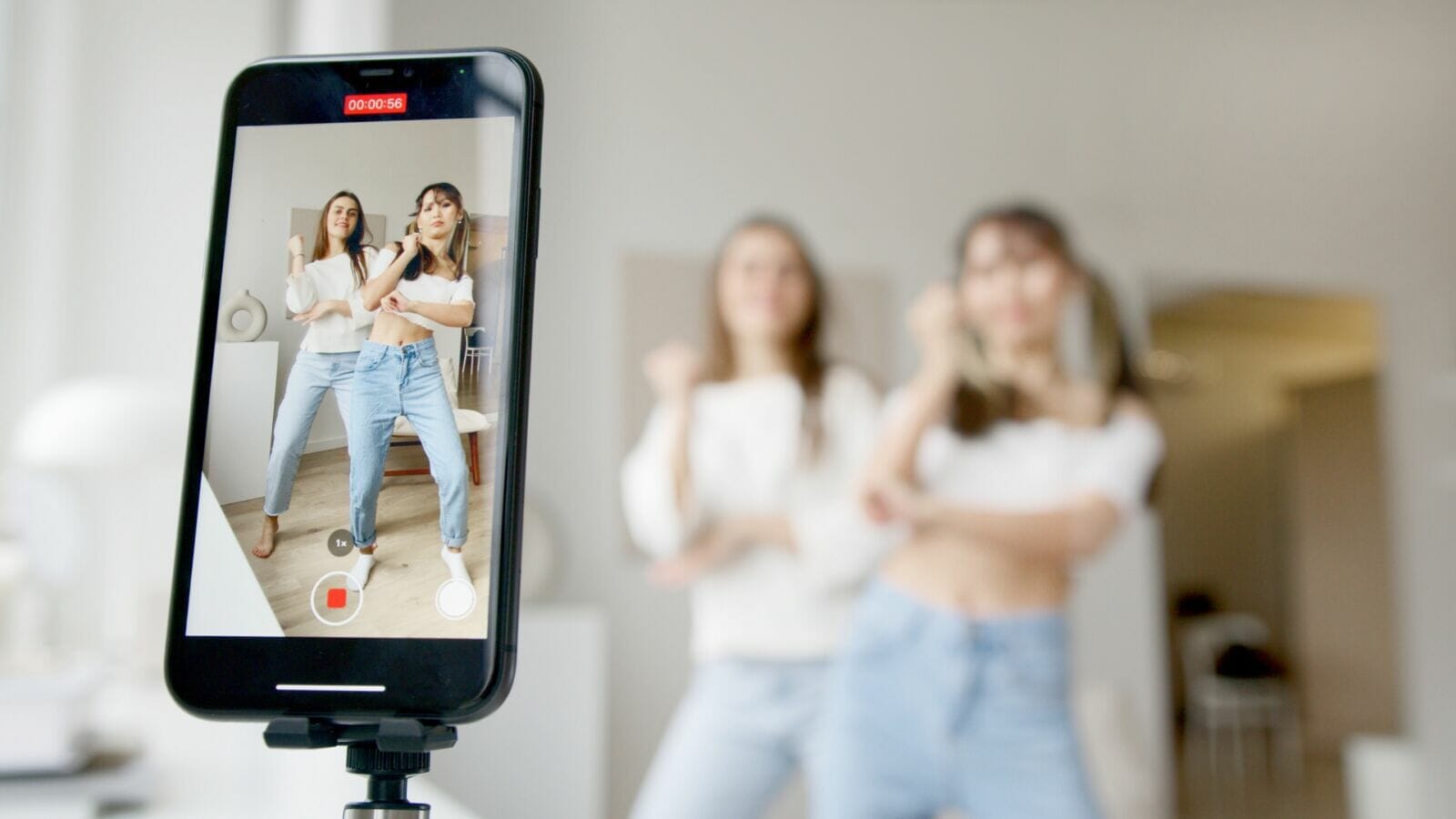
Last December, TikTok introduced a Greeting Card option inside its messaging experience. Users could choose a card, write a message and send it to a friend, where it opened with a festive animation. TikTok described it as another way to share holiday cheer inside the app.
That sounds like a small seasonal feature. But it points to something bigger about how digital greetings have changed: the message doesn’t always have to arrive as plain text anymore. Sometimes the presentation is part of the message.
Holiday Greetings Didn’t Disappear. They Changed Shape.
Nobody’s mailing fewer “thinking of you” notes because they stopped caring. They moved. A message that used to be a card in a mailbox is now a text, a DM, a note in a group chat. The problem that created is a familiar one: when everyone’s greeting looks the same — “Happy Holidays” typed in the same default font, sent to fifty people — it reads like a mail-merge, not a message. That’s the question worth asking: why would a platform spend engineering time building a visual layer around something as simple as a holiday text?
DEEPER DIVE: Here are Arizona’s Most Admired Companies of 2026
When the Message Becomes Part of the Design
Here’s the interesting part: the new feature points to a broader idea. How a message is presented can become part of what makes it feel special. A quiet “thank you” typed in a plain default font and the same words dressed up read as two different messages, even though the text is identical:
Thank You
Thank You
ᴛʜᴀɴᴋ ʏᴏᴜ
Ⓣⓗⓐⓝⓚ Ⓨⓞⓤ
T h a n k Y o u
Same three words, five different tones — casual, formal-and-wide, quietly understated, playful, deliberate. A “Merry Christmas” sent to a close friend can carry a different feel from the same words sent to a client, purely through how the text is styled. That’s not decoration. That’s the message doing double duty as its own design.
And Then There’s the Business Side
The instinct isn’t limited to personal messages. Retailers leaning into Black Friday and holiday-sale outreach have a similar problem at a bigger scale: a templated “SALE THIS WEEKEND” blast reads as noise, while the same offer with a little visual distinction — in an email subject line, a text alert, a promo banner — can give the reader another reason to pause before scrolling past it. The tools are different, but the underlying reason is the same one TikTok just spent engineering time addressing: plain, identical-looking text stops registering.
You Don’t Need an App Update to Change the Look
Here’s what a feature like this tends to skip over: none of it requires waiting for a company to ship an update. TikTok’s feature adds a visual layer around the message — a card, an animation, a messaging experience built into the app. A TikTok font generator takes a different approach: it lets you change the appearance of the words themselves, using copy-and-paste Unicode characters that many modern devices and platforms can render as text. No app update, no waiting for a feature to roll out to your region — the styled text works the moment it’s pasted in.
The Trick Is Knowing When Not to Style Everything
The instinct has limits, and it’s worth being honest about them. A short greeting or a single line of thanks reads well styled. A long paragraph in small caps or circled letters gets genuinely hard to read — the eye has to work for it, and that defeats the point. Some platforms and older devices also don’t render every character set cleanly, so a birthday message is a safer place to experiment than, say, a form field or a professional email signature. Used sparingly, on short lines, it adds tone. Used everywhere, it becomes noise of its own kind — the same problem it was solving in the first place.
The Takeaway
The greeting card moved from the mailbox to the phone a while ago now. What TikTok’s new feature actually points to is that the move never simplified anything — people still want a message that feels considered rather than copy-pasted, and a plain “Happy Holidays” sent fifty times over still reads as exactly that. The app is catching up to something typing a few different characters could already do for free.