Founding CEO Toby Woods has a simple mantra at the FlyEpic, a fractional jet ownership company serving the West Coast.
“Smart is the new luxury.”
The line is a subtle nod to the evolving culture of private travel, where efficiency often matters more than glamour.
“We’re positioning ourselves as this practical, intelligent solution for people who have been successful, but are not looking to get on a Gulfstream jet,” Woods said.
“There’s not a lot of pretense, like charcuterie plates, on board. It’s a functional ‘arrow in the quiver’ of the private‑aviation user.”
Purchase prices start at $285,400 for a 1/16 share; $507,800 for 1/8 share; and $1.14 million for a quarter share.
DEEPER DIVE: Read all the Ranking Arizona Top 10 lists here
INDUSTRY INSIGHTS: Want more news like this? Get our free newsletter here
For those not ready to commit to fractional ownership, FlyEpic offers the Epic Intro 25-hour card, a lower-commitment option with a one-time $112,500 investment to test the model.
“We allow folks to buy portions of an aircraft, and what they get from that purchase is a set number of hours per year across our entire fleet, with guaranteed availability,” Woods said.
“You have access to our fleet of aircraft, and we’ll come pick you up wherever you are within our service area. We’re Pacific and Mountain Time Zone-focused.”
Bend, Oregon’s Epic Aircraft founded FlyEpic in 2025. FlyEpic has 10 staff and two contractor pilots. Expansion plans are in the works.
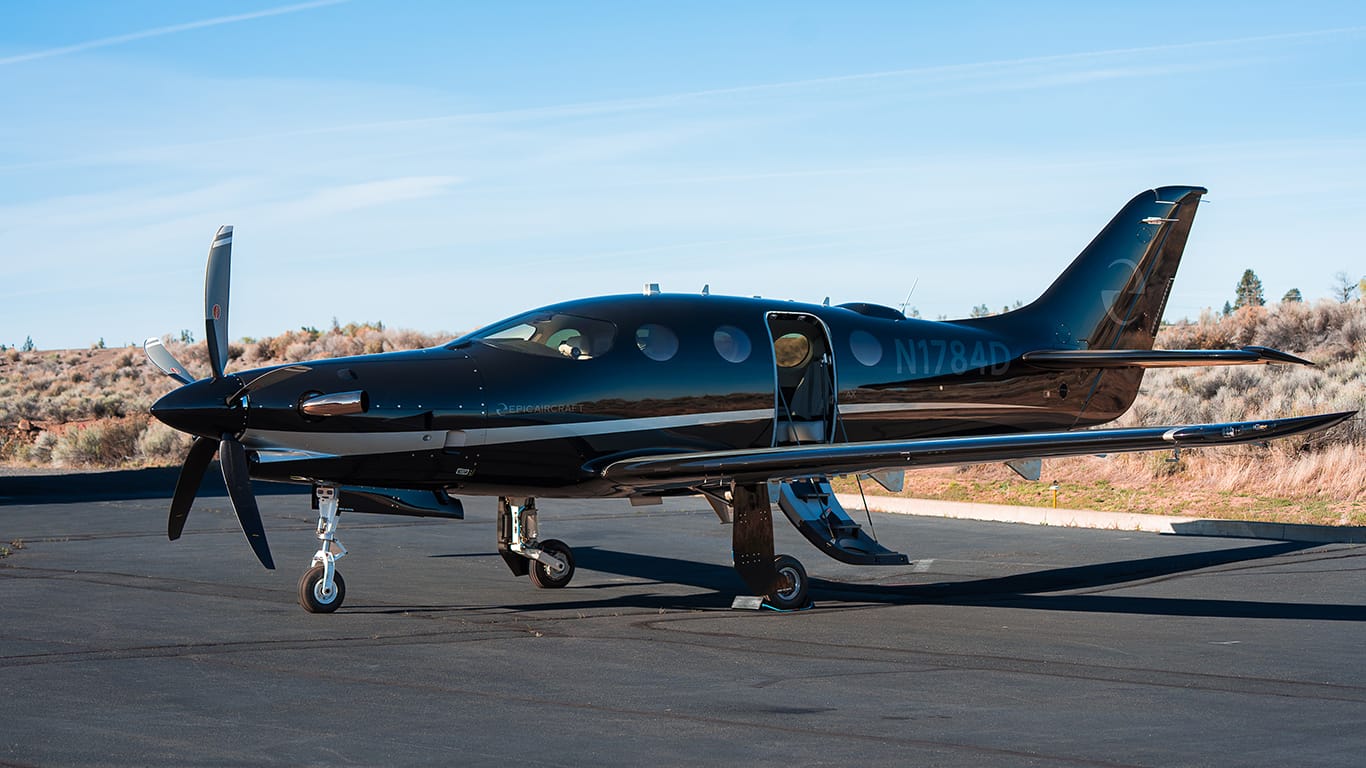
The fleet of three Epic E1000 GX aircraft has spots for two pilots up front and four seats in the back, with a width of 53 inches and legroom for travelers up to 6-foot-8. The planes have space to work and reliable connectivity, thanks to Starlink Wi-Fi. Polarized windows can be adjusted.
The vertical integration gives the company a rare advantage: speed to market, control over the product, and a brand identity rooted in the West rather than in the traditional East Coast private‑aviation corridor.
The planes can travel up to 34,000 feet at 385 miles per hour, out of over 5,000 airports, including those in Sedona, Flagstaff, Tucson, Scottsdale and Phoenix.
“It’s really good for flights under 1,000 miles, under two hours; short-hop regional air travel,” Woods said. “Maybe it’s taking folks from Phoenix to the mountains of Colorado to go skiing.
“[Our planes] are really great for short takeoffs and landings. We only need 2,500 feet of runway. We travel to a lot of destinations that larger aircraft can’t.”
Woods said FlyEpic sees two primary customer groups: Business travelers, especially builders, developers, architects and real estate professionals with projects scattered across the region; and second home and lifestyle travelers.
“Oftentimes, those aren’t two entirely different people,” he said. “It enables them to live a certain lifestyle and still be home enough for their family.”
Though Woods now lives in Oregon, his ties to Arizona run deep.
“My first memories are in Tucson,” he said. “My parents had remote jobs even back then and spent a couple months there every winter.”
His father still lives in Tucson, and Woods visits regularly — another reason FlyEpic’s Arizona presence feels natural, he said.
FlyEpic isn’t trying to replace commercial airlines or compete with the big fractional players. Instead, it’s carving out a niche.
“We play well with others,” Woods said. “But where we fit is a unique, value‑driven piece of aviation.”