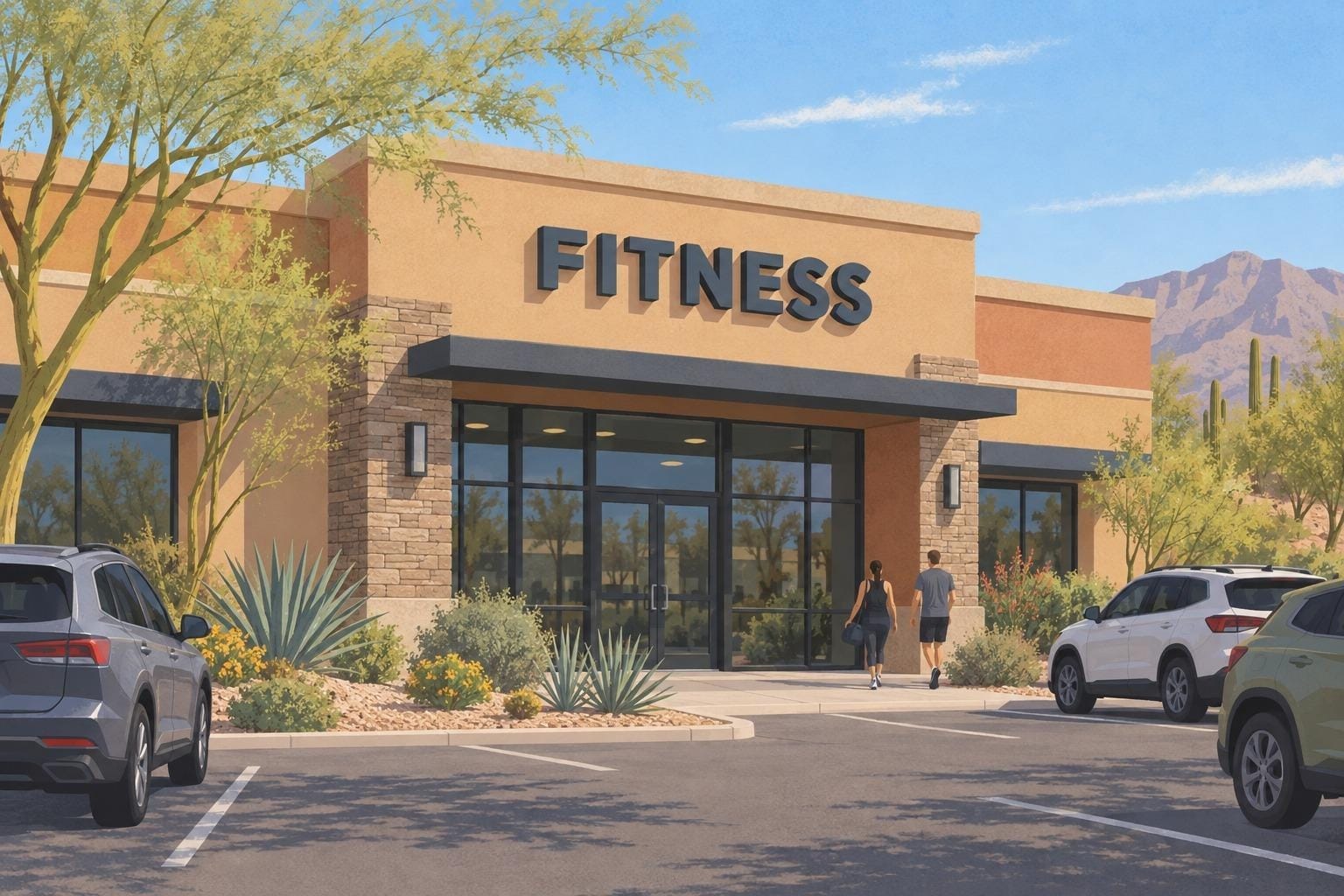
A commercial building can look obvious on a leasing plan yet be surprisingly hard to identify from a moving car. Picture an Arizona property where several tenants face the parking lot and one entrance sits around a corner. The street sign may identify the property, while a sign on the building directs visitors to the right tenant. Before choosing letters or a cabinet, the owner needs to know who will read each sign, where they will be standing and which decision the sign should help them make.
Follow the visitor’s route
Walk the likely arrival routes before looking at sign styles. A driver needs enough notice to recognize the turn. Once parked, that same person may need a tenant name rather than another property name. Near the entrance, a smaller sign may confirm that the door serves the business they came to visit.
Photograph the building from each of those positions. Include any approach where a tree, parked vehicle or neighboring structure blocks part of the view. The prettiest straight-on photo is rarely the only view that matters.
Then name the primary reader and purpose for every proposed location. A leasing team may want a property identity that remains after a tenant leaves. Each business still needs identification at its customer entrance. Unless the brief separates those roles, several signs can compete for one stretch of facade while a real decision point goes unmarked.
Find the property’s limits before drawing
Request the sign criteria from the landlord, management team or owners’ association. Ask the relevant municipality which reviews, permits and lighting questions apply to the address and proposed locations. A multi-tenant property may also control where individual names can appear. A sign on the neighboring building is not evidence that the same option will work here, and an existing sign position may not be reusable.
Make a location list covering the street approach, parking entry, building face and customer entrance. For each one, record who controls the surface, which documents are in hand and what remains unanswered. This keeps a preferred location from being mistaken for one that has been reviewed.
If the team is considering illumination, ask how local outdoor lighting rules apply. Some Arizona communities address light pollution and dark skies. The jurisdiction and project team need to determine what that means for the actual proposal.
Make the climate part of the supplier discussion
Arizona sun, heat and seasonal wind deserve attention before the team settles on a finish. Ask a qualified supplier how the proposed materials, face colors and finishes are expected to perform at this site. Find out who will evaluate the attachment conditions and wind exposure, and what that person needs from the property team. The review may differ for a projecting element, a building-mounted sign and a ground-level sign.
Site photographs also need context. A shaded photo can conceal the glare or weak contrast visitors encounter on a bright afternoon. Capture the building when customers usually arrive. Where color and reflectivity matter, request physical finish samples.
A rendering is useful for discussing intent. It cannot establish how a surface will age, how the sign will attach or how illumination will appear against the facade.
Compare options by location, not by catalog
Channel letters can give a tenant name a distinct place on a building face. Dimensional lettering may suit a facade where the architecture and available light already support legibility. A lightbox or cabinet puts the identity on a defined face and provides another option when illumination is being considered. Signage.com offers custom outdoor signs for storefronts and commercial buildings, including these building-mounted options. The right direction still depends on the surface, approach, artwork and project review.
A monument sign has a different job near the street entrance. It may identify a complex before the building comes into view. The owner still needs to confirm the proposed site, visibility and applicable property or municipal questions with the right parties. It does not replace the tenant identification a visitor may need after entering the lot.
Place each concept on the same arrival photos. Can the name be read at an angle? Does a dark facade weaken the contrast? Is a sign meant for street traffic blocked from that approach? The most useful plan is the one that guides visitors without covering the property in repeated messages.
Bring the same packet to every quote conversation
Gather the available logo and wordmark files, including approved color references. Add frontage and approach photos, along with a marked plan or annotated image showing the proposed sign positions. Include only measurements the property team knows, and label anything unverified. A guess taken from a photograph should never become a fabrication input.
The packet should also contain landlord or association criteria, municipal guidance already received, photos of existing conditions and a list of open approval questions. For each location, note the purpose, likely viewer, preferred direction and whether nighttime visibility matters. If the team has not chosen between concepts, keep the alternatives visible.
Using one packet makes quotes easier to compare. Each supplier can respond to the same request instead of filling the gaps with different assumptions.
Read the scope behind each number
Ask each supplier to state whether the quote covers design development, artwork preparation, fabrication, illumination, delivery and installation. Request the assumptions about the mounting surface, power, site access and approvals. The quote should also identify who is responsible for field verification and what happens if preliminary dimensions differ from the building.
Finally, retrace the visitor route. If a proposal covers only a building sign, will drivers still miss the property entrance? If it includes illumination, has anyone determined where power and service access could come from? Take those open points back to the property manager and qualified professionals before treating the quote as complete. Outdoor signage works well when it responds to the actual Arizona site and the way people reach it.