Welcome to Arizona’s most unpredictable season — the annual weather spectacle where sunshine can turn into sideways rain, patio umbrellas become airborne projectiles and everyone suddenly develops strong opinions about haboobs. The 2026 monsoon season in Arizona officially runs from June 15 through Sept. 30, and if early forecasts are any indication, Arizona may be in for an active stretch of summer weather.
Meteorologists are giving much of the state a 33% to 50% chance of seeing above-normal precipitation this year, which means residents may want to keep one eye on the forecast — and maybe stop pretending that windshield wipers aren’t optional.
DEEPER DIVE: Arizona races to reskill workforce before wave of 700,000 new jobs hits
INDUSTRY INSIGHTS: Want more news like this? Get our free newsletter here
For Phoenix, Tucson and much of central Arizona, the odds slightly favor a wetter-than-normal monsoon season, thanks in part to expected El Niño conditions in the Pacific Ocean. That weather pattern can help funnel more moisture into the Southwest, increasing the chance for those dramatic late-afternoon thunderstorms Arizonans know so well.
Of course, monsoon season in Arizona is never just about rain.
It’s also about timing.
Storms often build during the hottest part of the day, especially near the Mogollon Rim and mountainous terrain. By late afternoon or evening, powerful outflow winds can race toward metro Phoenix, sometimes arriving dramatically before the actual storm. Locals know the signs: the temperature suddenly drops, patio napkins take flight and the sky turns an unsettling shade of brown.
Cue the haboob.
Dust storms remain one of the monsoon’s biggest hazards. Visibility can disappear in minutes, making driving dangerous — especially on Valley freeways. Safety experts continue to remind drivers: “Pull aside, stay alive.” Translation: If you can’t see, don’t keep driving like you’re starring in an action movie.
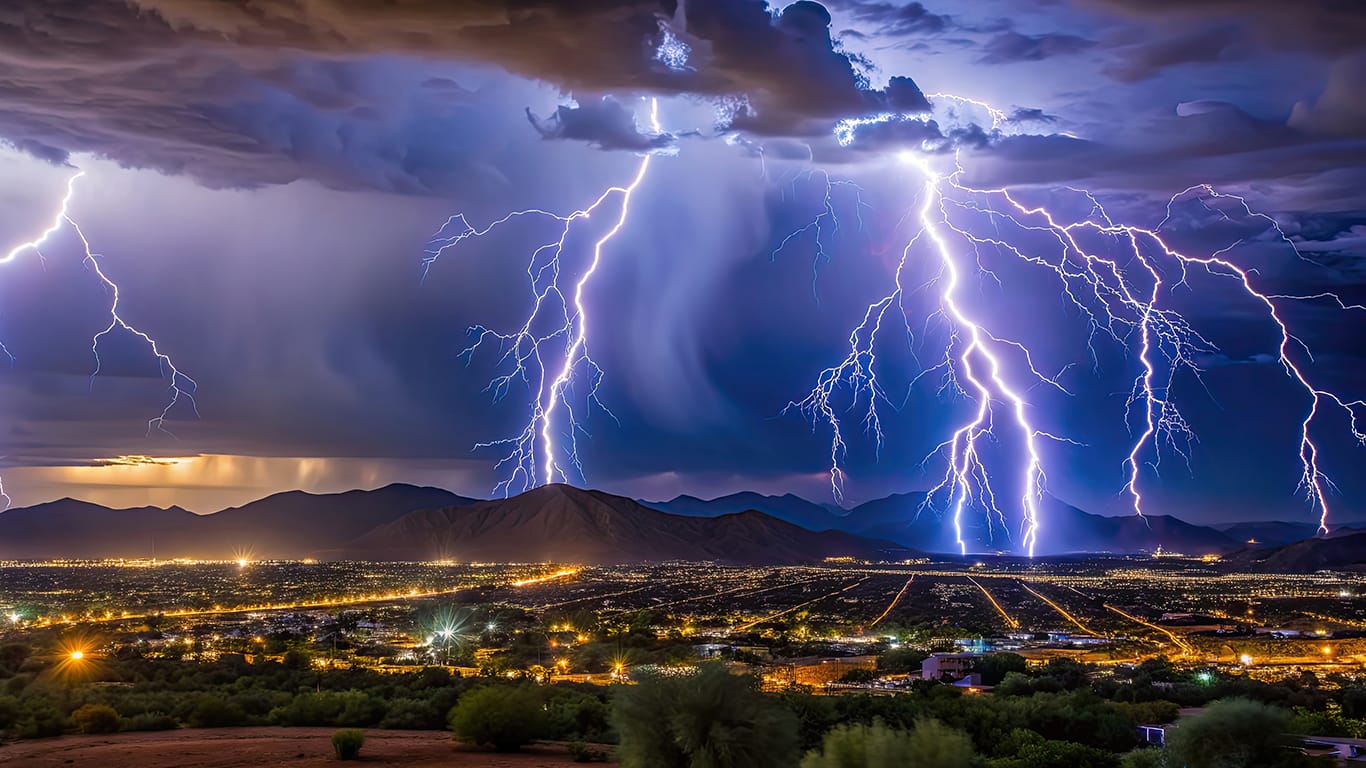
Then there’s lightning — Arizona’s unofficial summer light show. Frequent cloud-to-ground strikes make monsoon storms visually stunning but potentially dangerous. Add in gusty winds and occasional flash flooding, and monsoon season quickly earns its reputation as nature’s version of controlled chaos.
Still, there’s a reason many Arizonans secretly love it.
After months of triple-digit heat and skies so blue they almost feel repetitive, monsoon season delivers drama. The smell of creosote after rainfall, dramatic sunsets, booming thunder rolling across the desert and the excitement of watching storms gather over mountain ranges feel uniquely Arizona.
There’s also practical value. Summer rainfall helps vegetation, replenishes soil moisture and temporarily cools temperatures. However, experts caution that monsoon moisture alone will not solve Arizona’s long-term drought challenges. The state remains deeply dependent on winter snowpack and Colorado River supplies to refill reservoirs.
Monsoon rain can even be a double-edged sword. Dry thunderstorms that produce lightning without meaningful rainfall can spark wildfires, while heavy rainfall encourages grasses and brush growth that may later dry out and become fuel.
In Phoenix, the seasonal rainfall average is just 2.43 inches between June 15 and Sept. 30. That may not sound impressive, but in the desert, every drop feels like an event.
So what should Arizonans expect from the 2026 monsoon?
Expect surprises. Expect dust. Expect at least one person to say, “We really needed this rain.” And above all, expect Arizona to put on one of the most dramatic weather shows in the country.