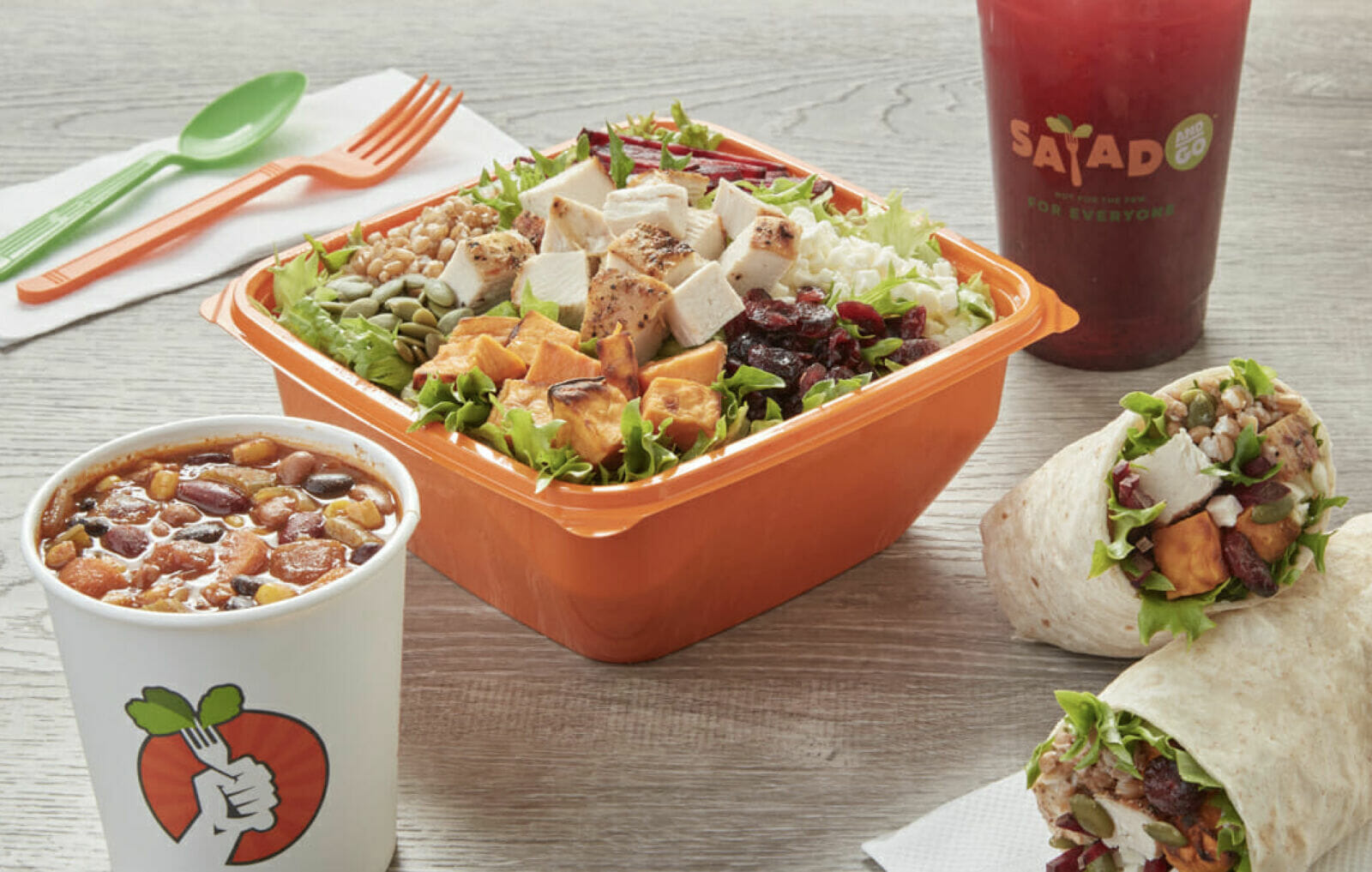
When Salad and Go collapsed this week, Tony Christofellis wasn’t surprised. He was disappointed.
He and his wife, Roushan, co-founded the Arizona-based drive-thru brand in 2013 and sold it to Volt Investment Holdings eight years later. From the moment the private equity firm took control, Christofellis said he warned it about its trajectory.
Volt steered away from Salad and Go’s healthy food promise. To save money, it centralized prep, removed organics, relied on preservatives, and microwaved reheating.
“We fought for them not to do it,” he said. “They were marketing themselves as healthy, but none of it was healthy. Do you want romaine coated in preservatives? Dressings with preservatives? Tomatoes stored in bags for seven days? Red onions cut six days ago? Drinks made from syrup bottles? That’s not healthy. They’re using microwave-assisted ovens to reheat their stuff.”
Christofellis offered to return to operate Salad and Go alongside Angie’s, the couple’s new platform. When Volt said “no,” Christofellis offered to buy the Salad and Go stores outright and convert them into Angie’s locations to preserve jobs and stabilize operations.
Volt declined every offer.
WOMEN IN BUSINESS: The Most Influential Women in Arizona for 2026
WOMEN IN REAL ESTATE: The Most Influential Women in Commercial Real Estate for 2026
On Aug. 4, Salad and Go filed for Chapter 11 bankruptcy and closed its locations the next day. Many store managers and hourly workers learned the news through internal messages rather than leadership, and, according to several who contacted Christofellis, without severance.
“When I heard they weren’t getting severance, that broke my heart,” he said. “It’s one thing to close a business because it isn’t working. I get that. But to close it without notice, tell people they have to come in the next day, and not give severance, that’s inexcusable.”
The story goes deeper. According to reports, an Oregon-based holding company linked to the founders of Dutch Bros Coffee agreed to purchase most of Salad and Go’s assets for roughly $100 million.
“I just don’t know how much of that’s going to debt and how much it’s going to equity to the investors,” he said.
With Salad and Go gone, he said he believes Arizona consumers are better off.
“It’s a big win,” he said. “People won’t be eating food that was marketed as healthy but wasn’t. It was basically the same thing as a McDonald’s burger. Preservatives, bad oils, nothing fresh.”
Angie’s carries on his and Roushan’s mission.
“We were wrong thinking we could change America’s health with salads alone,” he said. “You have to make everything people eat better and healthier.”
Angie’s — named after Christofellis’ mother, a Greek immigrant and longtime restaurant worker — is built differently. Instead of raising prices when costs rise, the company removes cost from the equation. It owns its processing facilities, distribution networks and logistics infrastructure. Angie’s employees cut the restaurants’ romaine, grate the cheese, make the drinks and grill proteins to order. The menu items are mixed with extra‑virgin olive oil in lieu of seed oils.
“We don’t follow revenue,” Christofellis said. “We follow efficiencies.”
Angie’s has an expansive menu: grilled breakfast burritos, pizzas, antibiotic-free fried chicken tenders, USDA Prime burgers, wild-caught seafood, Maine lobster, protein bowls, Mexican offerings and salads.
“Changing the world isn’t easy,” he said. “It’s almost impossible. But our team has this common valor. With the consumer together, we can get it done.”
Angie’s is expanding across Arizona, Nevada, North Texas and, soon, upstate New York. But Christofellis insists the long‑term vision leans toward the food.
“Our goal is to build a platform that can serve customers across more food occasions while continuing to improve quality and lower costs,” he said. “We believe the future belongs to restaurant companies that can become more efficient as they grow, not less. I will have a business that will be much bigger than any restaurant business that’s ever come before it.”
In the meantime, he’s focused on the people who lost their jobs, as he’s preparing to hire eight salaried employees and dozens of hourly workers. These additions weren’t necessarily in the plan.
“We’re taking on overhead we don’t need right now,” he said. “But we’re doing it to take care of people.”